


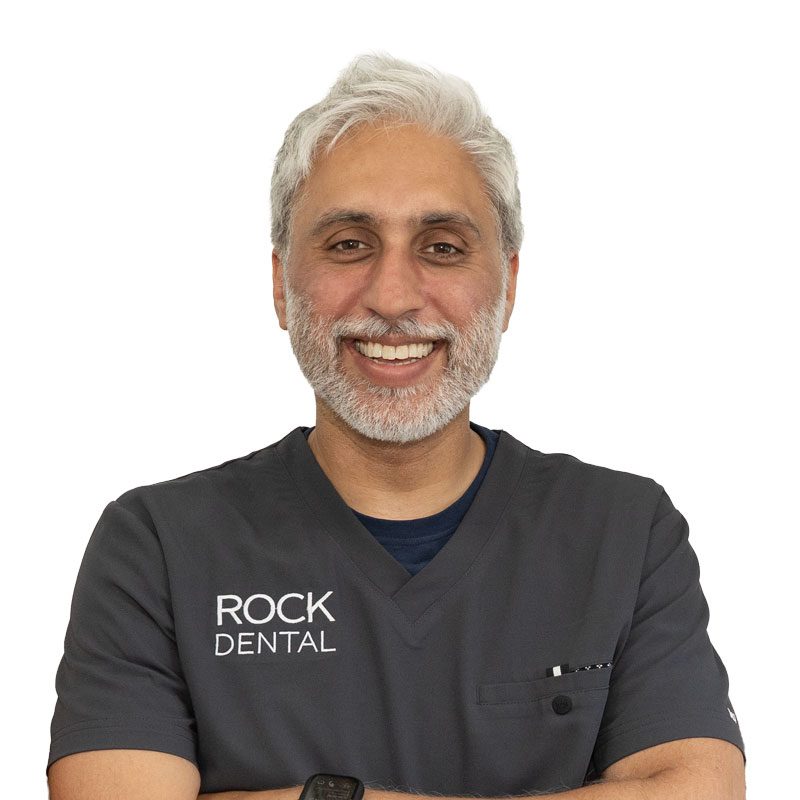
In the first of a two-part exploration of how the profession can bring more structure to career development, College Vice President Dr Anoup Nandra FCGDent encourages providers of postgraduate dental training to think of their qualifications as a stage on a journey rather than a destination in themselves.

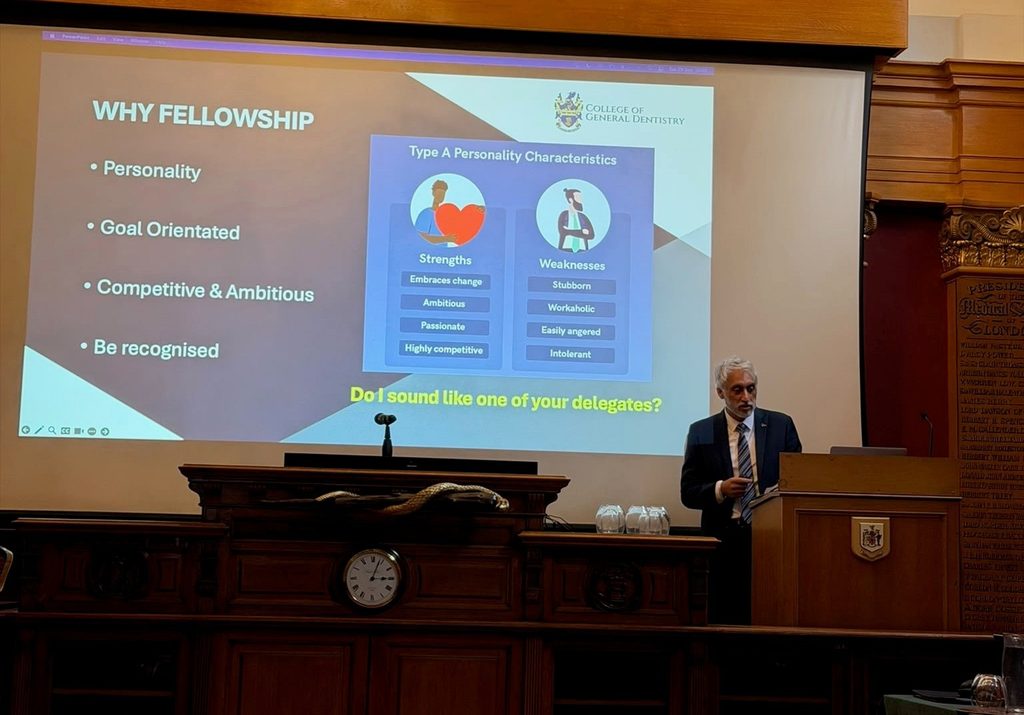
Dr Nandra addressing the Training Provider Forum, September 2026
At the end of September, I had the pleasure of representing the College at the inaugural meeting of the Postgraduate Dental Training Provider Forum, which was held at the Medical Society of London. I was there alongside fellow College representatives Dr Roshni Karia MCGDent (President), Simon Thornton-Wood PhD (Chief Executive), Professor Avijit Banerjee FCGDent (Dean of the Faculty of Dentists) and Dr Abhi Pal FCGDent (Immediate Past President).
The launch of the Training Provider Forum was recently announced as part of the ‘Assured care’ pillar of the College’s new Philosophy of Care initiative. The purpose of the Forum is to enable post-qualification education providers to help shape the College’s developing roles in quality assurance and in guiding dental professionals, particularly early career practitioners, to more confidently navigate postgraduate and post-qualification education.
In line with this ambition, the event brought together postgraduate dental education providers from across the UK to discuss how the College might work more closely together with them to help dental professionals make better sense of their career development. It was encouraging to see so many people involved in postgraduate education in one room, particularly given the important influence they have on how our profession develops.
I delivered a presentation entitled Building a Pathway to Fellowship, which explored how education providers might help their delegates understand where their qualifications fit within their wider professional careers.
Reflecting on my own journey
Preparing for the session made me reflect on my own experiences.
When I qualified, I was fortunate to have the former Faculty of General Dental Practice UK (FGDP) pathway to guide me. I had tutors and mentors who encouraged me to pursue further qualifications and, ultimately, Fellowship. At the time, I didn’t have a particularly detailed plan of how I would get there, but I had a destination in mind.
The structured pathway gave me something to work towards. Alongside that, regular local study groups provided an opportunity to meet colleagues, share experiences and learn from one another. Looking back, we weren’t just developing our clinical skills individually; we were progressing together.
Over the years, my interests developed beyond clinical dentistry into education, practice leadership and medical law. I completed various postgraduate qualifications, became involved in teaching and eventually achieved Fellowship of the College (FCGDent) in 2023.
What surprised me when preparing my Fellowship application was how much of my professional experience already fitted within the College’s framework. I had accumulated evidence across all five domains of professional accomplishment, without necessarily having planned my career around them.
This was a really key point I wanted to get across to the assembled education providers.
Why structured pathways matter
Today’s early and mid-career dental professionals face a very different educational landscape from their predecessors. There is an extraordinary choice of postgraduate courses, qualifications and opportunities to develop new clinical skills. Much of this is positive, but greater choice does not necessarily make choosing any easier.
Without a clear sense of direction, professional development can become a series of disconnected courses, driven by immediate clinical interests, commercial pressures or simply what happens to be popular at the time.
A structured pathway provides something different. It helps practitioners understand where they are in their careers, identify the skills and experience they need to develop, and make informed decisions about their next steps.
Importantly, it encourages them to build upon their existing knowledge and competence rather than simply moving from one qualification to another.
For early-career dental professionals, this can mean developing confidence in core clinical skills, gaining broader experience and establishing the foundations for safe, independent practice. For those further into their careers, it can provide direction as they pursue more advanced clinical work or wider professional interests such as teaching and leadership.
A structured pathway also provides an opportunity to recognise progress along the way. Not everyone will want to follow the same career, and not everyone will aspire to Fellowship, but everyone should have access to a framework that helps them develop in a purposeful and meaningful way.
Ultimately, this is about more than career progression. Practitioners who develop their skills within a structured, supportive environment are better placed to recognise their limitations, make appropriate clinical decisions and provide safe, effective care. The benefits should extend beyond the individual professional to the patients who place their trust in them.
Recognising achievement beyond qualifications
Fellowship is not simply about accumulating qualifications or being an excellent clinician. It recognises professional achievement across several areas, including clinical practice, teaching, leadership, research, and law and ethics. It also acknowledges the contribution practitioners make to their colleagues, patients and the wider profession.
Importantly, there isn’t just one route to achieving it.
In my presentation, I also shared the career journey of my fellow Vice President, Dr Nicola Gore FCGDent. Although our professional experiences and routes to Fellowship have been quite different, both were recognised through the same framework. That flexibility is one of its strengths.
I also asked the attendees to take part in a simple exercise. We worked through the five Fellowship domains, and I invited them to consider how many they might already satisfy.
It was an interesting moment because it demonstrated that some practitioners may be much further along their Fellowship journey than they realise.
That led to a question I put to the room: if experienced education providers don’t necessarily recognise how close they might be to Fellowship, how many of their delegates are similarly unaware?
Every year, dental professionals invest considerable time and money in postgraduate education. Yet they may complete a diploma, master’s degree or other qualification without understanding how it fits into a broader framework of professional development.
I think we have an opportunity to change that.
A shared responsibility for the profession
Professional development should not be something practitioners are expected to navigate entirely on their own.
As a profession, we have a collective responsibility to help colleagues develop throughout their careers. Universities and postgraduate education providers, employers, mentors, professional organisations and experienced clinicians all have a part to play.
Education providers are particularly well placed to influence this. They work directly with practitioners who are motivated to improve their skills and are often making significant investments in their future.
Rather than introducing the College to practitioners once they have completed their qualifications, why not engage with them from the beginning?
Providers could introduce delegates to the College’s Professional Framework, encourage them to become involved with the College and help them understand how their studies and experience may contribute towards Associate Fellowship or Fellowship.
This does not mean changing the courses they already deliver. It is about helping delegates see where those courses might lead and encouraging them to think beyond the qualification itself.
But a pathway must also be supported by access to mentoring, opportunities to gain experience and recognition of achievement. Simply publishing a framework is not enough. We need to help practitioners understand how to use it and ensure that they have opportunities to progress.
There is an important patient-care dimension to this responsibility too. If we encourage dental professionals to develop more advanced skills, we must also ensure they have the appropriate foundations, judgement and support to apply them safely.
Good postgraduate education should not simply teach practitioners how to perform more complex procedures. It should help them understand when those procedures are appropriate, when alternative approaches may be preferable and when referral is in the patient’s best interests.
As a profession, we should be supporting ambition whilst ensuring that professional development remains firmly grounded in patient-centred care.
Looking beyond the next course
The discussions at the Forum were positive, with plenty of ideas about how the College and education providers could work together. There was a shared enthusiasm for clearer professional pathways, for greater recognition of achievement and for helping practitioners understand the opportunities available throughout their careers.
For me, Fellowship had always been something of an ambition. When I achieved it in 2023, I initially regarded it as the culmination of many years of hard work. In reality, it opened doors to other opportunities, including becoming more involved in the College itself.
That is something I would like more practitioners to appreciate.
A postgraduate qualification is an achievement worth celebrating, but it needn’t be viewed as the final destination. It can be one step in a much longer and more rewarding career, whether that leads to greater clinical expertise, teaching, leadership or contributing to the development of the profession.
If we can help early and mid-career practitioners to make more informed choices, to access appropriate support and to recognise their progress, we will not only enable them to build more fulfilling careers but also to strengthen the quality of care they deliver to patients.
I left the Forum encouraged by the conversations and the willingness of those attending to work together. My thanks go to everyone who contributed to what was a valuable and thought-provoking event.
I ended my presentation with a message to education providers which, for me, captures what we should all be working towards:
Don’t make the qualification the destination. Make it part of the journey.
The next meeting of the Postgraduate Dental Training Provider Forum will take place on 2 March 2027 in London. Providers of externally-accredited programmes interested in joining the Forum should contact simon.thorntonwood@cgdent.uk

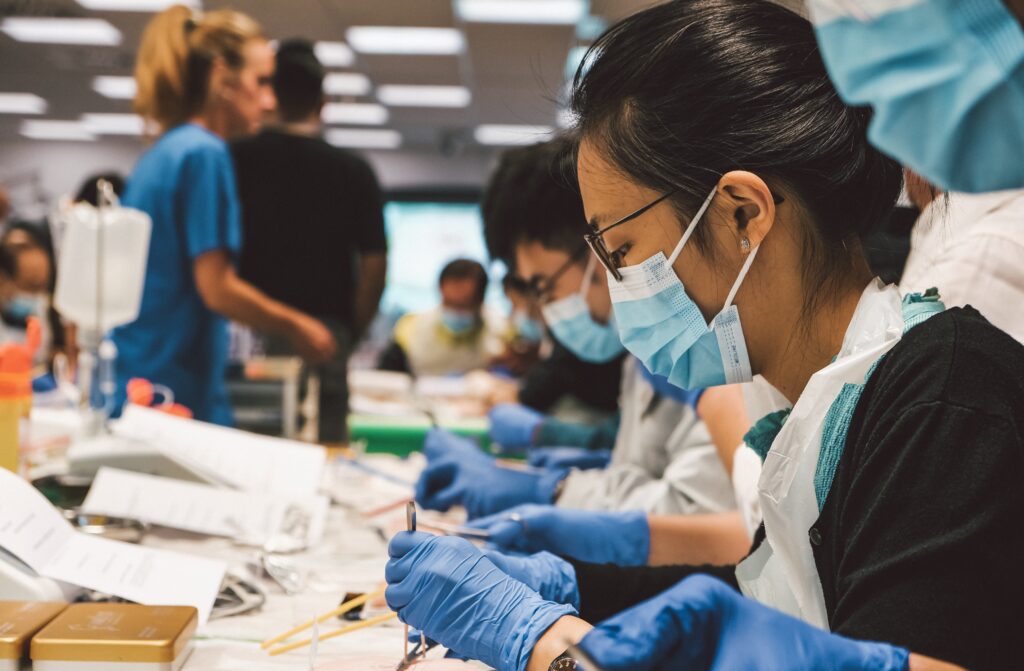
Raising quality in postgraduate dental skills training
Dr Nandra will also be addressing our seminar for practitioners on Thursday 28 January 2027. This will discuss the future of the postgraduate training market, and set out the College’s plans to support practitioners to structure their career development and choose the most suitable courses.