

Caroline Persaud, a Clinical Dental Technician and board member of the College’s Faculty of Dental Technology and Clinical Dental Technology, describes her experience of the Foundation Nakao – CGDent Award in Coaching and Mentoring.

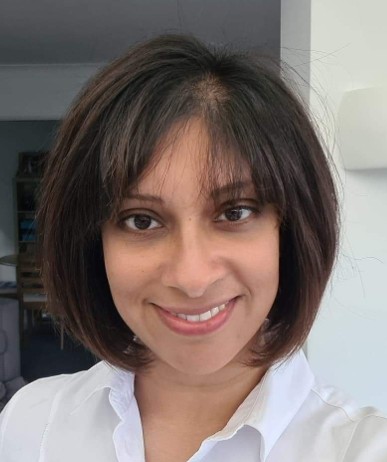
I qualified as a Clinical Dental Technician in 2007 and have practised, within my own business, for 19 years. Although I have been on the Faculty Board representing my profession for several years, at times I have lacked the confidence to impart my knowledge and opinions with others without seeming too direct. So when the Foundation Nakao – CGDent Award was announced last year, my primary motivation in applying was to gain skills to support this role. My second driver was that opportunities like this do not come along every day – and it was specifically for Dental Care Professionals. I took the plunge, pushed the nervous twitch to one side, submitted my application and was delighted to be awarded a place.
The course provided an opportunity to step back from day-to-day practice and reflect on how we support colleagues, trainees and the wider profession. Although many of us naturally share knowledge and experience in practice or the laboratory environment, the course helped me gain a greater understanding of the differences between advising, coaching and mentoring. The result was that I gained a base knowledge of how each can positively influence professional growth and confidence.
One of the most valuable aspects of the programme was enjoying learning alongside fellow DCPs from a range of professional backgrounds. The course was delivered online, which I had some reservations about as any type of home-based or non-face-to-face learning is often fraught with distractions. However, all my misgivings were dispelled within the first 45 minutes. The discussions were engaging, supportive and thought-provoking, with relatable content and scenarios that brought about a meeting of minds from the group of DCPs in attendance. The course leaders created an excellent environment for open conversation and shared learning.
The most useful part of the course for me was the Coaching Supervision Interview. Conducted just ahead of Day 3, this exercise gave me the opportunity to put the knowledge learned so far into my everyday practice and illustrate how effective it was for me and my mentee.
Having sat on the Faculty board for some years, I have at times struggled to find my voice. However, I have realised that the environment of smaller gatherings of board members, where your opinions do not feel under scrutiny, seems to bring out my best thoughts and ideas; over time my fear of personal expression has alleviated, and I have truly found my voice. I also perceived that there was a similar pattern within some of my fellow board colleagues, so I wanted to encourage them to grow the same level of confidence to raise their hand and speak aloud. The coaching model I adopted for my test case worked seamlessly. Through a series of questions and conversation, the mentee was able to identify the problem, provide solutions and implement them in real time to achieve the end goal. I must say: it felt satisfying to have made a difference. Perhaps it was a small difference, but ‘mighty oaks from little acorns grow‘.
As all professionals will confess, time is a precious commodity. One of the most poignant moments of Day 2 was a role-play session whereby I was mentor, and my mentee came to me with time management issues. This issue hit home hard; I am known for working some rather unorthodox hours and so I had a vested interest in this scenario. After five minutes of following a particular coaching model, the mentee had devised an action plan that seemed realistic. I sensed that this was genuinely going to be implemented and felt that I had influenced some key decision-making which would benefit the mentee going forward. It also illustrated the versatility of these techniques, and how they can apply to our personal situations as well as our professional roles.
When the final session commenced, there was an air of confidence and a real buzz amongst the delegates. Everyone had started to put into practice the skills learned during Days 1 and 2, and the open discussions revealed the positives and challenges, including some real personal triumphs. The groupwork flowed with a level of calm and conviction, with a real sense of pride that we all had applied ourselves and felt richer for the experience. Three days invested and well worth it!
Since attending, I have become more aware of how effective coaching and mentoring can support confidence, communication and career development within the dental team. The idea that ‘you get out what you put in’ is a timeless principle. As a group, we invested our time, our minds and our passion for the profession. In turn, we all came away enriched compared to where we began at the start of Day 1. If you follow the philosophy learned here, this course will broaden your thinking and provide you with the tools to gain the most from your colleagues, mentees and the wider dental community.
Attending the course was an extremely worthwhile experience, and one I would strongly encourage other Dental Care Professionals to consider applying for now that the course is being run again this year. I would highly recommend it to anyone who is passionate about supporting others and giving something back to the profession along with those who may see their future in a teaching environment of any kind.
An extended thank you to Foundation Nakao and to Professor Avijit Banerjee FCGDent for their generosity, and for working with the College to provide DCPs with this opportunity.
The Foundation Nakao – CGDent Award 2026 is now open to registered dental therapists, dental hygienists, dental nurses, orthodontic therapists, dental technicians and clinical dental technicians with at least two years’ post-qualification experience in their role. Applications close on Friday 31 July. To find out more and apply, click the button below: