We regret to report that Nikolaus Otto Alexander Palmer, Dip. FFGDP(UK), an early leader in the adoption of infection prevention and control protocols in dentistry, and an authority on best practice in dental antimicrobial prescribing, died recently aged 74.
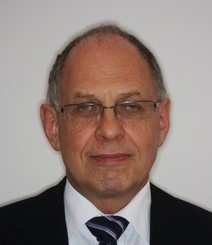
Dr Nikolaus (Nick) Palmer, Dip. FFGDP(UK), 1952-2026
Born in Birmingham, Nick attended the King’s School, Macclesfield, for both his primary and secondary education, after which he studied dentistry at the University of Liverpool from 1971-76. Following graduation, he worked as an associate dentist and in 1981 became a partner in Dowhills Dental Practice in Crosby. Under his leadership, he computerised and modernised the practice and established it as a training practice for foundation dentists.
A member of Sefton Local Dental Committee, he served as Secretary for many years and was a member and Past President of the West Lancashire, West Cheshire and North Wales branch of the British Dental Association (BDA).
He sold his dental practice in 2001 but continued to practise there as a self-employed dentist for a further 11 years, still delivering predominantly NHS care while maintaining a special interest in orthodontics, and continuing as a Foundation Trainer while also mentoring newly registered overseas-qualified colleagues.
During this period, he also served as a Postgraduate Tutor and Research Associate for Health Education North West, organising more than 200 ‘Section 63’ courses and other postgraduate training events, and he later became the region’s Clinical Advisor in dental education, and a Research Fellow.
In the late 1980s, Nick was involved in the development of cross-infection control protocols at the groundbreaking Clinic V HIV clinic at Liverpool Dental Hospital. At a time when dental practices were not subject to standardised infection prevention and control procedures, when HIV was less understood and when effective antiretroviral therapies were not yet widely available, patients with HIV were routinely refused treatment in general dental practice for fear of transmission. In providing HIV-positive patients with full spectrum oral and dental care, Clinic V demonstrated that through the rigorous implementation within dentistry of emerging medical infection control protocols, dental patients with bloodborne viruses could be treated safely and compassionately without risking transmission to staff or other patients.
Following the publication in 1991 of the BDA Advice Sheet A12, Infection Control in Dentistry, Nick became involved in educating the profession to implement its advice, playing his part in moving it from the era of bare-handed (‘wet-fingered’) dentistry, handwashing with soap between patients and the use of boiling water or disinfectant wipe-downs to sterilise instruments, to now-standard precautions such as the use of gloves, masks, protective eyewear and autoclaves.
In 1996, he became a part-time Clinical Lecturer at Liverpool Dental School, teaching and supervising undergraduate dentistry and dental therapy students, and in 1997 he decided to undertake a PhD – even more a rarity among general dentists then than now – which he completed in 2001. His supervisor, Professor Michael Martin – whose work on infection prevention and control had been instrumental in the BDA’s advice – encouraged him to investigate how and why dentists prescribe antibiotics.
So began a lifelong interest, with Nick soon becoming one of the profession’s foremost authorities on the subject. A committed practice-based researcher, he wrote numerous peer-reviewed papers which were published in leading journals including the British Dental Journal, Primary Dental Care, Primary Dental Journal, Dental Update, the Journal of Antimicrobial Chemotherapy, the International Journal of Paediatric Dentistry and the British Journal of Oral and Maxillofacial Surgery.
Nick was a founding member of the former Faculty of General Dental Practice UK (FGDP) in 1992, later becoming a Fellow and in 2021 only the third winner of the Faculty Medal for his exceptional contribution to dentistry. In 1996 he was elected to its national board, which he went on to serve for over 18 years, including as Chair of Research, Vice Chair of Education, Chair of Publications, member of the Executive Committee and Vice Dean. During his tenure as Chair of Examinations, he oversaw the development and delivery of the Diploma in Primary Care Orthodontics and the Membership of the Joint Dental Faculties (MJDF) examinations, as well as the re-development of the FGDP Fellowship assessment. He was also on the national group which developed the Dentists with Special Interests framework which was jointly launched by FGDP and the Department of Health in 2004.
FGDP was the first organisation in the UK comprised primarily of general dental practitioners to publish recognised standards and guidelines for the profession, and soon after joining the board Nick proposed and became lead author and editor of Adult Antimicrobial Prescribing in Primary Dental Care, the general dental profession’s first authoritative reference work on responsible antibiotic use. Developed while Nick was also practising clinical dentistry, managing a dental practice, teaching undergraduates, training FDs, serving on the FGDP board and completing his PhD, it was published in 2001 and was the first edition of what is still co-published 25 years later by the College of General Dentistry and the Faculty of Dental Surgery of the Royal College of Surgeons of England (FDS) as Antimicrobial Prescribing in Dentistry: Good Practice Guidelines.
The FGDP published the second edition, which Nick had updated and expanded to encompass all patients in primary dental care, in 2012. In 2015, this was published online for the first time, and together with later revisions this has since been accessed hundreds of thousands of times, benefitting patients worldwide.
Nick was also the lead author of the Antimicrobial Prescribing Self-Audit Tool. Co-published by the FGDP and BDA in 2016, updated in 2019 and now available through the CGDent website, the tool helps practitioners and practices audit their prescribing and their management of dental infections in line with the guidelines.
In 2016 he also updated the second edition of the guidelines following changes to some of the prescribing recommendations in the BNF, and the following year he embarked on a project to expand the guidance from a publication aimed principally at general dental practitioners to one encompassing the whole of dentistry. With the additional contributions sourced from and reviewed by all the dental specialties through collaboration with the FDS, of which he had become a Fellow in 2009, the third and extant edition was co-published by the FGDP and FDS in 2020.
What made these achievements all the more remarkable was that they had been undertaken while Nick was living with myeloma, with which he had been diagnosed in 2012. Though he retired from clinical practice following the diagnosis, he maintained an extraordinary determination and a commitment to the profession, continuing to take on roles and complete significant projects while facing significant personal challenge.
He continued working for Dental Protection, which he had joined in 2010 as an Associate Dentolegal Advisor, until 2017, and he remained an Honorary Clinical Lecturer at the University of Liverpool until 2021. From 2013-21, he represented the FGDP on both the dental sub-group and pan-healthcare oversight group for Public Health England’s new English Surveillance Programme for Antimicrobial Utilisation and Resistance (ESPAUR). And in 2017 he was appointed as a dental adviser to the National Institute for Health and Care Excellence (NICE) committee reviewing its guidance on managing common infections.
Outside of dentistry, golf was Nick’s main hobby (and greatest frustration), and he was a member of Waterloo Rugby Club for many years. He also liked nurturing his lawn and spending time in the garden at home in Formby.
Half Swiss, he was an accomplished skier and climber and loved hiking, with regular trips to the Lake District and annual visits to the Bernese Oberland.
A great listener, he knew a vast number of people both within the profession and through his sporting and charitable associations, and he delighted in socialising with them, including at the post-course meals he organised as a trainer and many formal dinners.
The COVID pandemic was an especially difficult time for Nick – given his illness, the resultant heightened personal vulnerability to coronavirus and the increased restrictions this implied for travel and social contact – and it was a long time before he was able to resume all the activities he enjoyed so much.
Characteristically though, he continued to contribute even while undergoing treatment, and using his own medical knowledge and experience of illness to benefit others, he joined the Patient & Carer Research Panel of Myeloma UK in 2021, and the Patient and Public Involvement Forum at Clatterbridge Cancer Centre NHS Foundation Trust in Liverpool in 2022.
After bearing his illness with great courage for many years, Nick passed away peacefully on Saturday 17 October 2026. He will be remembered as a highly respected and principled colleague, and a great friend and mentor to many, generous with his time and deeply committed to the development of others. A firm believer in practice-based research and evidence-based practice, he was a significant figure in the modern history of the profession who has left an enduring professional legacy, not least through the guidelines he established and the careers he supported.
He is survived by his beloved wife, Christine, and his former wife Susan and their sons Alexander and Daniel, and grandchildren Ethan, Blu and Mason, to whom he was a devoted father and besotted grandfather.

