Dr Stuart Ellis FCGDent, Director of the Postgraduate Certificate in Dental Education at the University of Cambridge and Guest Editor of the new issue of the Primary Dental Journal (PDJ) dedicated to dental education, reflects on the meaning of competence in dentistry.
Competence. It is worth pausing for a moment and reflecting on what we mean by this word, which at first glance may seem obvious. Competence is the central concept that dental education has been revolving around since dentistry first became a profession. Competence has become, as Lingard pointed out, a “god term”.1 It has evolved into a word that sits superior to all other expressions of ability. As a “god term” it is often used as the final word in debates on how dental professionals should function. It is a term with such high moral power that it is inherently accepted, without question, as a self-defining trump card. The new edition of Primary Dental Journal (PDJ) explores deeper thinking about competence by addressing questions such as, what is it, how do we know we have it, how do we hold on to it and what can we do if we lose it?
At undergraduate and postgraduate levels, we pass examinations to show that we are competent. We aim to demonstrate that we can be trusted to treat patients safely. Since Biggs’ model of constructive alignment highlighted the need to ensure that assessments measure what they should measure, healthcare educationalists have been striving for better ways to assess the competence of professionals.2 It became clear that a dentist who could write a competent essay in an examination was not necessarily demonstrating the ability to be a competent dentist. The paper in the new issue of PDJ by Thomas O’Connor explores the increasing use of Entrustable Professional Activities (EPAs) as an assessment tool in dentistry. The utilisation of EPAs as a form of workplace assessment was first proposed by ten Cate as a means to bridge the gap between theory and “real world” clinical practice; a tool to enable a person to demonstrate what they can do, rather than just what they know.3
The conventional understanding of competence, as a predetermined stage of ability to be reached by an individual, has its limitations. After gaining a dental degree, a postgraduate certificate or a postgraduate diploma the expectation is that the dental professional has reached a general level of competency in a specified field of learning. This simplistic conceptualisation of competence fails to account for the complexities of human performance. An individual may be competent one day, and incompetent the next. Human behaviour is multifaceted and sinuous. Numerous emotional factors can exert a significant influence on the actions of professionals. Particularly prevalent in surgical fields, such as dentistry, ideas of competency are situated within a narrow and highly technical orientation. We tend to look at communication skills, diagnostic skills and operative skills without consideration of the wider context that dental professionals work in. The airline industry realised long ago the effect that human factors could have on the situational awareness, communication and decision-making abilities of air crew, leading to the introduction of training programmes in non-technical skills for pilots.4 The paper by Christopher Fowell describes the introduction of non-technical skills training for surgeons and explores how improved training in this field could help to improve patient safety in dentistry.
“Patient safety” has become another “god term” with such enormous rhetorical power that it deserves a closer look. Again, it is the airline industry who led the way when realising that passenger safety was best served through an open culture of transparency, where professionals are encouraged to report near misses and honest mistakes, so that the entire industry could learn from them. This was facilitated through the development of a “Just Culture”, where the focus of the system is on understanding why honest mistakes happen rather than punishing those who make them. Pilots are encouraged to admit errors without fear of unfair punishment, within an open system of learning that is overseen by a Just Culture Champion appointed by the Civil Aviation Authority.5 Shamir Mehta’s paper on Early Remediation explores ways in which the General Dental Council are working towards a more open culture of learning in dentistry through changes to the Fitness to Practice (FtP) procedures. Accepting that otherwise competent dental professionals can, for a variety of reasons, lose their competency, Early Remediation aims to support dental professionals in difficulty during the early stages of the FtP process. My own paper on mentoring in dentistry explores how this underutilised resource, which is awarded a high degree of importance by many other professions, can help all of us whether we are a practitioner in difficulty or just a professional seeking supported career development.
The other two papers that I have contributed to the issue delve into what we mean by competency and how we can show patients and colleagues that we have achieved a certain level of knowledge and skill. The research study that I conducted with my University of Cambridge colleague, Rachel Williams, explored the opinions of learners who took a practical skills assessment in implant dentistry, with no time limits for the assessed tasks. The responses showed that, in our fast-moving modern world, competency is often equated with speed. Faster operators are viewed as better operators, faster thinkers as smarter people. It is interesting to see how this concept has changed over time. Many of the greatest thinkers in human history, from Socrates to Descartes, were valued for the depth of their thinking rather than the speed of their thinking. These great minds were known for the extensive amount of time they spent contemplating wisdom, not the speed that they produced it. Perhaps our modern perspective has been moulded by the consumerisation of society, under contemporary ideas that time is money and money equals happiness.
I hope that my third article in the Dental Education issue will help colleagues to navigate the plethora of postgraduate qualifications and awards in dentistry. I aim to persuade the reader that postgraduate qualifications and awards should be viewed as tools rather than trophies and that the most effective training course is the one that strengthens professional judgement, improves patient care and supports a coherent career direction.
This article was first published in the recent ‘Dental education’ issue of the Primary Dental Journal, which is now available online via the button below. Printed copies should arrive with College members by the end of October.
The Primary Dental Journal is the College’s quarterly peer-reviewed journal dedicated to general dental practice. The titles and abstracts of PDJ papers are available to all dental professionals via the searchable PDJ homepage, with full paper access available to College members through the PDJ Library.
References
Lingard L. What we see and don’t see when we look at ‘competence’: notes on a god term. Adv Health Sci Educ Theory Pract. 2009;14(5):625-628. Available at pubmed.ncbi.nlm.nih.gov/19856124/
ten Cate TJO, Snell L, Carraccio C. Medical competence: the interplay between individual ability and the health care environment. Med Teach. 2010;32(8):669-675. Available at pubmed.ncbi.nlm.nih.gov/20662579/
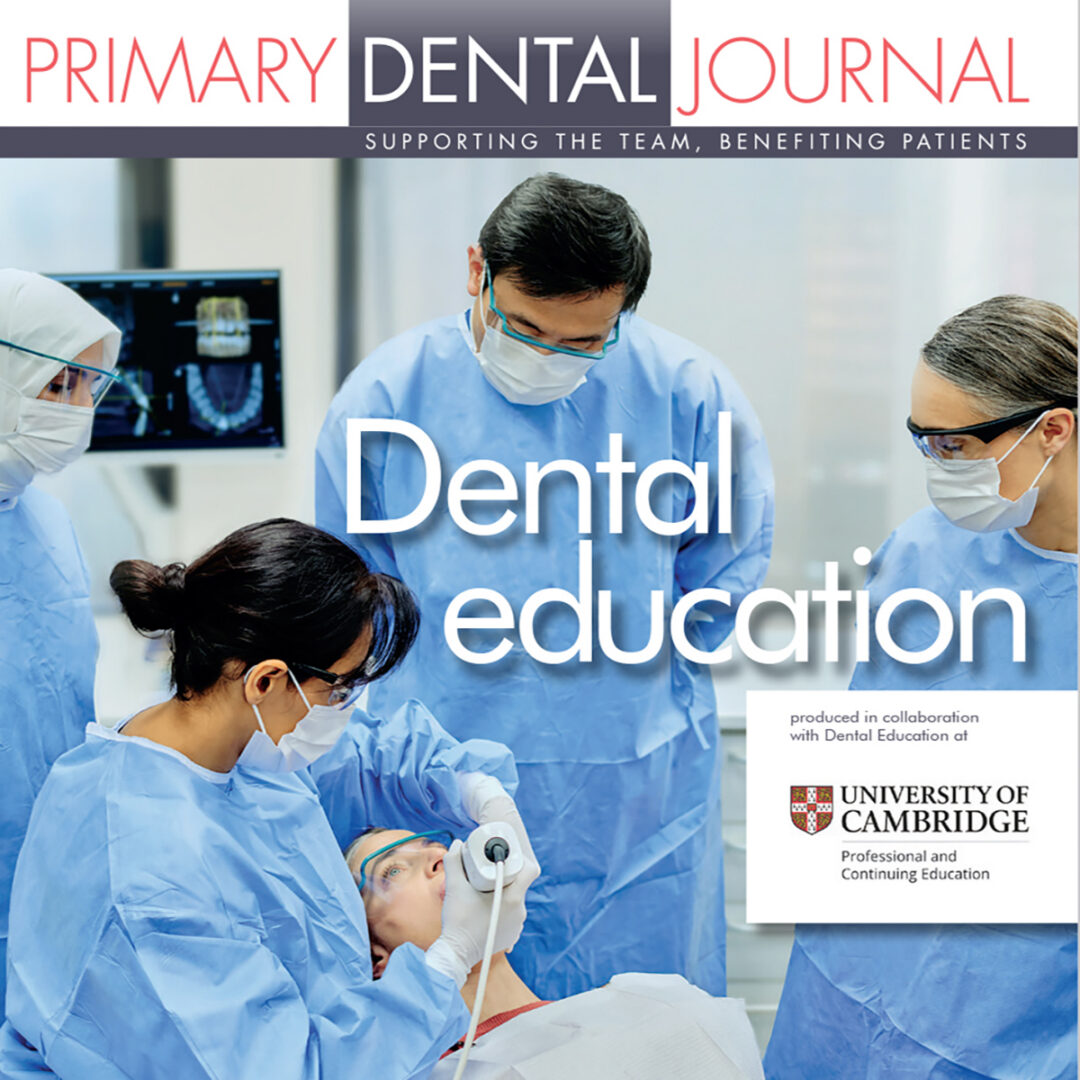
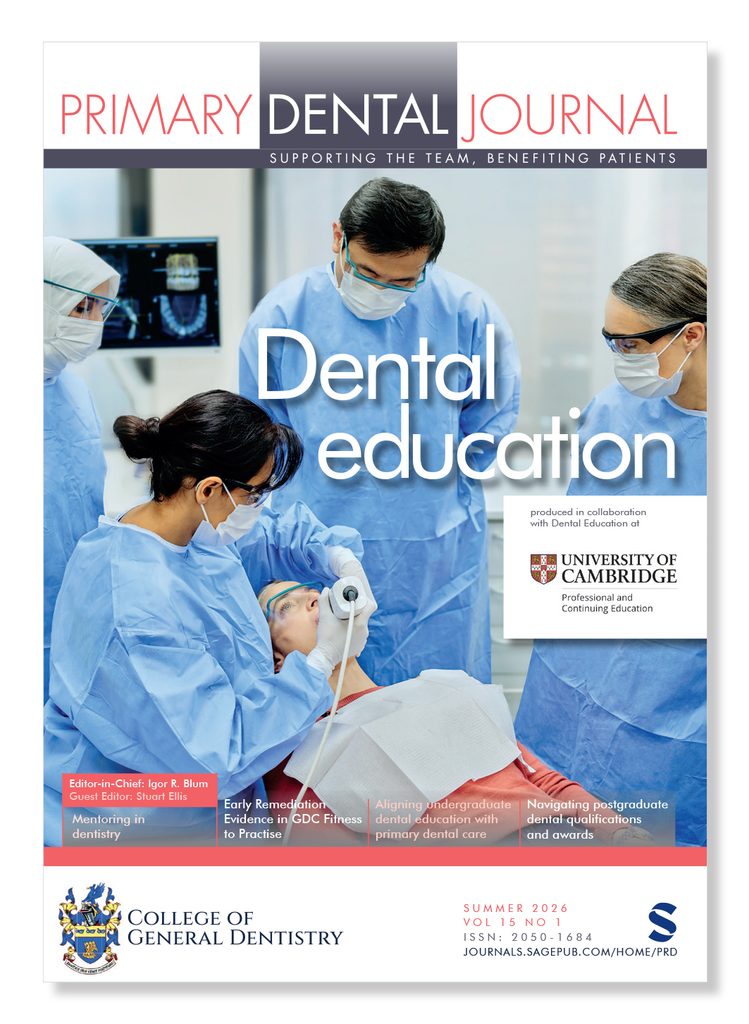
The latest issue of the Primary Dental Journal, exploring dental education, is now available online.
The issue has been produced in collaboration with Dental Education at University of Cambridge Professional and Continuing Education (PACE). Established in 1873 and previously known as the University of Cambridge Institute of Continuing Education, PACE is the world’s oldest university department specialising in continuing education.
The new issue includes a range of topics that span the teaching and learning journey, such as aligning undergraduate learning with primary dental care, navigating postgraduate qualifications, considering types of assessment, and mentoring and credentialling in dentistry.
It also includes the second in a series of articles charting the history of the College, an introduction to its new Philosophy of Care, and its Philosophy of Care Statement on Initial Caries Management.
It is the first of the journal’s 54 issues to date to explore education as a theme, and is the first of what the College intends will be many collaborations between the Primary Dental Journal and expert organisations in fields relevant to general dentistry.
The Guest Editor for the issue is Stuart Ellis FCGDent, Director of the Postgraduate Certificate in Dental Education and Assistant Teaching Professor in Dental Education at the University of Cambridge. Principal of a five-surgery general dental practice in Cambridge for over thirty years, he is also Director of the Cambridge Academy of Dental Implantology and Clinical Lead for both the MSc in Advanced Dental Implantology and the MSc in General Dental Practice at Aston University. He holds a Diploma and a Master’s in Postgraduate Dental Studies from the University of Bristol, a Master’s in Medical Law & Ethics from the University of Edinburgh and both a Postgraduate Diploma and Master’s in Medical Education from the University of Cambridge.
A full list of contents can be found below.
Full online access to most articles in this and previous issues is reserved for College members and Primary Dental Journal subscribers, who can expect their printed copies to arrive shortly. New joiners wishing to receive a copy of this issue can let us know by emailing [email protected]
For non-members / non-subscribers, five peer-reviewed papers and a number of other articles in the Dental education issue have been made available online free of charge, with all other articles available by becoming a member or by purchasing them individually via the links below.
An annual print subscription to the PDJ is included with membership of the College, which also includes online access to over 1,500 current and past articles in the PDJ Library and a range of other benefits.
On behalf of the College, the PDJ editorial team would like to express its gratitude to the Guest Editor and to all the authors and peer reviewers who have contributed to this issue.
Professor Igor Blum, Editor of the Primary Dental Journal (PDJ), explores the challenges facing educators in preparing dental professionals for emerging technologies and the evolving needs of patients and healthcare services
Dental education in the UK stands at a critical inflection point. Rapid advances in digital technology, changing patient expectations, evolving regulatory frameworks, and increasing pressures on the NHS workforce are reshaping the knowledge, skills, and professional behaviours expected of dental professionals. Although the fundamental goals of dental education remain unchanged – to develop safe, competent and ethical practitioners – the means by which this is achieved are undergoing considerable transformation. Across undergraduate and postgraduate education, the question is no longer whether change is necessary, but how best to prepare current and future members of the dental team for an increasingly complex, technologically enabled and dynamic healthcare environment.
This challenge is explicitly recognised in the General Dental Council’s Safe Practitioner framework.1 The framework reflects a broader conception of professional competence, extending beyond clinical knowledge and technical proficiency to encompass professionalism, communication, cultural awareness, wellbeing, sustainability, reflective practice and the ability to work safely within one’s scope of practice.1,2 In doing so, it signals an expectation that dental education should not merely equip students to meet current standards, but should also develop the adaptability, judgement and commitment to lifelong learning required to respond to the evolving needs of patients, healthcare services and society.
The articles in the upcoming themed issue of the Primary Dental Journal (PDJ), guest edited by Dr Stuart Ellis FCGDent, offer a timely illustration of these developments. Collectively, they demonstrate how dental education is evolving beyond a traditional focus on technical proficiency towards a more holistic model of professional formation. Articles addressing the alignment of undergraduate dental education with primary care, remediation, mentoring, workplace-based assessment, non-technical skills, credentialing and postgraduate career development reflect a growing recognition that excellence in dentistry depends on far more than procedural competence alone. It also requires professional discernment, effective communication, professionalism, adaptability and a sustained commitment to continuous learning and development.
An article on aligning undergraduate dental education with contemporary primary dental care develops one of the central propositions of the issue: dental primary care should not be regarded merely as the destination to which graduates are delivered, but as a partner in determining what and how they are taught. It argues for stronger primary care representation in curriculum design, authentic and well-supported outreach education, closer feedback between dental schools and the regional dental deaneries responsible for foundation training, and the teaching of digital dentistry and artificial intelligence (AI) within the clinical contexts in which they will be used. This perspective is especially important because primary care is where scientific knowledge, technical capability, professional behaviour, technology and individual patient circumstances must be integrated in everyday decision-making.
Another notable contribution relates to the growing recognition of professional development as a continuous process rather than a succession of discrete educational milestones. The discussion of early remediation in the context of Fitness to Practise processes reflects a broader shift towards supporting dental professionals through timely feedback, structured reflection and developmental intervention. Such approaches align with contemporary educational thinking and acknowledge that professional growth often arises from identifying, addressing and learning from difficulties, rather than from avoiding them altogether.
Closely related to this is an article examining the role of mentoring, which has assumed increasing prominence across the healthcare professions. The growing complexity of clinical practice, together with concerns about practitioner wellbeing, workforce retention and career satisfaction, has made mentoring an increasingly important component of professional development. Effective mentoring can support transitions from undergraduate education to foundation training and through subsequent career stages, helping students and dental professionals navigate uncertainty, develop confidence, strengthen professional identity and make informed decisions about their future development.
At the same time, advances in educational theory are reshaping how competence is conceptualised and assessed. The growing interest in Entrustable Professional Activities (EPAs), explored in this issue, reflects a wider international trend towards competency-based education. EPAs define key units of professional practice and provide a framework for making explicit judgements about whether a learner can be entrusted to undertake them safely with a specified level of supervision. By assessing the integration of knowledge, clinical skills, professional behaviours and judgement within authentic clinical settings, this approach moves beyond the evaluation of isolated competencies. EPAs may therefore offer a more meaningful means of determining readiness for progressively independent practice and align closely with contemporary understandings of workplace-based learning.3
Assessment itself continues to evolve. The experiences reported in this issue of candidates undertaking Objective Structured Assessments of Technical Skills (OSATS) without fixed time limits raise important questions about the purpose of assessment and the constructs it is intended to measure. Dental educators have long recognised that performance under examination conditions does not necessarily equate to capability in the workplace. Although efficiency is an important component of safe clinical practice, assessment should distinguish between appropriate clinical fluency and speed for its own sake. As curricula place increasing emphasis on patient-centred care, critical thinking, professional judgement and professionalism, assessment strategies must reward integrated and meaningful competence rather than rapid task completion alone.
The future direction of dental education is inseparable from technological innovation. Digital dentistry has progressed from a relatively specialised area to an increasingly important component of contemporary clinical practice. Intraoral scanning, computer-aided design and computer-aided manufacturing (CAD-CAM), three-dimensional printing and advanced imaging technologies are becoming more widely used across primary and secondary care settings.4 Undergraduate dental programmes must therefore ensure that graduates possess the digital literacy required to practise safely and confidently within technologically enhanced clinical environments. Postgraduate education must likewise provide opportunities for practitioners to develop, update and critically evaluate their digital capabilities as technologies and their clinical applications continue to evolve.
AI may prove even more transformative. AI-assisted radiographic interpretation, clinical decision support and predictive treatment-planning systems are already beginning to influence healthcare delivery.5 Although these technologies offer considerable potential to improve efficiency, consistency and diagnostic accuracy, they also present important educational, ethical and professional challenges.6-8 Undergraduate and postgraduate dental education must therefore prepare practitioners not only to use AI-enabled systems, but also to interrogate their outputs critically, recognise bias and uncertainty, understand their limitations and maintain appropriate safeguards for patient information.9,10 Crucially, professional accountability for clinical decisions cannot be delegated to an algorithm. The ability to use intelligent technologies to augment – rather than replace – clinical judgement is therefore likely to become a defining professional competency.
Advances in simulation technology are similarly reshaping dental learning environments. Virtual reality, augmented reality and haptic simulation platforms enable students to practise procedures repeatedly within safe and controlled settings. These technologies have the potential to support deliberate practice, improve standardisation, provide objective and immediate feedback, and enhance patient safety, particularly during the early stages of clinical training.11,12 Nevertheless, simulation must remain a complement to, rather than a substitute for, authentic patient care. It can prepare students for clinical encounters, but it cannot replicate the uncertainty, complexity and human interaction inherent in treating real patients. Communication, empathy, adaptability and professional judgement can be rehearsed in simulated environments, but they are ultimately developed and tested through genuine clinical experience.
An article examining non-technical skills is particularly relevant in this context. Evidence from healthcare has consistently shown that communication failures, ineffective teamwork and loss of situational awareness are important contributors to adverse events.13 Lessons from medicine, aviation and other high-reliability industries have therefore emphasised leadership, teamwork, decision-making and the management of uncertainty as essential components of safe professional practice.14 Increasingly, these non-technical skills are being recognised not as desirable additions to technical competence, but as indispensable attributes of the contemporary dental professional.15 Technical expertise alone is insufficient if it is not accompanied by the ability to communicate effectively, anticipate risk, work collaboratively and respond appropriately when circumstances change.
This broader understanding of competence also has important implications for postgraduate education and workforce development. NHS England’s Dental Education Reform Programme, informed by the Advancing Dental Care review, seeks to establish training pathways that better prepare dentists for multidisciplinary practice and evolving patient needs.16 The reforms emphasise broader clinical exposure, greater flexibility in training and closer integration with wider healthcare systems. They acknowledge that future dental professionals will increasingly be expected to work across traditional professional and organisational boundaries, contribute to integrated models of care and respond to the needs of populations rather than individual episodes of treatment alone.16
Articles concerning credentialing and postgraduate qualifications highlight a related evolution in professional development. Expertise has traditionally been viewed through a binary distinction between generalist and specialist practice. Yet the increasing complexity of patient care has created a need to recognise enhanced skills and experience that sit between these established categories. Appropriately governed credentialing could provide a means of recognising such expertise, supporting more flexible workforce models and improving access to care.
However, credentialing must be transparent, consistent and underpinned by robust educational and assessment standards. The possession of a postgraduate qualification should not automatically be equated with clinical capability, just as the completion of a course does not in itself establish readiness to undertake more complex care independently. Any system intended to recognise enhanced practice must demonstrate that the practitioner can apply knowledge, skills and judgement safely and consistently in the workplace.
The expanding range of postgraduate qualifications nevertheless reflects a profession in which lifelong learning has become an expectation rather than an aspiration. Education can no longer be understood as something completed at graduation or at the end of formal training. Rapid technological and clinical change requires practitioners continually to review their knowledge, refine their skills and reconsider established approaches throughout their careers.
The COVID-19 pandemic accelerated many of these developments. Digital learning platforms, virtual seminars, remote assessment and blended-learning approaches rapidly became commonplace, demonstrating that many aspects of education could be delivered effectively through technology-enhanced methods.17 Although dentistry will always retain a substantial face-to-face and clinical component, the pandemic exposed the limitations of assuming that education must invariably be delivered in a particular place, at a particular time and in a single format. It also created opportunities to develop more flexible, accessible and student-centred educational environments.17 The challenge now is to retain what proved educationally valuable rather than simply reverting to familiar practices.
As these changes continue, dental schools and postgraduate education and training providers face a delicate balancing act. Innovation must be embraced, but not merely because a technology or educational approach is new. Its value should be judged by whether it improves learning, strengthens professional capability or enhances patient care. Scientific rigour, technical competence, ethical practice, patient safety and professionalism remain the foundations upon which all educational innovation must be built.
The articles in the issue, which will be published shortly, will offer valuable perspectives on many of the challenges and opportunities currently facing dental education. Whether addressing the alignment of undergraduate education with primary dental care, remediation, mentoring, workplace-based assessment, non-technical skills, credentialing or postgraduate career development, they collectively portray a profession adapting to substantial change. They also reinforce a central message: the future dental professional must be more than technically accomplished. They must be digitally literate, critically reflective, professionally resilient, ethically grounded and capable of working effectively within increasingly complex healthcare systems.
Dental education in the UK is therefore experiencing more than incremental change; it is undergoing a fundamental reorientation. Yet transformation should not be measured by the number of technologies introduced, curricula rewritten or qualifications created. Its success will ultimately be determined by whether undergraduate and postgraduate dental education produce practitioners who can integrate technical expertise with sound judgement, humanity and professional accountability.
By embracing technological innovation, strengthening the continuum between undergraduate and postgraduate development, supporting meaningful approaches to learning and assessment, and maintaining an unwavering commitment to patient-centred care, dental educators can prepare practitioners and dental care professionals not only for the demands of contemporary practice but also for a future that will continue to evolve. The inflection point has arrived. The decisions made now will shape not only how the next generation is educated, but also the kind of profession dentistry becomes.
To receive the Dental Education issue of the PDJ, join the College by Wednesday 23 September 2026.
The Primary Dental Journal is the College’s quarterly peer-reviewed journal dedicated to general dental practice. The titles and abstracts of PDJ papers are available to all dental professionals via the searchable PDJ homepage, with full paper access available to College members through the PDJ Library.
The Dental Education issue will be available online in late September and printed copies should arrive with College members in October.
Ten Cate O. What entrustable professional activities add to a competency-based curriculum. Acad Med. 2014;89(4):691-692.
Zitzmann NU, Matthisson L, Ohla H, et al. Digital undergraduate education in dentistry: a systematic review. Int J Environ Res Public Health. 2020;17(9):3269.
Schwendicke F, Samek W, Krois J. Artificial intelligence in dentistry: chances and challenges. J Dent Res. 2020;99(7):769-774.
Annamma LM, Varma SR, Abuttayem H, et al. Current challenges in dental education: a scoping review. BMC Med Educ. 2024;24(1):1523.
Khanagar SB, Al-Ehaideb A, Maganur PC, et al. Developments, application, and performance of artificial intelligence in dentistry: a systematic review. J Dent Sci. 2021;16(1):508-522.
Uribe SE, Maldupa I, Schwendicke F. Integrating generative AI in dental education: a scoping review of current practices and recommendations. Eur J Dent Educ. 2025;29(2):341-355.
Kavadella A. Guest Editorial: Artificial Intelligence in Dental Education. Eur J Dent Educ. 2024;28:923-924.
Reddy MS, Nalliah R, Ohyama H. Human-centered dental education in a time of advancing technology. J Dent Educ. 2024;88(10):1315-1317.
Al-Saud LM, Mushtaq F, Allsop MJ, et al. Feedback and motor skill acquisition using a haptic dental simulator. Eur J Dent Educ. 2017;21(4):240-247.
Towers A, Field J, Stokes C, et al. A scoping review of the use and application of virtual reality in pre-clinical dental education. Br Dent J. 2019;226(5):358-366.
Leonard M, Graham S, Bonacum D. The human factor: the critical importance of effective teamwork and communication in providing safe care. Qual Saf Health Care. 2004;13(Suppl 1):i85-i90.
Catchpole KR, Giddings AEB, Wilkinson M, et al. Improving patient safety by identifying latent failures in successful operations. Surgery. 2007;142(1):102-110.
Flin R, O’Connor P, Crichton M. Safety at the Sharp End: A Guide to Non-Technical Skills. Aldershot: Ashgate; 2008.
NHS England. Dental Education Reform Programme. Workforce, Training and Education. [Internet]. London: NHS; 2026. Available via NHS England Dentists in Training programme, hee.nhs.uk/our-work/dentists-training [Accessed Aug 2026].
Quinn B, Field J, Gorter R, et al. COVID-19: The immediate response of European academic dental institutions and future implications for dental education. Eur J Dent Educ. 2020;24(4):811-814.
We use cookies on our website to give you the most relevant experience by remembering your preferences and repeat visits. By clicking “Accept”, you consent to the use of ALL the cookies.
This website uses cookies to improve your experience while you navigate through the website. Out of these, the cookies that are categorized as necessary are stored on your browser as they are essential for the working of basic functionalities of the website. We also use third-party cookies that help us analyze and understand how you use this website. These cookies will be stored in your browser only with your consent. You also have the option to opt-out of these cookies. But opting out of some of these cookies may affect your browsing experience.
Necessary cookies are absolutely essential for the website to function properly. These cookies ensure basic functionalities and security features of the website, anonymously.
Cookie
Duration
Description
cookielawinfo-checbox-analytics
11 months
This cookie is set by GDPR Cookie Consent plugin. The cookie is used to store the user consent for the cookies in the category "Analytics".
cookielawinfo-checbox-functional
11 months
The cookie is set by GDPR cookie consent to record the user consent for the cookies in the category "Functional".
cookielawinfo-checbox-others
11 months
This cookie is set by GDPR Cookie Consent plugin. The cookie is used to store the user consent for the cookies in the category "Other.
cookielawinfo-checkbox-advertisement
1 year
The cookie is set by GDPR cookie consent to record the user consent for the cookies in the category "Advertisement".
cookielawinfo-checkbox-necessary
11 months
This cookie is set by GDPR Cookie Consent plugin. The cookies is used to store the user consent for the cookies in the category "Necessary".
cookielawinfo-checkbox-performance
11 months
This cookie is set by GDPR Cookie Consent plugin. The cookie is used to store the user consent for the cookies in the category "Performance".
PHPSESSID
session
This cookie is native to PHP applications. The cookie is used to store and identify a users' unique session ID for the purpose of managing user session on the website. The cookie is a session cookies and is deleted when all the browser windows are closed.
viewed_cookie_policy
11 months
The cookie is set by the GDPR Cookie Consent plugin and is used to store whether or not user has consented to the use of cookies. It does not store any personal data.
wordpress_test_cookie
session
This cookie is used to check if the cookies are enabled on the users' browser.
Functional cookies help to perform certain functionalities like sharing the content of the website on social media platforms, collect feedbacks, and other third-party features.
Performance cookies are used to understand and analyze the key performance indexes of the website which helps in delivering a better user experience for the visitors.
Analytical cookies are used to understand how visitors interact with the website. These cookies help provide information on metrics the number of visitors, bounce rate, traffic source, etc.
Advertisement cookies are used to provide visitors with relevant ads and marketing campaigns. These cookies track visitors across websites and collect information to provide customized ads.