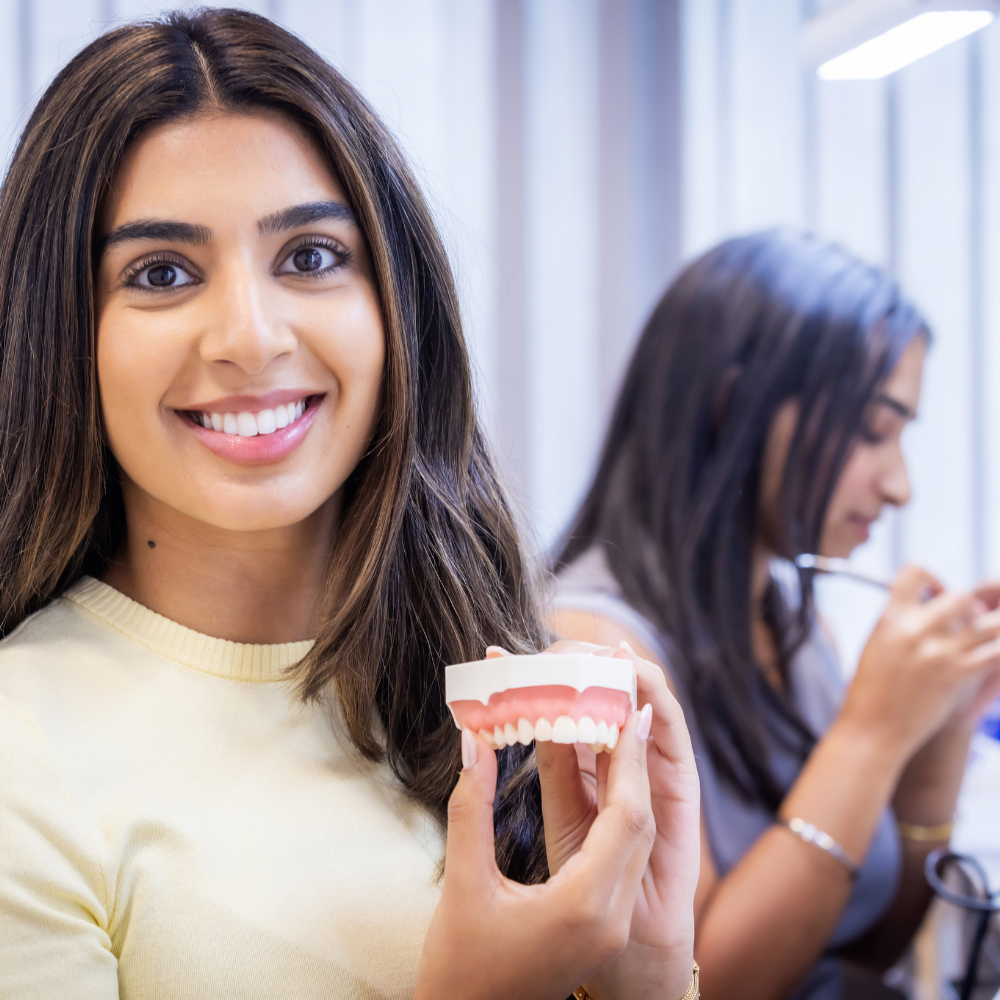

Dr Mariam Ahmed, one of the successful candidates in the 2026 CGDent-GC Award, reflects on entering the competition and what she gained from the experience.
More than a competition: The award explained
The CGDent-GC award was founded by the Tom Bereznicki Charitable Educational Foundation in conjunction with the College of General Dentistry and GC. The award requires entrants to submit a clinical case report involving at least one anterior tooth restored with composite, with winning entrants each being awarded a fully funded place on a two day composite layering course in Belgium.

Entering the award is an easy process, with guidance documents available on the College website providing everything an entrant could need, from examples of acceptable photography to advice on compiling a written case report. As well as this, a dedicated email address is available for further enquiries with helpful staff on the receiving end to provide support. After gaining consent to enter the award from your patient, educational supervisor, and preferably your training programme director, it’s time to take and submit pre-op photos following which suitable cases will be accepted. Then once the case has been completed, submit your post-op photos and final report, and patiently wait to hear if you are one of the successful candidates. There is also a window of opportunity to change your case should you identify a more suitable case later on.
Inside my winning entry
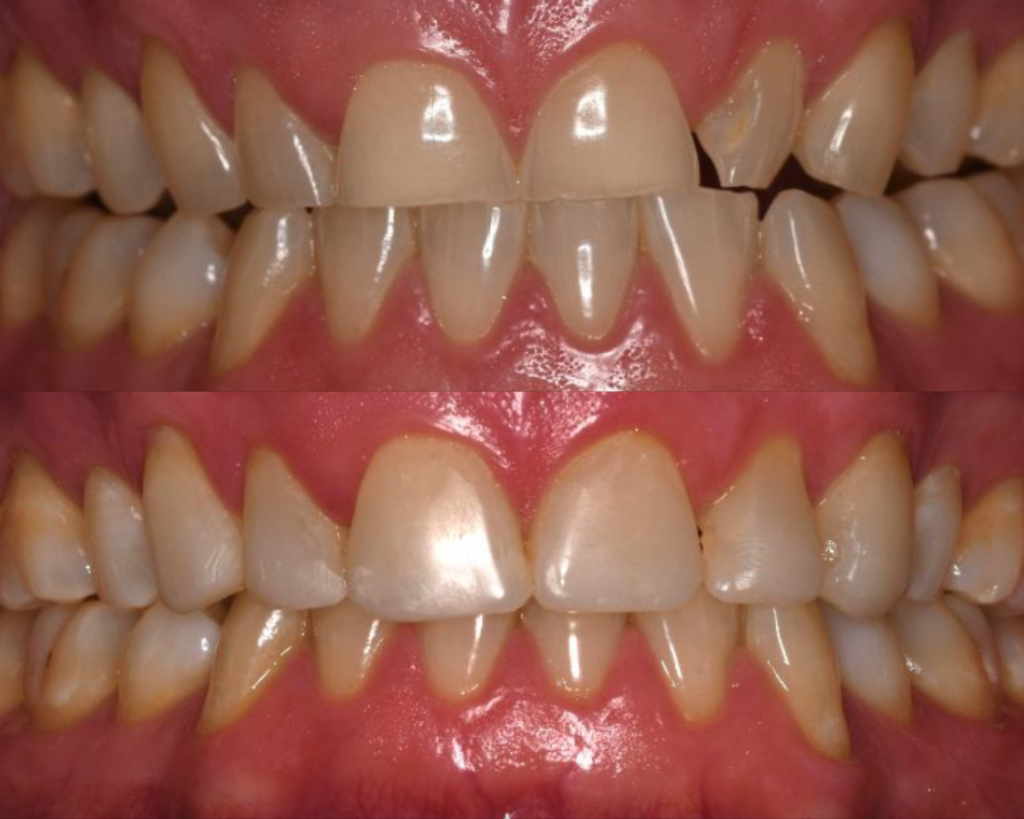
After hearing about the award on social media during my final year of dental school, I was keen and ready to enter as soon as I identified a suitable case. As I am undertaking joint dental foundation and core training, my case was carried out in the Dental Hospital Restorative department and involved six anterior composite build ups to manage tooth surface loss aided by a diagnostic wax up. The timeline of the award is extremely manageable. I entered the award in September 2025, submitted my report in February 2026, and was proud to have been selected as a winner in May 2026.
Belgium unwrapped
Home to the GC European campus (and plenty of chocolate), winning entrants travelled to and stayed together in Leuven, a university city just east of Brussels. With a whole host of restaurants and ice cream parlours lining the cobbled streets, entrants had plenty of time to get to know each other on arrival to the city and throughout the evenings, before returning to the hotel to wind down over games of cards and pool. It was rewarding to meet likeminded foundation trainees from across the country and share our experiences so far, as well as our future ambitions. A highlight for many from this trip was our final night in Belgium during which we joined the CGDent and GC team for a celebratory dinner before finishing the night enjoying Leuven’s annual open air summer music festival.

Layering composite and learning new skills: The course
The course itself was split over two days and led by Dr Simone Moretto, GC’s training manager. The campus was well equipped with a comfortable café, spacious seminar rooms and an advanced clinical skills unit. The first day involved a lecture on colour theory, bevelling, and material selection before moving onto phantom models and working in tandem with Dr Moretto to restore a class IV cavity on a central incisor using a layered technique. The second day involved further clinical practice to restore a discoloured lateral incisor using a direct composite veneer, and multiple class II cavities using various approaches such as a cusp by cusp, injection moulding, and stamp technique. Emphasis was placed on recreating anatomical details, utilising new instruments and materials appropriately, implementing a step wise polishing protocol to achieve life like results. Over both days, Dr Moretto was on hand to critically appraise our work under the microscope and provide personalised feedback and demonstrations.

The course helped me develop an understanding of how small anatomical details can significantly improve the aesthetics of the final restoration. I gained practical experience in creating a natural emergence profile and contact point using anterior sectional matrices which I found provided me with a consistent outcome as opposed to the traditional mylar strip I previously used with difficulty. I began learning how to layer enamel and dentine shades in order to highlight anatomical features such as mamelons to create a more lifelike result. I also had the opportunity to learn about polishing protocols and how altering the direction and speed of my polishing discs could better enhance surface anatomical details such as perikymata whilst still achieving a gloss finish.
The pace of the course encouraged precision, and with the help of further tutorials and regular feedback from my educational supervisor, I have begun to consolidate my knowledge and implement these skills in practice.
Thinking of entering? My top tips
Photos are key
The advice I would give future entrants is to take photos of everything! Clinical photography is an invaluable skill to develop early in your career. Photos are essential in completing milestone cases and case based discussions which is a requirement of successful completion of foundation training, but are also invaluable for reflection and self-improvement, building a portfolio to aid future employment, to gain second opinions and make referrals, and in educating and motivating patients.
Picking up a camera can be daunting, especially early in your career when you have so much else to focus on, but confidence comes with practice. Take notes during your photography study day, request further practice in a tutorial with your educational supervisor, and practice on your colleagues during cancellations!
Advice from colleagues
The second piece of advice I would give future entrants is to discuss cases with colleagues! Make use of the experience your senior colleagues have and ask how they would approach the case, what materials and instruments they would use, what problems they think you could encounter, and how to overcome these. Before beginning my case I presented the pre-op photos to my educational supervisor in practice and a Restorative consultant in hospital and asked all of the above which made me feel much more prepared to manage my case. Discussing with colleagues also reminded me that dentistry is dynamic, there is rarely one right answer to a problem and the best way to learn is by trial and error until you find out which techniques work in your hands.
The power of reflection
The third and final piece of advice I would give future entrants is to not rush your reflection. It’s easy to become tunnel visioned when focusing on minute details for an extended period of time. Step back from the case and revisit it with a fresh set of eyes, whether that be reviewing post-op photos or the patient themselves sometime after completing the case. I have found that my best reflection often comes weeks after completing a case, particularly if I have observed or carried out a similar style treatment since then. I am lucky to work alongside a large team of trainees and specialists in Restorative Dentistry in hospital, and I asked one of my supervising consultants to provide feedback on my winning case. They kindly agreed and when the patient returned for review, they carefully inspected my composite work from aesthetics to function and enquired about my technique, giving me much to reflect on when compiling my final report.

I am a firm believer that every day is a learning opportunity if you are willing to look for it. Implementing the above three pieces of advice will help any foundation dentist or therapist begin their journey of development from trainee to trusted clinician.