Career Pathways will support all dental professionals

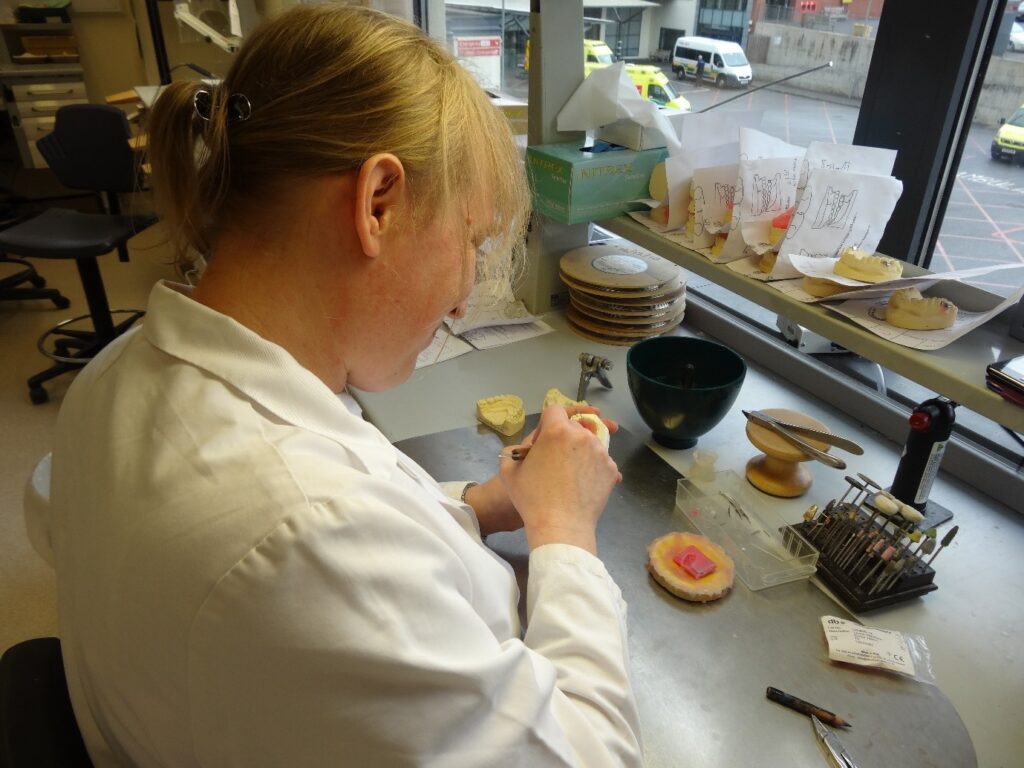
A member of the College’s Career Pathway Reference Group and Advisory Strategy Group, orthodontic & maxillofacial laboratory manager, Andrea Johnson, explains how the College of General Dentistry will benefit and support every member of the dental team.

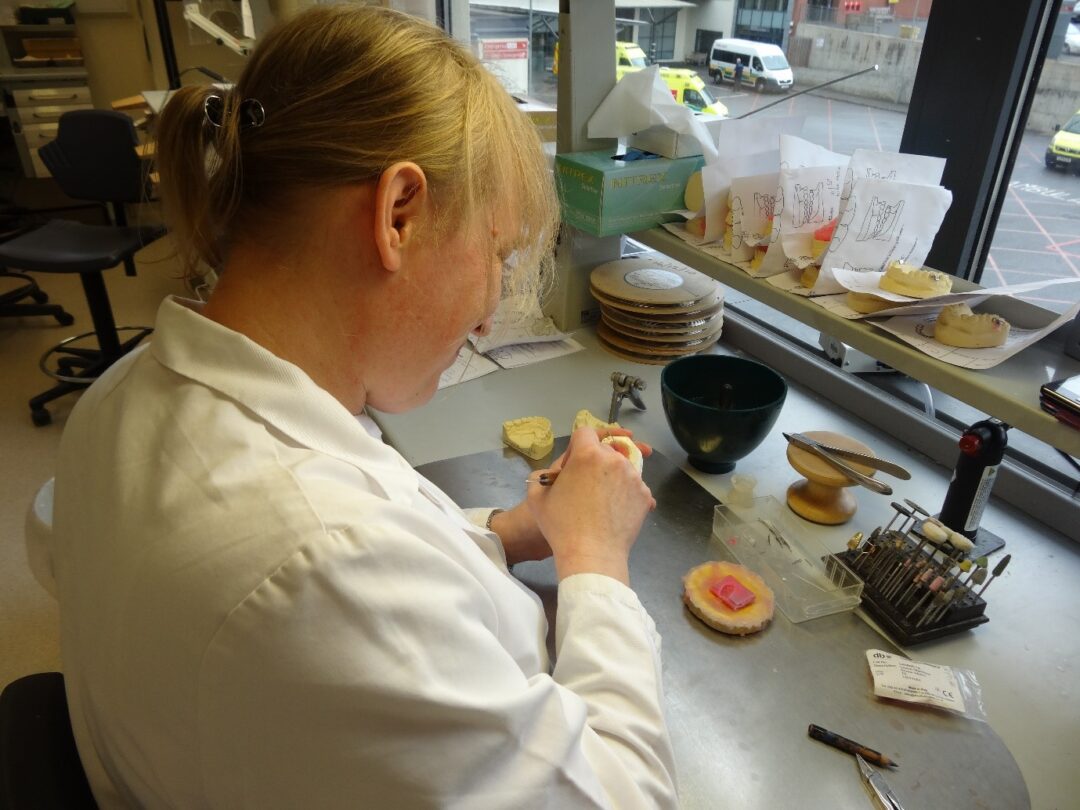
Who am I? That is a good question, I am currently a highly specialised orthodontic technician, orthodontic & OMFS laboratory manager, deputy clinical governance lead, quality improvement coach, chair/founder of registered charity Den-Tech, editorial board member of the Dental Technician magazine, advisory & reference group member of CGDent and a part time masters student. I have previously served as a STEM ambassador, Chair of the OTA, a DTA council member, have taught dental technology in various education establishments, I lecture both nationally and internationally at conferences and events and generally get involved in trying to further and support my profession wherever and whenever I can.

Is this who I have always been? No. I actually retrained into dental technology in my early 30’s. I must admit that it was a little scary in some respects going back to being a student and knowing I would be one of the eldest in the cohort. However, I needn’t have feared because I was welcomed with open arms and treated as just one of the group. Having said that, I did end up mothering them all to some degree!

My career in dental technology has been relatively straight forward. I started out in a small private denture laboratory and then after a couple of years moved into the hospital service, training further in orthodontic technology, and have not looked back since. I didn’t realise at the time just how much I would enjoy the challenges I would face in the field of orthodontics, especially the more complex patient cases we see in the hospital service.

When I started at my first hospital-based post, my then manager insisted that I become a member of the Orthodontic Technicians Association (OTA) and attend their annual conference. He realised the value of contact with fellow technicians from other labs and the networking opportunities these events provide. Little did I know at that time where that would lead, but I am very grateful for the nudge, because after only two years as a member I was approached by the then chair of the OTA and was asked to present at their conference and subsequently to sit on the council. Ultimately, I spent over 8 years on the council serving in a variety of roles including the OTA’s first female chairperson.

My time with the OTA gave me the opportunity to engage with professionals and regulators from across dentistry in a variety of settings, but the common theme I always noticed was the inequalities in the opportunities and engagement offered to our various groups within dentistry and the outdated hierarchy clearly still very present.

Throughout my working life, I have found that the only truly positive and productive way forward is through a strong team-working ethic, resulting in effective output and higher levels of job satisfaction for all team members.

These are the reasons that I was very excited and honoured to be approached to work with the newly-forming College of General Dentistry, to be given the opportunity to work with like-minded, professionals from across dentistry and help define the dental college of the future that we all want and most definitely need.

A college that will treat every member of the team as an equal, that will recognise the incredibly important role that each and everyone of us plays in achieving the very best in patient care and outcomes.

So how will this be achieved? One of the key and very exciting steps is the evolution of the College’s Career Pathways for each of the dental groups. The Career Pathways are being designed with parity, between all dental team groups, with equivalent progression, recognised associated post nominals and membership status regardless of our role within the profession. It will be our experience, skill, ability, training and education that will determine our position and standing within the College, allowing all to stand proudly shoulder to shoulder with our peers.

We have a very dedicated group of representatives from across the profession working on these pathways and they are looking fantastic already. Although there will still be some tweaking needed to complete the pathways after the College has launched, they will be integral to the College membership structure, with regular reviewing to ensure they remain relevant for all the years ahead.

In short, I have real belief and faith in what the College is determined to achieve, and although I have outlined only a tiny part of what will be a clearly defined membership structure for the full dental team, I urge you all, in the strongest possible way, to join the College and be proud to be part of something amazing.

You may also be interested in reading blogs from Dr Heather Mitchell special care community dentist, and Professor Avijit Banerjee, Chair in Cariology & Operative Dentistry at Guy’s, who are both part of the Career Pathways development team.

Professor Avijit Banerjee’s career path

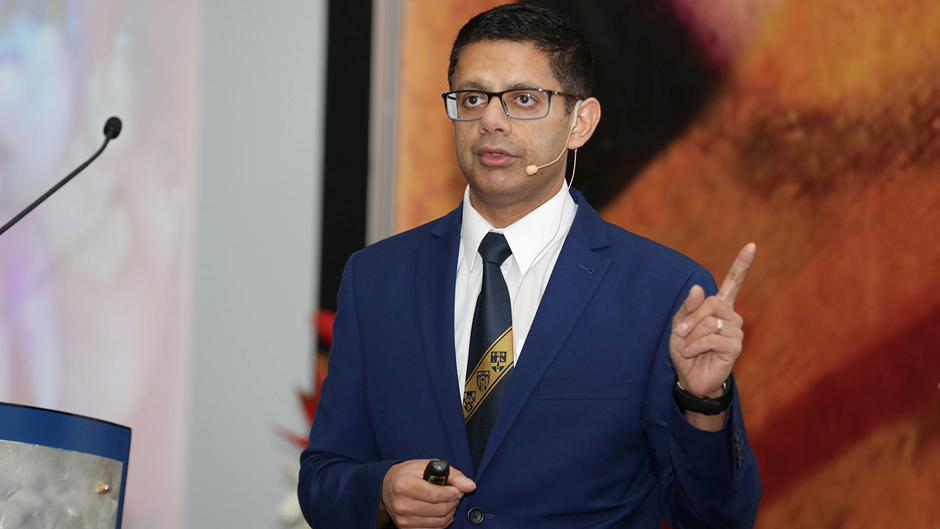
Professor Avijit Banerjee sits on the College’s Career Pathway Reference Group. We asked him to share his own career path with us and set out how CGDent’s Career Pathways will benefit dentistry and the wider oral healthcare profession in the UK.

My personal career pathway

After qualifying as a dentist from Guy’s in 1993, I wanted to train as a specialist clinician, teach and carry out dental research. Thirty years ago, such formal career pathways were more varied, with no real roadmap available detailing what experience was required or what qualifications were needed etc etc. Thus, I forged my complex personalised career pathway in clinical academia by gaining advice and mentorship from key individuals in my career.

The first stage started with what was then called “house jobs” in Queen Alexandra Hospital, Portsmouth in Oral & Maxillofacial Surgery followed by an18-month rotation at Mount Vernon, Hillingdon and Watford General Hospitals. I learned / osmosed so many surgical skills and patient management skills, working with hospital and primary care teams and making lifelong friends along the way. During these latter senior house officer (SHO) posts, I completed my primary and final FDS RCS (Eng), which in those days had a pass rate of only 10%!

It was at this stage, I started to look at my research career in more depth. After carrying out scientific research as a dental undergraduate and publishing my first research paper the year I qualified, I was bitten by the bug and wished to pursue this aspect of my career by studying for a PhD. So, whilst an SHO, I collaborated with my supervisors back at Guy’s and applied for a Medical Research Council Clinical Training Fellowship which would cover my 3 yr salary and costs for my PhD. I was extremely fortunate to win this national award (at that time only two other dentists had been awarded this prestigious MRC Fellowship in the past 30 yrs).

Between the years of 1995-98 I carried out my research full-time at Guy’s, which also included a masters in the first year, at UCL. I was acutely aware of the importance of maintaining wet-fingered clinical practice, so I also got a part-time job in primary care general dental practice, working two sessions/week, evenings and weekends. Forging such a career path involves much ball juggling and during this period, I became adept at this!

After finishing my PhD (in Cariology and Operative Dentistry), I was lucky enough to get a full-time substantive clinical lecturer’s position in Guy’s, in Conservative Dentistry. This role allowed me to develop my teaching, research and management/leadership skills. During the next 7 yrs, I completed my clinical specialist training in Restorative Dentistry, continued with my research (supervising masters and doctorate students, writing grants and papers, and lecturing at international conferences) and developed my teaching and management skills, leading clinical teachers and UG students.

From 2005, I was promoted with seniority, firstly to senior lecturer and ultimately, 10 yrs ago, to a personal Chair at Guy’s with an Honorary NHS Consultant contract with Guy’s & St. Thomas’ Hospitals Trust. I am now privileged to hold several senior national roles within the profession and have an international lecturing/research reputation in my discipline.

All this time, I have continued to work in private practice, reduced now to two sessions/month. It is always wise in my opinion, not to close off any opportunities during one’s career progression as you never know how things will transpire. It is the variety of experiences that develop and enrich one’s career until the day you retire.

The need for career pathways

I have learned a lot about myself (and others) during my career. Although hard work, but fulfilling, there was much left to chance and the support I received was welcome but hard-sought. The processes in those days were less transparent perhaps, but equally competitive as they are now.

The world has changed.

Therefore, the processes available to encourage, enhance and enrich career progression must also evolve.

The traditional qualification-based linear progression through one’s chosen discipline needs to be questioned with regards to its value, appropriateness and modern-day inclusivity. A more holistic, depth and breadth of quality of experience-based approach will empower individuals to take control of their training and allow inter-disciplinary cross-over.

The College of General Dentistry Career Pathway Reference Group was created with the remit to help develop and guide this structure and ultimately its implementation. We are collating the results from the working groups convened for each oral healthcare team member career pathway. The working groups consist of expert influencers within the specific professional stakeholder groups, including dental nurses, clinical dental technicians, orthodontic technicians, hygienists, dental therapists and dentists.

The Reference Group wisely has representation from all oral healthcare team members, accepting that “one size does not necessarily fit all” when considering career progression milestones. The CGDent challenge will be assessing, quality assuring and validating the huge variety of holistic evidence that could be attained for each of the seven oral healthcare clinical career pathways, to provide and align milestones to allow progression of team members from safe beginners to accomplished practitioners throughout their career.

This is a huge project with hugely positive implications for the oral and dental profession as a whole. Inclusivity of team roles, the appreciation of different forms of training and how it affects the individual, adaptation and quality assurance are all challenges to overcome, to allow a flexible, career-enabled and inclusive workforce to develop and deliver better oral health to our nation.

You may also be interested in reading blogs from Andrea Johnson, orthodontic & maxillofacial laboratory manager, and Dr Heather Mitchell community dentist, who are both part of the Career Pathways development team.