The College has expressed its support for the General Dental Council’s intention to replace Standards for the Dental Team with a new Framework for Professionalism.
Responding to the regulator’s consultation on the proposed change, which closed last week, the College endorsed the ambition to move away from an approach founded primarily on detailed rules and prescribed behaviours to a principles-based framework, which it says, “has the potential to provide greater flexibility, enabling registrants to exercise appropriate judgement in complex and varied situations.”
However, the College acknowledges that this would be a significant culture change, placing new expectations of agency and responsibility on the practitioner, and that at present many registrants derive confidence from understanding precisely where boundaries lie, particularly when faced with difficult professional or ethical decisions. It is therefore calling for the profession, which “[may not] trust those standing in judgement of their practice”, to be adequately supported in applying broad principles to real-world situations, and equipped to interpret and apply these principles consistently and confidently.
The College’s response encourages the GDC to ensure that the framework will be relevant and meaningful to every part of the registered workforce, regardless of professional title, role or practice setting, and says that the transition to a more principles-based approach will be most successful when accompanied by appropriate support that builds confidence, encourages reflection and promotes consistent understanding across the profession.
The College also says that it stands ready to play a strategic role in this respect, helping to bridge the gap between high-level principles and practical decision-making through the provision of guidance, education, professional development, reflective learning and the sharing of good practice.
Details of the GDC’s proposals are available in its consultation document. The College’s response is available here.
The 2026 College of General Dentistry Lecture will now take place on Thursday 12 November.
Dr Catherine Rutland FCGDentwill deliver the 2026 College Lecture
The Ethical Shield: Protecting enamel, professional integrity and patient smiles, to be delivered by Dr Catherine Rutland FCGDent, will explore how dental professionals can continuously integrate ethical values into their working lives in order to provide patients with assurance and confidence in the care they receive.
Originally scheduled to take place on 25 June, the lecture was postponed following the issuing of a red heat health alert by the UK Health Security Agency, with transport firms advising against non-essential travel.
Marking the fifth anniversary of the College, it will be the second annual College Lecture, and will build on both Martin Kelleher’s inaugural College Lecture, Satisficing standards in dentistry, and on the rich legacy of Malcolm Pendlebury Lectures previously hosted by the Faculty of General Dental Practice UK (FGDP).
Dr Rutland is Head of Clinical and Policy at Dentaid, representing the dental charity across the profession and engaging with MPs, public health teams and commissioners. She is also a Board Member of Dental Protection, which indemnifies and supports 70,000 dental professionals worldwide, and a Non-Executive Director and Council Member of the Medical Protection Society, which has a further 245,000 medical professional members in 40 countries. Part of the General Dental Council’s Dental Leadership Network, she is a Trustee of the Dentists’ Health Support Trust, which supports dentists facing mental health and addiction challenges, and was appointed a Trustee of the College of General Dentistry earlier this year. She was previously Director of Policy and Clinical Affairs at the Association of Dental Groups, whose members work with over 22,000 registered dental professionals in treating over 10 million dental patients, and Clinical Director at Simplyhealth, including Denplan, where she chaired both the Clinical Governance Committee and the Denplan Excel Board.
After qualifying as a dentist in 1992 from the University of Leeds, where she achieved a Distinction in oral surgery, she spent two and a half years in secondary care as a House Officer in Leeds and Senior House Officer in Newcastle before moving into general dental practice. She completed Vocational Training in Sunderland and spent a year there as an associate GDP before practising in Reading for three years. From 2000-2019, she was Principal Dental Surgeon and a joint partner at a private dental practice in Thatcham, West Berkshire. She joined Denplan as a Dental Advisor in 2010, and was later promoted to Senior Dental Advisor, Head of Professional Support Services and Head Dental Officer before working there full-time from 2019. In 2013, she completed a Master’s degree in Medical Ethics and Law at King’s College London, writing her dissertation on whether both professional integrity and patient autonomy can be satisfied in fulfilling patients’ cosmetic dental desires. She became a Certified Member of the Institute of Risk Management in 2015 and was awarded a Chartered Management Institute Level 7 Certificate in Leadership Mentoring and Coaching in 2016. She became a Fellow of the College in 2023, and in 2024 was a keynote speaker at the CGDent Scotland Annual Study Day, the College’s largest annual CPD event, lecturing on ethical and legal considerations in the provision of aesthetic and cosmetic dental procedures.
The lecture will take place at 3pm at Regent’s University in London.
All dental professionals, and others with professional interests in contemporary dental practice, are eligible to attend, with discounted places for College members. Early bird rates apply for all attendees throughout September.
Those previously registered for the lecture in June have the option to either transfer their ticket or request a refund by emailing [email protected]
The College has announced that Catherine Rutland FCGDent will be delivering the 2026 College Lecture.
The Ethical Shield: Protecting enamel, professional integrity and patient smiles will explore how dental professionals can continuously integrate ethical values into their working lives in order to provide patients with assurance and confidence in the care they receive.
This will be the second annual College Lecture, and will build on both Martin Kelleher’s inaugural College Lecture, Satisficing standards in dentistry, and on the rich legacy of Malcolm Pendlebury Lectures previously hosted by the Faculty of General Dental Practice UK (FGDP).
Dr Rutland is Head of Clinical and Policy at Dentaid, representing the dental charity across the profession and engaging with MPs, public health teams and commissioners. She is also a Board Member of Dental Protection, which indemnifies and supports 70,000 dental professionals worldwide, and a Non-Executive Director and Council Member of the Medical Protection Society, which has a further 245,000 medical professional members in 40 countries. Part of the General Dental Council’s Dental Leadership Network, she is a Trustee of the Dentists’ Health Support Trust, which supports dentists facing mental health and addiction challenges, and was appointed a Trustee of the College of General Dentistry in 2026. She was previously Director of Policy and Clinical Affairs at the Association of Dental Groups, whose members work with over 22,000 registered dental professionals in treating over 10 million dental patients, and Clinical Director at Simplyhealth, including Denplan, where she chaired both the Clinical Governance Committee and the Denplan Excel Board.
After qualifying as a dentist in 1992 from the University of Leeds, where she achieved a Distinction in oral surgery, she spent two and a half years in secondary care as a House Officer in Leeds and Senior House Officer in Newcastle before moving into general dental practice. She completed Vocational Training in Sunderland and spent a year there as an associate GDP before practising in Reading for three years. From 2000-2019, she was Principal Dental Surgeon and a joint partner at a private dental practice in Thatcham, West Berkshire. She joined Denplan as a Dental Advisor in 2010, and was later promoted to Senior Dental Advisor, Head of Professional Support Services and Head Dental Officer before working there full-time from 2019. In 2013, she completed a Master’s degree in Medical Ethics and Law at King’s College London, writing her dissertation on whether both professional integrity and patient autonomy can be satisfied in fulfilling patients’ cosmetic dental desires. She became a Certified Member of the Institute of Risk Management in 2015 and was awarded a Chartered Management Institute Level 7 Certificate in Leadership Mentoring and Coaching in 2016. She became a Fellow of the College in 2023, and in 2024 was a keynote speaker at the CGDent Scotland Annual Study Day, the College’s largest annual CPD event, lecturing on ethical and legal considerations in the provision of aesthetic and cosmetic dental procedures.
The College of General Dentistry Lecture 2026 will take place at 3pm on Thursday 25 June in the historic Cutlers’ Hall in London, and is the centrepiece of the Summer Day programme of events marking the College’s fifth anniversary. The other Summer Day events include the Fellows’ Summer Reception, the inaugural Academic Court Convention, and a lunch for retired members.
All dental professionals, and others with professional interests in contemporary dental practice, are eligible to attend the 2026 College Lecture. Discounted places are available to College members.
Thirty million deaths directly related to antimicrobial resistance (AMR) are expected globally in the period between 2025 and 2050, with an annual mortality rate by 2050 (8.2 million) approaching that of cancer (9.7 million).
The more we use antimicrobial agents, the more AMR is expected to develop. This is leading humanity to face a situation similar to the era before the discovery of antimicrobials, when it was not possible to treat even simple infections.
Dentists prescribe approximately 10% of antimicrobials in the UK and Ireland, and there is evidence of increasing rates of reported resistance to many antimicrobials in head and neck infections. It is important that the dental community acts now in response to this global health threat. Appreciating the requirement for system-level changes to facilitate the provision of best evidence practice, we need to take the lead and protect antimicrobial use to cases when it is justified based on evidence. This could be guided by the available resources in three major national platforms:
This year, the United Nations focus has been on non-communicable disease such as cancer, and diabetes. People with these conditions are susceptible to rapidly advancing infection.
Dr Wendy Thompson, the College’s AMR Lead, explained:
“Prevention is better than cure. Preventing non-communicable diseases, such as dental infection, reduces antimicrobial use and must be a global priority to secure our future. That is why, in New York for the 80th session of the UN General Assembly earlier this year, I emphasised that universal access to oral healthcare is an essential element of efforts to keep antibiotics working.”
World AMR Awareness Week, commemorated annually from 18 to 24 November, is a global campaign to raise awareness and increase understanding of AMR and to promote global action to tackle the emergency and spread of drug-resistance pathogens.
Twenty-three national dental organisations have come together to support the WAAW 2025 theme ‘Act Now: Protect Our Present, Secure Our Future’:
Association of Clinical Oral Microbiologists (ACOM)
Association of Dental Groups (ADG)
Association of Dental Hospitals (ADH)
British and Irish Society for Oral Medicine (BISOM)
British Association for the Study of Community Dentistry (BASCD)
British Association of Dental Nurses (BADN)
British Association of Dental Therapists (BADT)
British Association of Oral Surgeons (BAOS)
British Association of Private Dentistry (BAPD)
British Dental Association (BDA)
British Endodontic Society (BES)
British Society for Antimicrobial Chemotherapy (BSAC)
British Society of Dental Hygiene and Therapy (BSDHT)
British Society of Paediatric Dentistry (BSPD)
British Society of Periodontology and Implant Dentistry (BSP)
College of General Dentistry (CGDent)
Dental Schools Council (DSC)
Faculty of Dental Surgery of the Royal College of Physicians and Surgeons of Glasgow (RCPSG)
Faculty of Dental Surgery of the Royal College of Surgeons of Edinburgh (RCSEd)
Faculty of Dental Surgery of the Royal College of Surgeons of England (FDS)
Oral Health Foundation
Scottish Antimicrobial Prescribing Group (SAPG)
Society of British Dental Nurses (SBDN)
Dr Noha Seoudi of the Association of Clinical Oral Microbiologists, who co-ordinated this year’s statement, said:
“Working together is key to improving knowledge and raising awareness of AMR.”
Regents University, Inner Circle, Regents Park, London NW1 4NS
The 2026 College of General Dentistry Lecture will be delivered by Dr Catherine Rutland FCGDent.
The Ethical Shield: Protecting enamel, professional integrity and patient smiles will explore how dental professionals can continuously integrate ethical values into their working lives in order to provide patients with assurance and confidence in the care they receive.
This will be the second annual College Lecture, and will build on both Martin Kelleher’s inaugural College Lecture, Satisficing standards in dentistry, and on the rich legacy of Malcolm Pendlebury Lectures previously hosted by the Faculty of General Dental Practice UK (FGDP).
The College Lecture will be accompanied by the launch of the College’s Charter campaign, marking our fifth anniversary.
Catherine Rutland is Head of Clinical and Policy at Dentaid, representing the dental charity across the profession and engaging with MPs, public health teams and commissioners. She is also a Board Member of Dental Protection, which indemnifies and supports 70,000 dental professionals worldwide, and a Non-Executive Director and Council Member of the Medical Protection Society, which has a further 245,000 medical professional members in 40 countries. Part of the General Dental Council’s Dental Leadership Network, she is a Trustee of the Dentists’ Health Support Trust, which supports dentists facing mental health and addiction challenges, and was appointed a Trustee of the College of General Dentistry in 2026. She was previously Director of Policy and Clinical Affairs at the Association of Dental Groups, whose members work with over 22,000 registered dental professionals in treating over 10 million dental patients, and Clinical Director at Simplyhealth, including Denplan, where she chaired both the Clinical Governance Committee and the Denplan Excel Board.
After qualifying as a dentist in 1992 from the University of Leeds, where she achieved a Distinction in oral surgery, she spent two and a half years in secondary care as a House Officer in Leeds and Senior House Officer in Newcastle before moving into general dental practice. She completed Vocational Training in Sunderland and spent a year there as an associate GDP before practising in Reading for three years. From 2000-2019, she was Principal Dental Surgeon and a joint partner at a private dental practice in Thatcham, West Berkshire. She joined Denplan as a Dental Advisor in 2010, and was later promoted to Senior Dental Advisor, Head of Professional Support Services and Head Dental Officer before working there full-time from 2019. In 2013, she completed a Master’s degree in Medical Ethics and Law at King’s College London, writing her dissertation on whether both professional integrity and patient autonomy can be satisfied in fulfilling patients’ cosmetic dental desires. She became a Certified Member of the Institute of Risk Management in 2015 and was awarded a Chartered Management Institute Level 7 Certificate in Leadership Mentoring and Coaching in 2016. She became a Fellow of the College in 2023, and in 2024 was a keynote speaker at the CGDent Scotland Annual Study Day, the College’s largest annual CPD event, lecturing on ethical and legal considerations in the provision of aesthetic and cosmetic dental procedures.
Registration & fees
All dental professionals, and others with professional interests in contemporary dental practice, are eligible to attend, with discounted places available to College members. Early booking rates apply until 30 September.
College member – early booking
£30 £20
Non-member – early booking
£40 £30
BOOK NOW – To access the booking form, sign in or register a free College subscriber account and refresh this page.
*This lecture was originally scheduled to take place as part of the College Summer Day on 25 June 2026, however the day unfortunately had to be cancelled due to the UK Health Security Agency’s red heat-health alert.
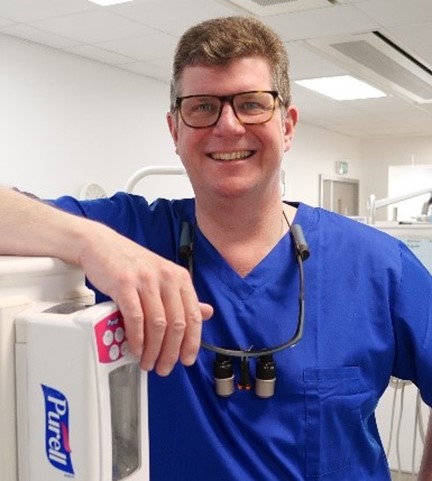
As members of the editorial team responsible for the recent revision of Standards in Dentistry, Professor Christopher Tredwin FCGDent, Dean of Queen Mary University of London Institute of Dentistry and Lorna Burns, Lecturer in evidence-based healthcare at the University of Plymouth, introduce the updated guidance.
Professor Christopher TredwinLorna Burns
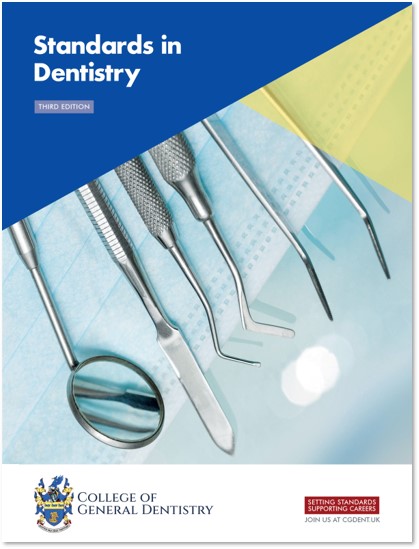
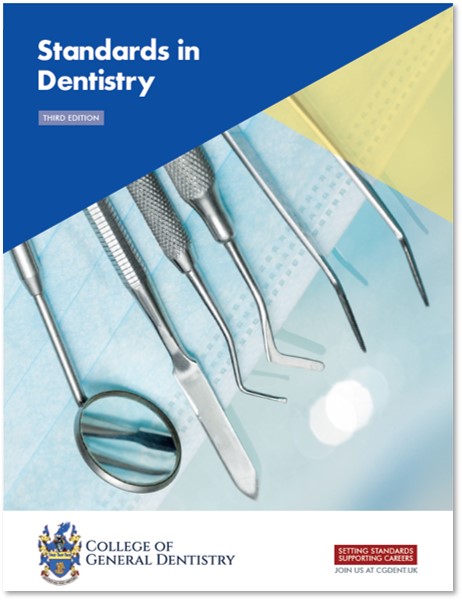
The third edition of Standards in Dentistry has been published and is now available to view online. Members of the College can also download and save it to their desktop or other devices.
The editorial team tasked with updating the guidance was led by Ewen McColl FCGDent, Professor of Clinical Dentistry and Head of Peninsula Dental School at the University of Plymouth, and included Chris Tredwin FCGDent, Professor of Restorative Dentistry, Dean and Director of Queen Mary University of London Institute of Dentistry; Robert Witton FCGDent, Professor of Community Dentistry at Peninsula Dental School and Chief Executive of Peninsula Dental Social Enterprise CIC; Lorna Burns, Information Specialist at Peninsula Dental School and lecturer in evidence-based healthcare at the University of Plymouth; and general dental practitioners Nicola Gore FCGDent and Susan Nelson MCGDent. The team also worked closely with Abhi Pal FCGDent, then President, now Immediate Past President of the College.
The fully revised edition incorporates new and updated guidelines and standards which are appropriate for the whole primary care dental team. It follows the structure of the previous two editions, and contains two main sections: summary tables of clinical standards, and lists of guidelines, arranged topically by area of care. The publication does not intend to imply that patients should receive identical care.
Guidelines provide recommendations for effective practice in the management of clinical conditions where variations in practice occur and where effective care may not be delivered uniformly.
Clinical standards are used to describe the specific elements of care that need to be correct in order to optimise the outcomes for patients. Standards must be unambiguous and measurable.
The clinical standards tables are presented as A: Aspirational, B: Basic and C: Conditional. The A,B,C clinical standards are process measures, not outcomes.
Aspirational – gold-level standards which are not essential
Basic – minimum standard necessary to ensure patient safety
Conditional – these recommendations only apply in particular situations
Clinicians can use the aspirational standards to improve their practice whilst ensuring that basic standards are met. However, clinicians must assess each clinical situation, the circumstances and the evidence available to them, and use their clinical judgement to settle on the course of action which is in the patient’s best interests. It is recommended that clinicians explain the choices to the patient, the reasons for recommending the chosen course of action and then seek the patient’s consent before clearly justifying the reasoning and recording the consent in the patient’s records.
The editorial team drew the summaries of clinical standards from multiple, authoritative sources of guidance for primary care dentistry. All of the summary tables have been reviewed and updated for this edition, and revisions were peer-reviewed in consultation with representatives from across the UK dental sector.
There are new summary tables for Digital Dentistry and Aesthetic Dentistry, reflecting changes in dental care. The newly incorporated standards for Digital Dentistry recognise that dental practices are at different stages of implementing full digital workflows. Therefore, the basic standards in this table refer to the legal necessities such as meeting GDPR requirements and maintaining secure electronic systems. However, in recognition that practices will be working towards the aspirational goal of full clinical digital workflow, there is also a basic standard for members of the dental team to develop the skills and knowledge to enable the transition.
The new standards for Aesthetic Dentistry are aligned with the legal position decided by the GDC in light of the High Court ruling in the case of GDC v Jamous. Tooth whitening treatment is the practice of dentistry and can only legally and safely be carried out by registered dental professionals. The basic standards for Aesthetic Dentistry highlight the importance of communications with patients, including discussion of risks and managing expectations. There is also clear emphasis on the responsibilities of the dental care professional to act within their scope of practice, competence and training.
The new 2025 edition of Standards in Dentistry is designed for the busy practitioner as a chairside guide which compiles guidelines from multiple bodies, covering all aspects of clinical care from diagnosis to treatment.
In updating this publication, the editorial team reviewed and updated summaries of the guidelines of more than twenty, mostly UK guideline-producing bodies such as the College of General Dentistry, Scottish Dental Clinical Effectiveness Programme, British Endodontic Society, British Orthodontic Society, British Society of Paediatric Dentistry, British Society of Periodontology and Implant Dentistry, and Royal College of Surgeons Faculty of Dental Surgery.
This comprehensive guidance for all members of the oral healthcare team, plays an essential role in maintaining standards of excellence within general dentistry, and supports practitioners to continue providing high standards of care to their patients.
The third edition of the Standards in Dentistry is available to view online. To gain access you must be signed in as a College Member or as a free College Subscriber. Members of the College can also download it to their devices as a PDF for personal use, giving access to search, text-select and print functionality.
The College has published the third edition of Standards in Dentistry, its comprehensive and free online manual bringing together standards and guidelines for primary care dentistry.
A compendium acting as a guide to personal or practice-based quality assessment, it sets out specific basic and aspirational standards covering 17 areas of practice.
Fifteen of these have been fully updated from the second edition to reflect changes to the evidence base and other contemporary contexts:
Consultation and diagnosis
Making and receiving referrals
Direct (plastic), coronal and root surface restorations
The standards are focussed on practitioner processes rather than treatment outcomes, and the book adopts the College’s ‘Aspirational’, ‘Basic’, ‘Conditional’ (ABC) notation for the grading of recommendations.
Standards in Dentistry also summarises over 100 standards, guidelines and advisory publications by the College and 50 other national and international bodies, and signposts to other relevant resources, organisations and legislation.
In addition to synopses of guidance covering the areas of practice listed above, summaries of 18 clinical and non-clinical fields from the second edition have been updated:
Clinical governance
Emergency dental care
Examination and record-keeping
Infection control
Medical emergencies
Medications management
Oral health
Pathology
Patient information
Practice management
Prevention
Radiography
Research governance
Restorative dentistry
Risk management & communication
Sedation
Special care dentistry
Staff training
Four brand new summaries have also been added, covering:
Antimicrobial prescribing and stewardship
Environmental sustainability
Equality, diversity and inclusion
Mental health and wellbeing
The first edition of Standards in Dentistry, published by the former Faculty of General Dental Practice (FGDP) in 2006, combined the functions of two previous FGDP publications, Self-Assessment Manual and Standards (SAMS) and Guidelines for Structure and Process in Dental Practice. The second edition was published in 2018, with the College making it available to the profession since it inherited the Faculty’s portfolio of guidance and standards publications in 2021.
The newly expanded third edition has been two years in the making, with over 1,000 comments received and considered during consultation processes with College Fellows and a wide range of national dental organisations. It is the College’s first comprehensive update of a flagship FGDP publication, and the first standards document to employ the College’s new branding following the recent grant of a Coat of Arms.
It was developed by an editorial team led by Professor Ewen McColl FCGDent (Head of Peninsula Dental School, Chair of the Dental Schools Council, Editorial Director of Dental Update and College Council member), which also included Professor Chris Tredwin FCGDent (Dean of Queen Mary University of London Dental School), Professor Robert Witton FCGDent (Professor of Community Dentistry, Peninsula Dental School), Lorna Burns (Information Specialist and Associate Head of Postgraduate Taught Programmes, Peninsula Dental School), Dr Nicola Gore FCGDent (general dental practice principal and College Council member) and Dr Susan Nelson MCGDent (general dental practitioner, implant dentist and College Council member).
For the benefit of the whole dental profession and all dental patients, the College has made Standards in Dentistry available to view free of charge.
College members can also download it to their devices as a PDF for personal use, giving access to search, text-select and print functionality.
Celebrating the publication of the new edition, Dr Roshni Karia MCGDent, President of the College, said:
“The provision of guidance and standards by dental professionals, for dental professionals, is central to the mission of the College, and Standards in Dentistry is an indispensable reference guide offering a comprehensive pool of information for all those working in general dental practice and primary dental care. Generations of oral healthcare professionals across the world have been supported by this and other publications of the former FGDP in their journey to provide effective clinical care and better outcomes for their patients, and the College will continue to provide this assistance for future generations. On behalf of the College, I would like to thank all the authors for their hard work, and the many College members and external consultees who gave their time to provide feedback and suggestions.”
All dental professionals and practices are encouraged to view Standards in Dentistry by visiting our Standards and Guidance page, where free access is also offered to the following publications:
Clinical Examination and Record-Keeping
Selection Criteria for Dental Radiography
Guidance Notes for Dental Practitioners on the Safe Use of X-Ray Equipment
Antimicrobial Prescribing in Dentistry
Training Standards in Implant Dentistry
Mentoring in Implant Dentistry
Dementia-Friendly Dentistry
An Introduction to Research for Primary Dental Care Clinicians
Implications of COVID-19 for the safe management of general dental practice
Users who are not members of the College will need to be logged into their College Subscriber account; new users can register for free at cgdent.uk/register-new
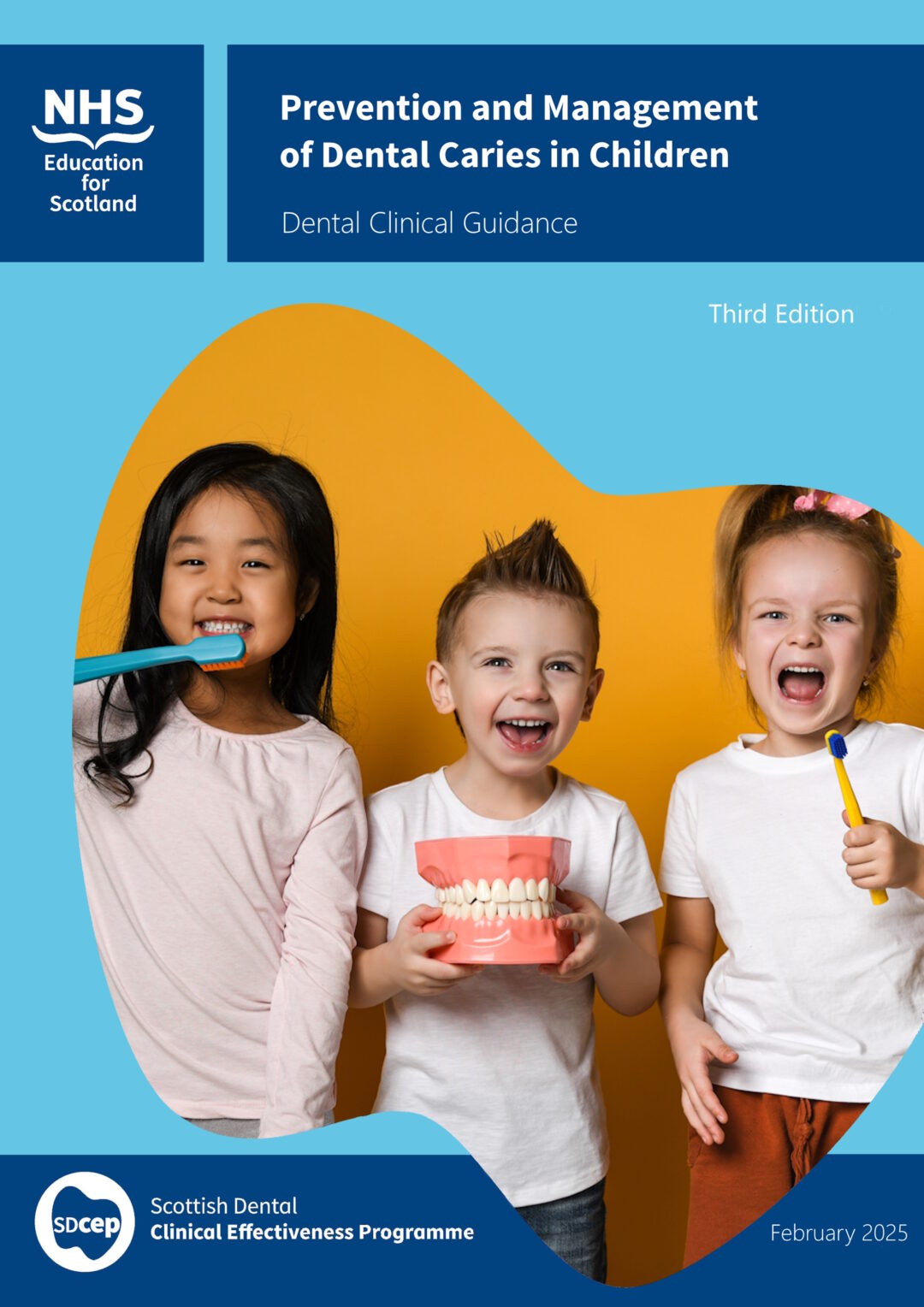
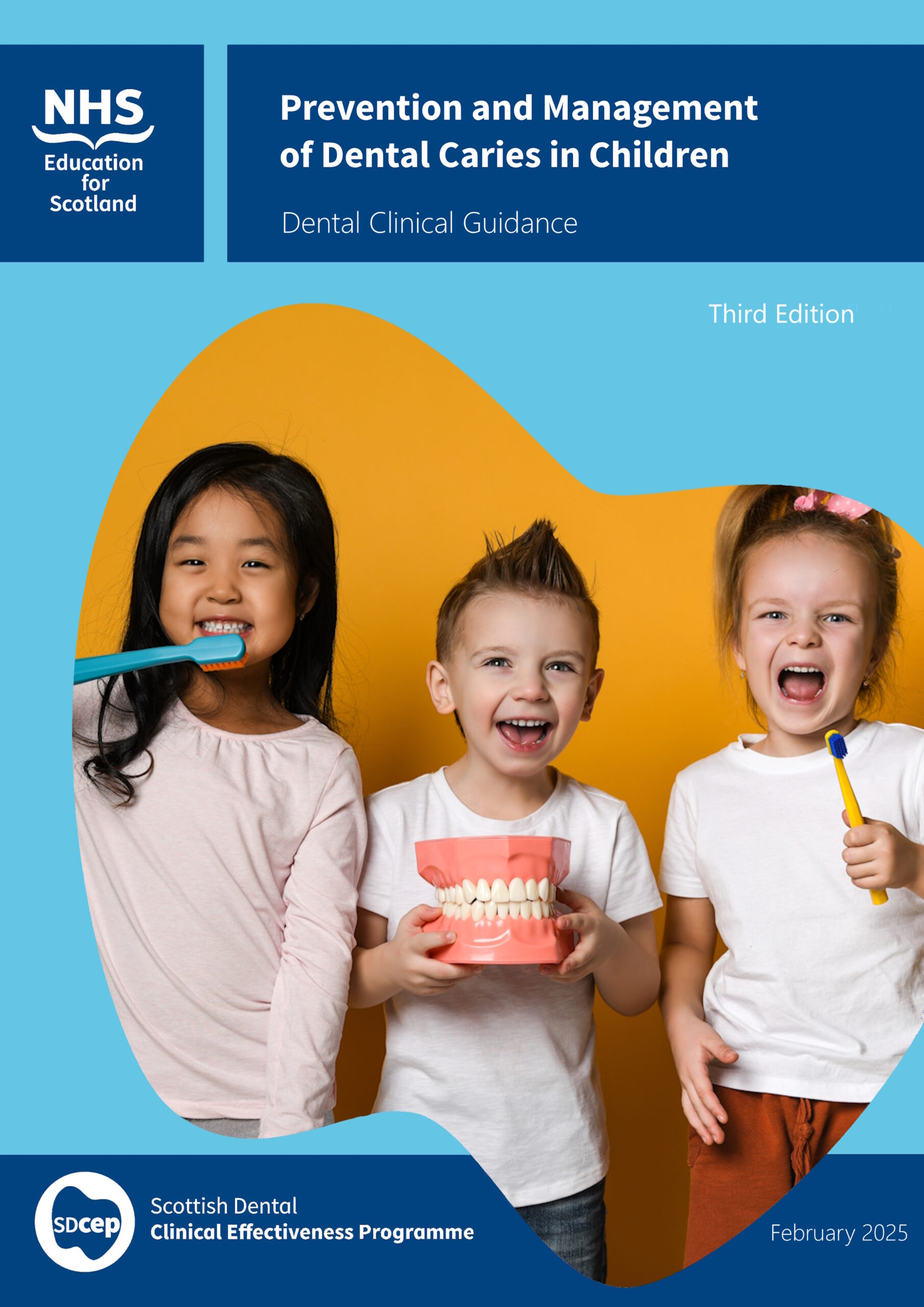
The College has endorsed newly updated guidance on preventing tooth decay in children from the Scottish Dental Clinical Effectiveness Programme (SDCEP).
The third edition of Prevention and Management of Dental Caries in Children, published this week, aims to support dental teams to improve and maintain the oral health of their younger patients through the delivery of preventive care and, where necessary, effective management of dental caries.
It also encourages shared decision-making, providing strategies for the dental team to support and empower children and young people (and their parents or carers) to take an active role in maintaining their oral health.
The guidance has been updated following a thorough review of the evidence, and after consultation with dental organisations including the College. While many parts remain unchanged, revisions since the second edition include amendment of the recommendation about preventive fissure sealants and wider application of vital pulp therapy in permanent teeth, with a new key recommendation about pulpotomy for treatment of pulpitis with irreversible symptoms.
The College has announced that Martin Kelleher FCGDent will be delivering the inaugural College Lecture on 13 June 2025.
‘Satisficing’ standards in dentistry: Who decides? Who benefits? will challenge the notion of the ‘ideal treatment plan’ and contend that subconscious bias and possible self-interests can lead some supposed experts to confuse their version of a questionable ‘gold standard’ with what is really in a patient’s overall best interests and with what the law expects.
Intended to stimulate and provoke healthy debate, the lecture will build on the rich legacy of the Malcolm Pendlebury Lectures hosted by the College’s predecessor organisation, the Faculty of General Dental Practice UK (FGDP).
Martin Kelleher has been a Consultant in Restorative Dentistry at King’s College Hospital, London since 1984 and has well- known interests in solving seemingly complex dental problems with various minimally destructive approaches. He is on the GDC specialist lists for Restorative Dentistry and Prosthodontics and owned his own practice in Bromley, Kent for nearly 40 years.
He is a Fellow of the Faculties of Dental Surgery at the Royal Colleges of Surgeons of Edinburgh and England, as well as the Royal College of Physicians and Surgeons of Glasgow. He is also a Fellow of the College of General Dentistry, a Fellow and former President of the British Society for Restorative Dentistry, and a former Chairman of the Southern Counties Branch of the British Dental Association.
Mr Kelleher graduated from University College Dublin in 1971, holds a Master’s degree in Conservative Dentistry and is the author or co-author of very numerous peer-reviewed articles on a wide variety of topics, as well as chapters in dental textbooks and a book on dental bleaching. He served on the board of Dental Protection for a decade, including three years as Chair of its Advisory Committee for Dental Claims. He is a renowned speaker, having lectured to many national dental associations and specialist societies as well as internationally for over 40 years.
The inaugural College of General Dentistry Lecture will take place in the historic Cutlers’ Hall in Sheffield, and will be followed by the College’s Summer Reception. CPD certificates will be provided.
All dental professionals, and others with professional interests in contemporary dental practice, are eligible to attend both events. Discounted places are available to College members.
To secure your place at current ‘Early Bird’ rates, click the button below:
Candidates awaiting conferral of awards by the former FGDP(UK) at a Diplomates’ Day
The Court Room, Cutlers’ Hall, Warwick Lane, London EC4M 7BR
This event celebrated the significant contribution of the former Faculty of General Dental Practice UK (FGDP) to raising the quality of education and practice in implant dentistry through its publication of Training Standards in Implant Dentistry and its renowned Diploma in Implant Dentistry programme.
Led by Dr Abhi Pal FCGDent, it also highlighted the College’s inheritance and continuance of these ambitions through the publication of guidelines on mentoring in implant dentistry and dedicated journal issues, an update of Training Standards in Implant Dentistry, the launch of the Register of Mentors in Implant Dentistry and plans to introduce the validation of quality postgraduate courses.
Dr Pal also outlined the emerging Career Pathway for Implant Dentistry – a progression from new practitioner in the field to Associate Fellowship by Portfolio, Certified Practitioner in Implant Dentistry and ultimately Recognised Mentor – through which implant dentists can develop their careers and gain recognition for the skills, knowledge and experience acquired at each stage.
Dr Pal is Principal of The University Dental and Implant Centre in Birmingham, editor of Training Standards in Implant Dentistry, co-editor of Mentoring in Implant Dentistry: Good Practice Guidelines, Immediate Past President of the College and a member of its Career Pathways Reference Group.
All dental professionals were welcomed to attend
Registering as a College Subscriber is free of charge and ensures you’ll be kept up to date through our regular newsletter. It also gives viewing access to our Standards & Guidance publications. Register via the button below:
We use cookies on our website to give you the most relevant experience by remembering your preferences and repeat visits. By clicking “Accept”, you consent to the use of ALL the cookies.
This website uses cookies to improve your experience while you navigate through the website. Out of these, the cookies that are categorized as necessary are stored on your browser as they are essential for the working of basic functionalities of the website. We also use third-party cookies that help us analyze and understand how you use this website. These cookies will be stored in your browser only with your consent. You also have the option to opt-out of these cookies. But opting out of some of these cookies may affect your browsing experience.
Necessary cookies are absolutely essential for the website to function properly. These cookies ensure basic functionalities and security features of the website, anonymously.
Cookie
Duration
Description
cookielawinfo-checbox-analytics
11 months
This cookie is set by GDPR Cookie Consent plugin. The cookie is used to store the user consent for the cookies in the category "Analytics".
cookielawinfo-checbox-functional
11 months
The cookie is set by GDPR cookie consent to record the user consent for the cookies in the category "Functional".
cookielawinfo-checbox-others
11 months
This cookie is set by GDPR Cookie Consent plugin. The cookie is used to store the user consent for the cookies in the category "Other.
cookielawinfo-checkbox-advertisement
1 year
The cookie is set by GDPR cookie consent to record the user consent for the cookies in the category "Advertisement".
cookielawinfo-checkbox-necessary
11 months
This cookie is set by GDPR Cookie Consent plugin. The cookies is used to store the user consent for the cookies in the category "Necessary".
cookielawinfo-checkbox-performance
11 months
This cookie is set by GDPR Cookie Consent plugin. The cookie is used to store the user consent for the cookies in the category "Performance".
PHPSESSID
session
This cookie is native to PHP applications. The cookie is used to store and identify a users' unique session ID for the purpose of managing user session on the website. The cookie is a session cookies and is deleted when all the browser windows are closed.
viewed_cookie_policy
11 months
The cookie is set by the GDPR Cookie Consent plugin and is used to store whether or not user has consented to the use of cookies. It does not store any personal data.
wordpress_test_cookie
session
This cookie is used to check if the cookies are enabled on the users' browser.
Functional cookies help to perform certain functionalities like sharing the content of the website on social media platforms, collect feedbacks, and other third-party features.
Performance cookies are used to understand and analyze the key performance indexes of the website which helps in delivering a better user experience for the visitors.
Analytical cookies are used to understand how visitors interact with the website. These cookies help provide information on metrics the number of visitors, bounce rate, traffic source, etc.
Advertisement cookies are used to provide visitors with relevant ads and marketing campaigns. These cookies track visitors across websites and collect information to provide customized ads.