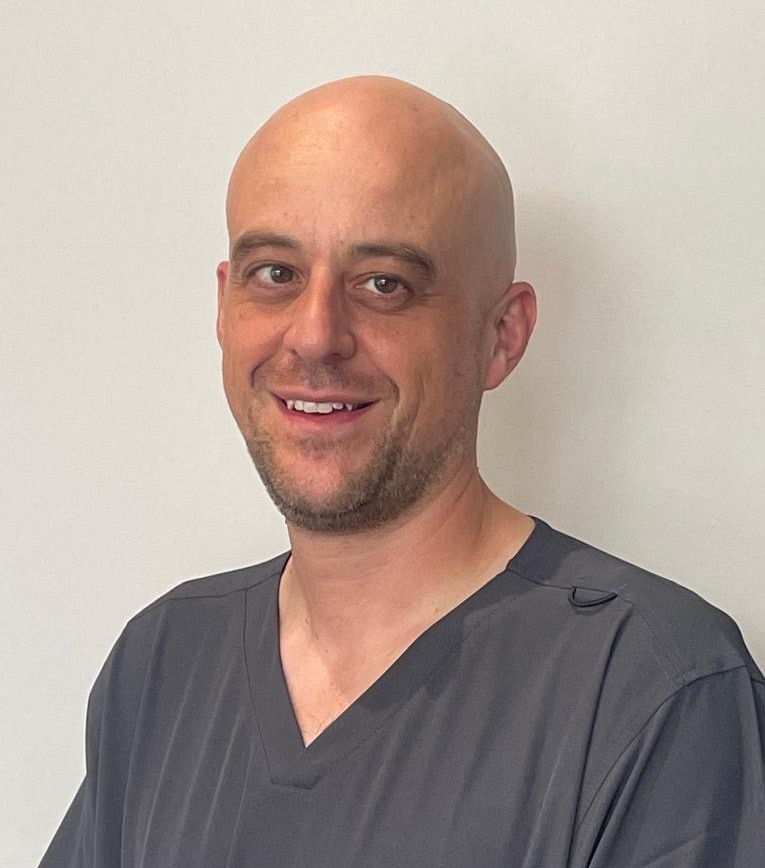
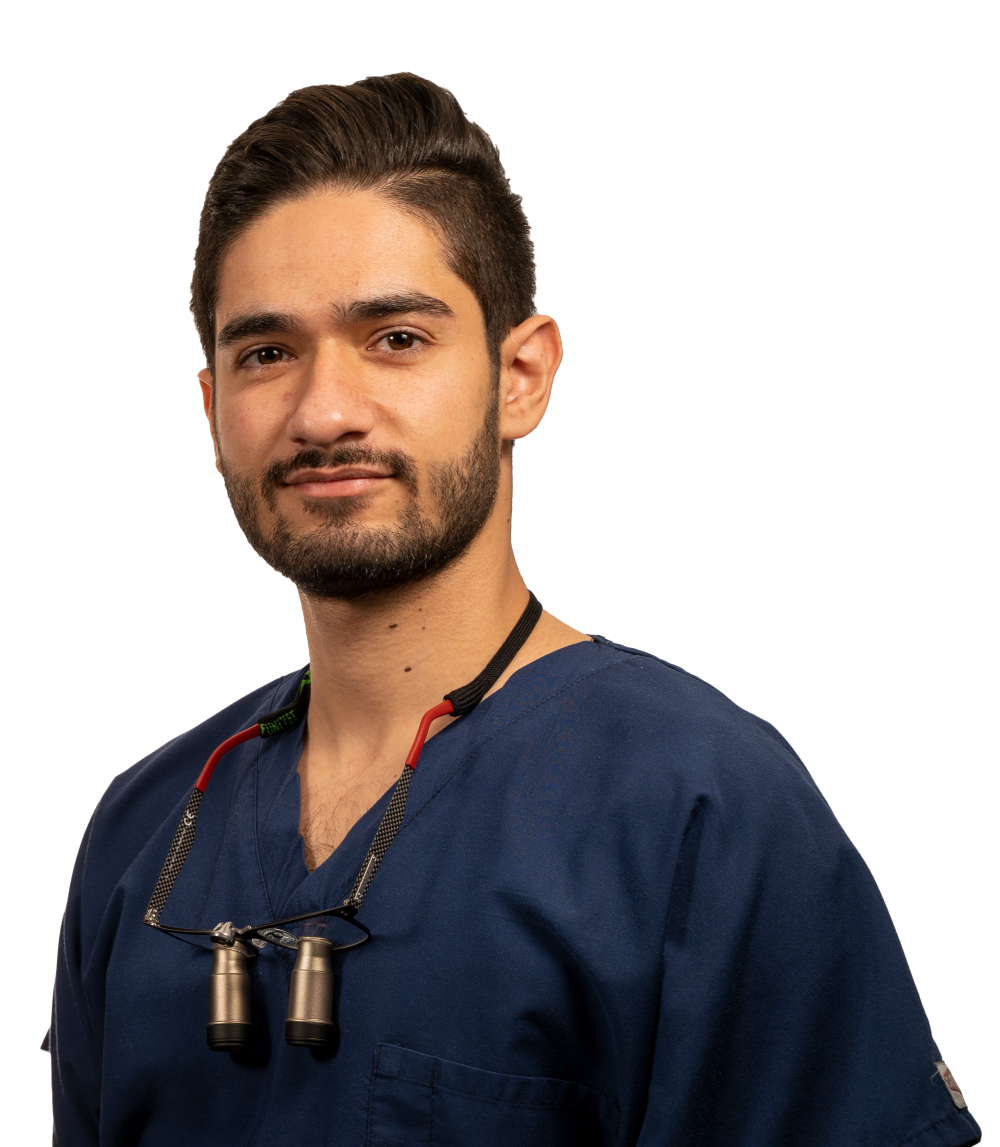
Dr Tom Booth FCGDent, a general dental practitioner based in Cumbria, describes his professional journey and how his knowledge, skills and experience led to College Fellowship.
Q. Can you tell us about yourself and your career?
A. I am a general dentist, working in the private sector for 21 years. I have always strived to stay educated and up to date. Early in my career I completed a Master’s in Oral and Maxillofacial Surgery, followed by a Diploma in Dental Implantology, Certificate in Periodontology, Diploma in Orthodontics and most recently a Master’s in Fixed and Removable Prosthodontics.
I work 3.5 days providing general dentistry and more specialist work, mainly oral surgery, implantology and complex restorative cases. I also teach one day a week on the Fixed and Removable Prosthodontics Master’s course at the University of Manchester.
I am a Fellow of the Higher Education Academy and have a mentoring qualification too. I am currently halfway through a six-year part-time Law degree, studying with the Open University, with the aim of helping dentists in medicolegal trouble, offering independent legal advice.
Outside of dentistry, I am a keen road cyclist, runner and car enthusiast, which I hope I can pursue into old age!
Q. Why did you decide to apply for College Fellowship?
A. I applied to become a College Fellow, as it provides a pathway which recognises my commitment to education in dentistry, as well as the high standards I aim to achieve for my patients. It also now represents an avenue in which clinical and academic credentials can be recognised in the Certified Practitioner Scheme, which is currently being rolled out. This will hopefully help me become even more referral based and carry out more of the advanced procedures I am trained to do.
Q. Which three of the five fellowship domains does your professional experience meet?
A. My professional experience fits in with the Clinical & Technical, Teaching & Assessment and Research & Publications domains.
Having obtained a Master’s of Science in both Oral and Maxillofacial Surgery, Fixed and Removable Prosthodontics, I met the Clinical & Technical domain. These qualifications also satisfied the Research & Publications domain via a written dissertation for both qualifications.
I managed to satisfy the Teaching & Assessment domain, as whilst working at the University of Manchester I was lucky enough to complete the Fellowship of the Higher Education Academy, an eligible teaching qualification.
Q. What would you say to others who are considering applying for Fellowship through the experience route?
A. I would advise anyone considering applying for Fellowship through the experience route to give it a try! The process is fair and allows a wide range of evidence to be used across all domains and recognises years, sometimes decades, of hard work!
Collating all your evidence and checking and organising your curriculum vitae is essential to a successful application, with all criteria clearly stated on the College of General Dentistry website.
Fellowship of the College
Fellowship of the College is the mark of accomplishment in dentistry, celebrating achievement across the different dimensions of your career.
All dental professionals can apply for admission to Fellowship by providing evidence to show how your knowledge, skills and experience meet the criteria of our fellowship domains.
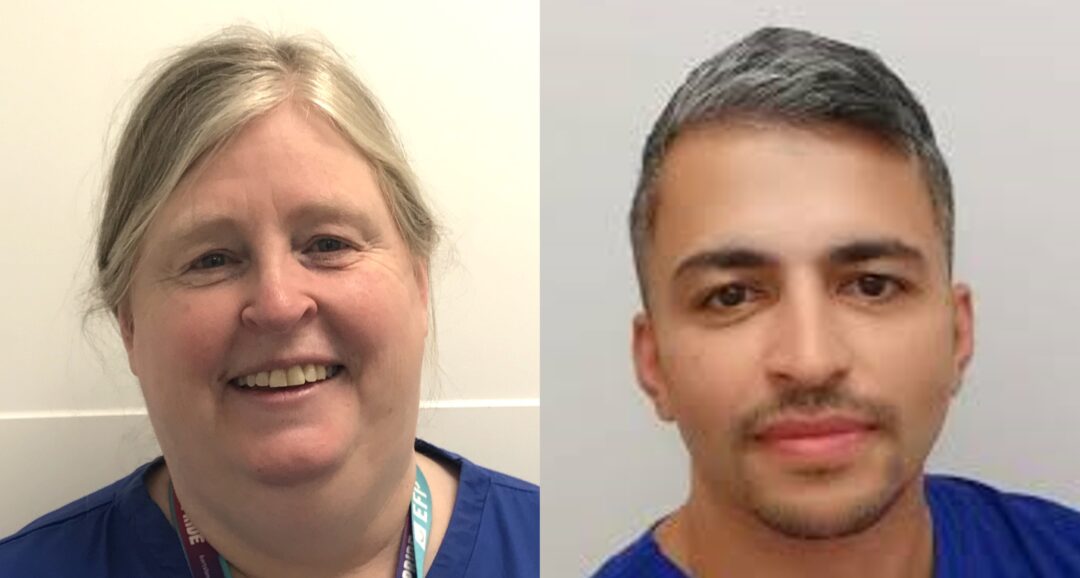
Sarah Murray MBE, Reader in Dental Therapy Education at Queen Mary University of London and Board Member of the College’s Faculty of Dental Hygiene and Therapy, and Leon Bassi, Clinical Lecturer in Primary Dental Care (Dental Therapy) at the University of Liverpool, discuss academic career pathways for dental therapists and dental hygienists.
The development of academic expertise within a professional group is essential to the process of professionalisation. To foster ownership of a specific body of knowledge, professional groups must possess adequate academic training to identify (through scholarly and research study), defend (through critical understanding and articulation), and sustain (through research and scholarship) that knowledge. Therefore, it is critical to provide opportunities for professionals to cultivate research skills and engage in research that is specific to their field. This strengthens the professional group to claim custodianship over their clinical discipline but also contributes to the broader process of professionalisation. (Dussault, 1981)
Utilising all of the dental team
In recent years, the NHS has placed increasing emphasis on ‘Building Better Teams’ (NHS England 2017), recognising that high-quality care relies on the effective integration of different professional skills. This is very relevant in dentistry, where the role of dental hygienists (DH) and dental therapists (DThs) has expanded significantly over many years. In a review of the literature, Nash and colleagues (2008) concluded that “access to basic dental care will not be available without the utilisation of dental therapists in the workforce”, whilst Johnson (2009) argues for a paradigm shift using dental hygienists to shift the culture “from treatment to prevention, wellness and self-care”. Research has shown that DTh are able to undertake over 70% of tasks routinely delivered in NHS primary care and ‘that only around 23% of clinical time was spent on “dentist only” tasks within the NHS nationally’ (Wanyonyi et al., 2015). Harnessing the potential of dental hygienists and dental therapists through skill mix, not only enhances efficiency but also addresses workforce challenges for greater access for the population to access dental care.
The NHS Long-Term Workforce Plan in 2023 highlighted the need to invest in dental education, and the Dental Schools Council (DSC) has called for an increase in both dentistry and dental therapy training places as a key priority. Chen et al. (2021) conducted a global scoping review of the education and career pathways of dental therapists, dental hygienists, and oral health therapists, synthesising 53 sources to explore their professional development. The review found that, despite advocacy for expanded roles beyond traditional clinical practice, most professionals in these fields continue to primarily practise as clinicians and express dissatisfaction with limited career progression opportunities. In our opinion, the Health Education England’s Advancing Dental Care project failed to illustrate how dental hygienists and therapists can have a fulfilling academic career. The World Health Organization’s Global Strategy and Action Plan for Oral Health (WHO, 2024) emphasises the need to focus on the oral healthcare team, particularly mid-level care providers, which we feel includes dental hygienists and dental therapists and their unique place in offering research led preventative based care to help tackle the global burden of non communicable diseases.
The dental academic landscape
Within academic institutions, there are other registered dental care professionals who work alongside their dentist colleagues, however, their route to comparable academic career pathway opportunities is varied across the United Kingdom. Unlike the standardised and managed academic career pathways for dentists, the career pathways for DH and DTh working in dental academia are neither standardised and at times not comparable in terms of academic opportunities.
As an example, we thought we would share our own academic career journeys.
Sarah Murray
My academic journey began with a primary qualification as a dental hygienist and dental therapist. My curiosity was sparked by thinking about how different professionals across the wider healthcare community could work together, which led me to pursue an MA in Primary Health and Community Care, with the University of Westminster.
During my postgraduate studies I developed a strong grounding in reflective practice and learning from other healthcare professionals, that included health visitors, GPs, complementary therapists, and these interactions helped me to consider the challenges surrounding working together for enhanced patient centred outcomes. However, at the time there were no structured academic pathways for me to take, so I had to find my own path, seeking out opportunities and mentorship for myself.
I am currently a Reader in Dental Therapy Education at Queen Mary University of London, and have held previous roles with the University of Essex as a Senior Lecturer within the Oral Health Sciences team, and the University of Suffolk in 2023 as the Curriculum Development Lead for their new BSc (Hons) in Dental Hygiene and Therapy. These opportunities have helped shape my academic career journey, each contributing differently, but complementing my academic development as an educator, leader and academic innovator.
Leon Bassi
I graduated as both a dental therapist and dental hygienist from Queen Mary University of London (Barts and The London School of Medicine and Dentistry). I went on to complete an MSc in Advanced Specialist Health Care at the University of Kent, and then a PG Diploma in Paediatric Dentistry for Dental Therapists.
My career spans community, hospital and specialist private practice. Alongside my clinical practice, I work as a Clinical Lecturer in Primary Dental Care (Dental Therapy) at the University of Liverpool.
It is important that student dental hygienists and dental therapists are taught by colleagues within their own profession, because this ensures teaching is grounded in the specific scope of practice, professional identity, and affords the opportunities to explore what the professional boundaries are in various care settings, and real-world challenges unique to their roles. Interprofessional education is key for us to meet the WHO global oral health strategy (WHO, 2024), however, peer-led education is also crucial to foster a deeper understanding of clinical competencies, role boundaries, and teamwork, while also modelling career pathways and inspiring professional confidence.
Conclusion
Dental hygienists and dental therapists play an integral role in oral healthcare, yet the academic pathways leading to professionalisation in these fields remain underdeveloped compared to other dental professions. As the demand for advanced clinical practice, research and teaching continues to grow, it is crucial to support the academic development of these professionals, fostering their ability to become the next generation of researchers, academics and advanced clinical practitioners.
Through the Faculty of Dental Hygiene and Therapy, the College offers structured support to colleagues, helping to forge their academic career. Through professional development, mentorship and networking opportunities, dental hygienists and dental therapists can enhance their skill set and strengthen their leadership, educational, policy and research skills within the wider dental community.
References
Chen, D; Hayes, M; Holden A (2021). A global review of the education and career pathways of dental therapists, dental hygienists and oral health therapists. BDJ Team 8, 36-42 https://doi.org/10.1038/s41407-021-0654-4
Dussault, G. (1981) The Professionalisation of Dentistry In Britain: A Study of Occupational Stratification, published PhD thesis. The University of London.
Johnson, P. (2009). International profiles of dental hygiene 1987 to 2006: a 21-nation comparative study. International Dental Journal, 59(2), 63–77. https://doi.org/10.1922/IDJ_2076Johnson15
Health Education England (2021). Advancing Dental Care: Education and Training Review – Final Report. HEE, London.
NHS England (2017). Building Better Teams: Exploring the contribution of skill mix in NHS primary dental care. NHS England.
Nash, D.A., Friedman, J.W., Kardos, T.B., Kardos, R.L., Schwarz, E., Satur, J., Berg, D.H., Nasruddin, J., Mumghamba, E.G., Davenport, E.S., & Nagel, R. (2008). Dental therapists: a global perspective. International Dental Journal, 58(2), pp. 61–70. https://doi.org/10.1111/j.1875-595x.2008.tb00177.x
Wanyonyi, K.L., Radford, D.R., & Gallagher, J.E. (2015). Alternative scenarios: harnessing mid-level providers and evidence-based practice in primary dental care in England through operational research. Hum Resour Health. 2015 Sep 15;13:78. doi: 10.1186/s12960-015-0072-9
Sarah Murray and Leon Bassi delivered a CGDent lecture on academic career pathways for dental therapists and dental hygienists at the British Dental Conference and Dentistry Show in 2025.
Dr Pouya Zohrabpour, GDP and co-creator of the Two Dentists YouTube Channel, describes his journey towards becoming a fully private associate dentist, and the support he has received from the College’s Certified Membership Scheme.
Many young dentists struggle with imposter syndrome, often hesitant to engage in private dental practice or transition to a fully private setting. I graduated in 2020 and have recently embarked on the journey to become a fully private associate dentist. The experiences I’ve gathered over the past few years have been instrumental in easing this transition, helping me overcome imposter syndrome, and instilling confidence in the quality of dental care I provide.
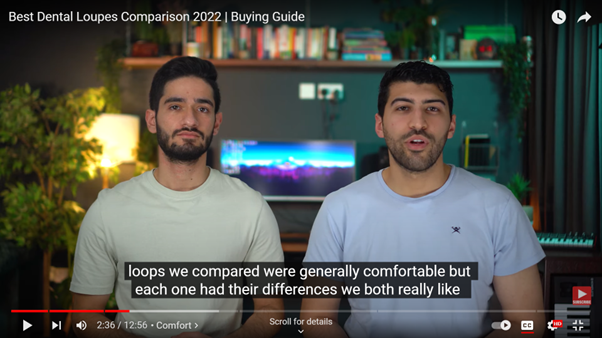
Shortly after graduating, my colleague and friend, Dr. Ali Gowie, and I made the decision to launch a YouTube channel named “Two Dentists.” This initiative was born out of our shared frustration during the lockdown, as we grew tired of lengthy hour-long webinars. Our mission was simple: to create informative, polished, and easily digestible educational videos within the field of dentistry. We aimed to make these videos accessible to both dental newcomers and students.
As time progressed, our content portfolio expanded to include diverse video series, such as our comprehensive exploration of dental photography and Loupes, which resonated strongly with our audience. Running our YouTube channel has opened doors for valuable collaborations with fellow dental professionals, nurturing our ongoing journey of learning and personal development. The channel has provided me with constant motivation to seek further knowledge, which I can then share through our videos.
During my foundation training year, I faced a pivotal decision regarding whether to pursue Dental Core Training (DCT). This choice weighed heavily on my mind as I sought advice from friends and colleagues. However, the diversity of opinions and my own uncertainty about the ideal career path left me in a state of indecision. Ultimately, I chose the associate route to focus on improving my general dentistry skills.
I’m certain that many others have found themselves in a similar situation, which is precisely where the new CGDent Certified Membership Scheme and Career Pathways can make a significant difference. As a young dentist, having a clearly defined career pathway, carefully mapped out by a professional body, offers me a sense of assurance that I’m on the right trajectory to expand my knowledge and evolve into a more proficient practitioner. Knowing that my progress will be acknowledged by the College and that I can work my way towards becoming an accomplished practitioner is incredibly motivating.
The Career Pathway provides a structured ladder to guide one’s professional growth, with clear steps leading to the achievement of the “accomplished practitioner” status. Currently classified as a “capable practitioner” “within the program, I am actively working towards the next milestone of becoming an “experienced practitioner”. One of the requirements for this advancement is completing a postgraduate diploma. To meet this requirement, I have enrolled in a PGDip program in Aesthetic & Restorative Dentistry offered by the Advanced Centre of Excellence (ACE). This further education has significantly boosted my confidence in treating a diverse range of patients, particularly in the private dental sector.
The Career Pathway is underpinned by the College’s Professional Framework, which delineates five domains encompassing 22 capabilities expected of dental professionals. My discussions with my assigned Facilitator while navigating these domains have been enlightening. They have encouraged me to pursue self-development not only in technical skills but also in the soft skills integral to dentistry. For instance, I’ve focused on honing my technical knowledge through courses in my PGDip program and ensuring I apply this knowledge in practice. Emphasizing the reflective domain, especially behaviours and well-being capabilities, has motivated me to foster a friendly, supportive, and collaborative environment among my colleagues at the dental practice. I firmly believe that without the framework and pathway in place, many of these actions may not have occurred or could have been delayed. The YouTube channel, Career Pathway, and Professional Framework have all played pivotal roles in shaping my career, enabling me to evolve and find fulfilment in dentistry.
As I near completion of my PGDip, I’m keen to identify the dental procedures that resonate with me most and potentially niche down in those treatments. To me, a successful dental career entails working in a capacity that allows you to practice the dentistry you enjoy, on a schedule that suits your preferences. This journey is neither swift nor easy; it demands patience and thoughtful planning. However, with the right guidance and strategy in place, it can become a more seamless and rewarding experience.
Webinar with Future Frontline, Tuesday 5 December 2023, 6pm
This webinar with Future Frontline, aimed to raise awareness of different careers within general dentistry and to educate future dental professionals about working in the dental profession. Members from across the dental team gave an insight into a typical day in the life of a dental professional, explained what they love about working in dentistry and the career pathways that are open to dental professionals. They also gave information about the College of General Dentistry and how we support careers in dentistry.
Speakers:
Michelle Brand, Dental Nurse, Associate Member of the College
Dr Roshni Karia MCGDent, General Dental Practitioner, Council member of the College of General Dentistry
Frances Robinson AssocFCGDent, Dental Hygienist, Chair of the College’s Faculty of Dental Hygiene and Dental Therapy
Carmel Vickers-Wall, Clinical Dental Technician, member of the College’s Faculty of Clinical Dental Technology & Dental Technology
Dr Pouya Zohrabpour, General Dental Practitioner, Ambassador for the College of General Dentistry, Associate Member of the College
Membership of the College of General Dentistry is open to all registered dental professionals and dental students and trainees. Find out about our membership types and fees here.
We use cookies on our website to give you the most relevant experience by remembering your preferences and repeat visits. By clicking “Accept”, you consent to the use of ALL the cookies.
This website uses cookies to improve your experience while you navigate through the website. Out of these, the cookies that are categorized as necessary are stored on your browser as they are essential for the working of basic functionalities of the website. We also use third-party cookies that help us analyze and understand how you use this website. These cookies will be stored in your browser only with your consent. You also have the option to opt-out of these cookies. But opting out of some of these cookies may affect your browsing experience.
Necessary cookies are absolutely essential for the website to function properly. These cookies ensure basic functionalities and security features of the website, anonymously.
Cookie
Duration
Description
cookielawinfo-checbox-analytics
11 months
This cookie is set by GDPR Cookie Consent plugin. The cookie is used to store the user consent for the cookies in the category "Analytics".
cookielawinfo-checbox-functional
11 months
The cookie is set by GDPR cookie consent to record the user consent for the cookies in the category "Functional".
cookielawinfo-checbox-others
11 months
This cookie is set by GDPR Cookie Consent plugin. The cookie is used to store the user consent for the cookies in the category "Other.
cookielawinfo-checkbox-advertisement
1 year
The cookie is set by GDPR cookie consent to record the user consent for the cookies in the category "Advertisement".
cookielawinfo-checkbox-necessary
11 months
This cookie is set by GDPR Cookie Consent plugin. The cookies is used to store the user consent for the cookies in the category "Necessary".
cookielawinfo-checkbox-performance
11 months
This cookie is set by GDPR Cookie Consent plugin. The cookie is used to store the user consent for the cookies in the category "Performance".
PHPSESSID
session
This cookie is native to PHP applications. The cookie is used to store and identify a users' unique session ID for the purpose of managing user session on the website. The cookie is a session cookies and is deleted when all the browser windows are closed.
viewed_cookie_policy
11 months
The cookie is set by the GDPR Cookie Consent plugin and is used to store whether or not user has consented to the use of cookies. It does not store any personal data.
wordpress_test_cookie
session
This cookie is used to check if the cookies are enabled on the users' browser.
Functional cookies help to perform certain functionalities like sharing the content of the website on social media platforms, collect feedbacks, and other third-party features.
Performance cookies are used to understand and analyze the key performance indexes of the website which helps in delivering a better user experience for the visitors.
Analytical cookies are used to understand how visitors interact with the website. These cookies help provide information on metrics the number of visitors, bounce rate, traffic source, etc.
Advertisement cookies are used to provide visitors with relevant ads and marketing campaigns. These cookies track visitors across websites and collect information to provide customized ads.