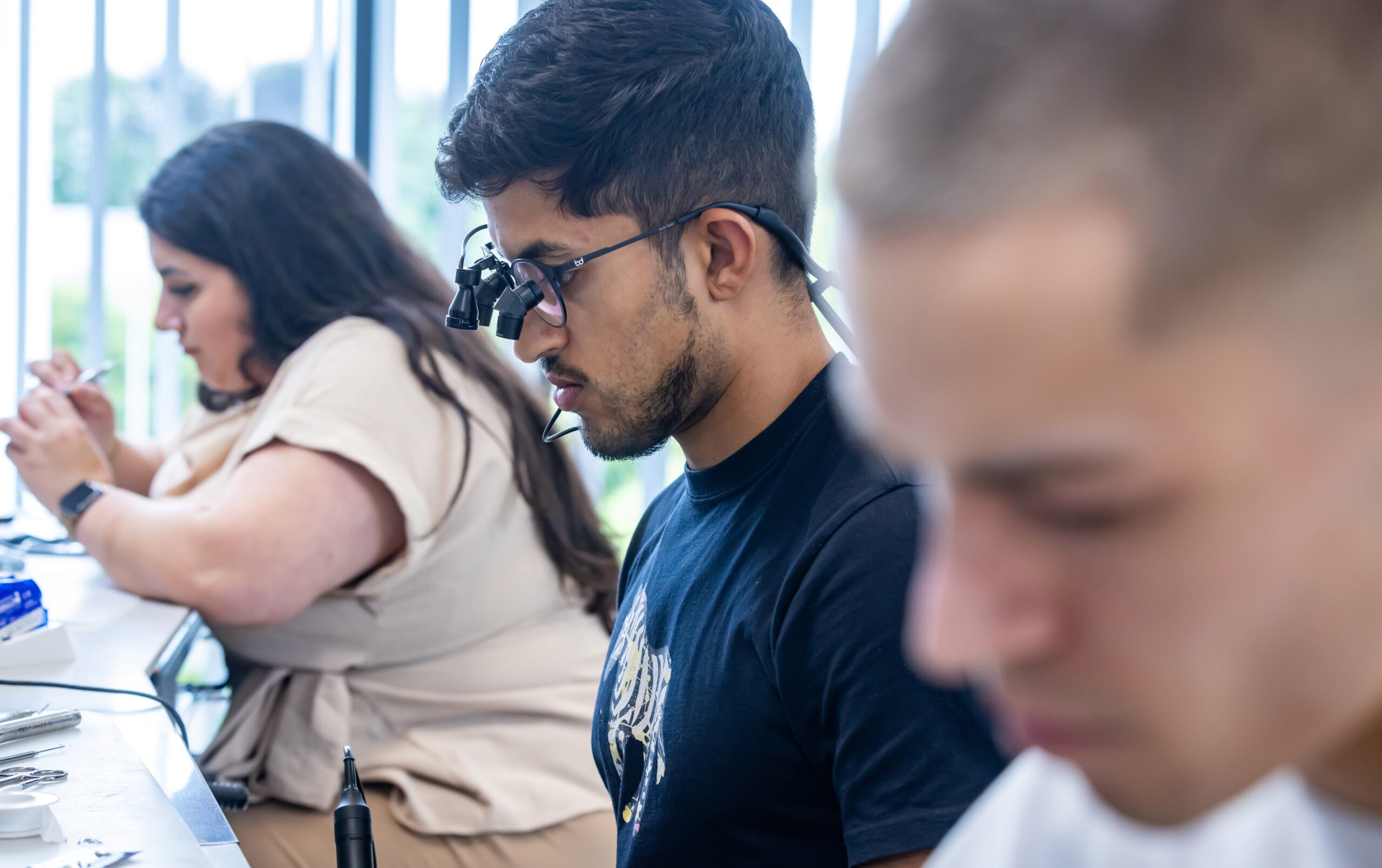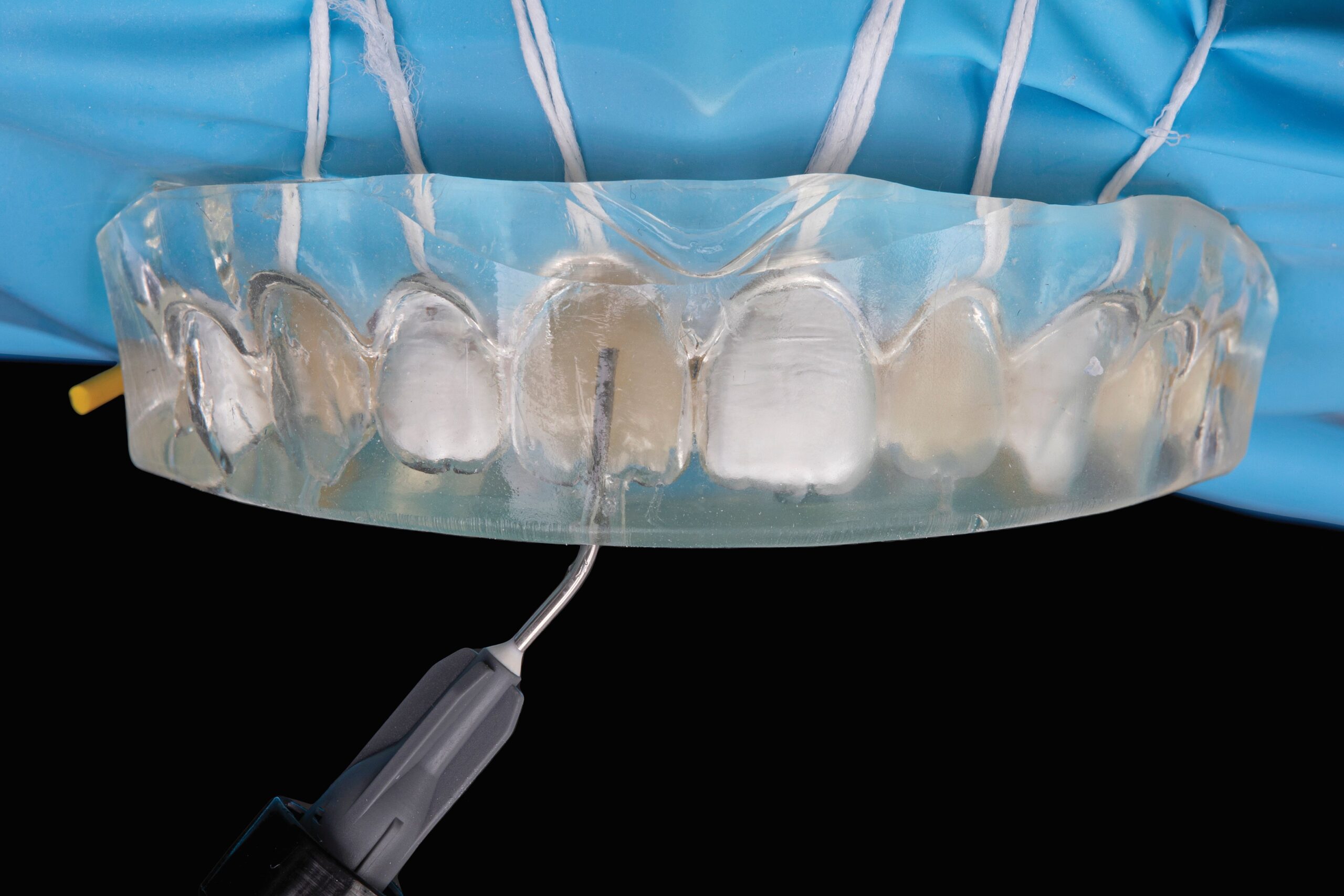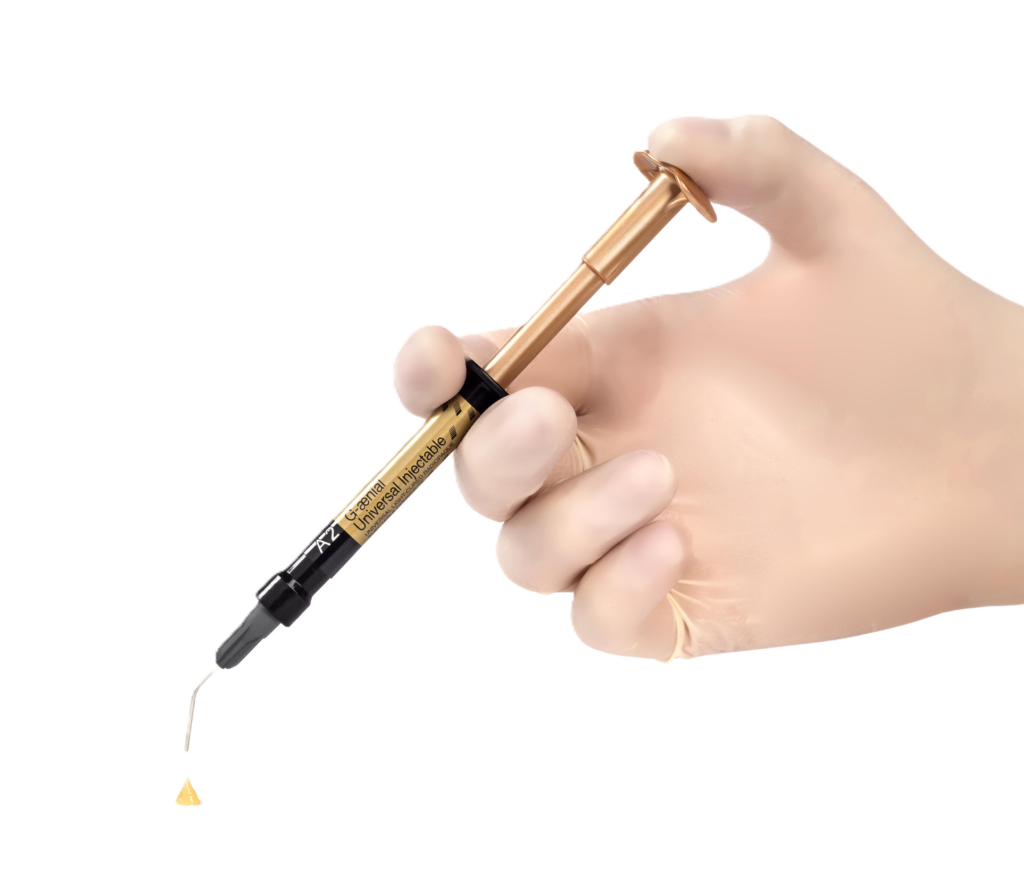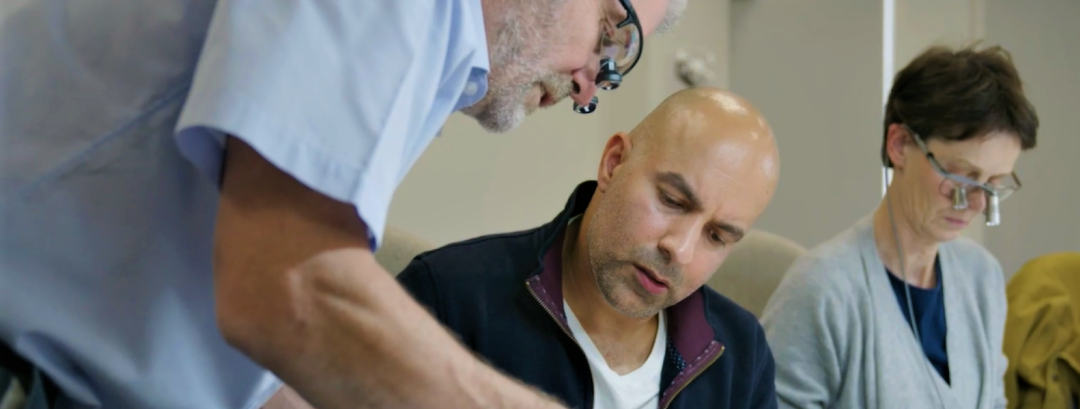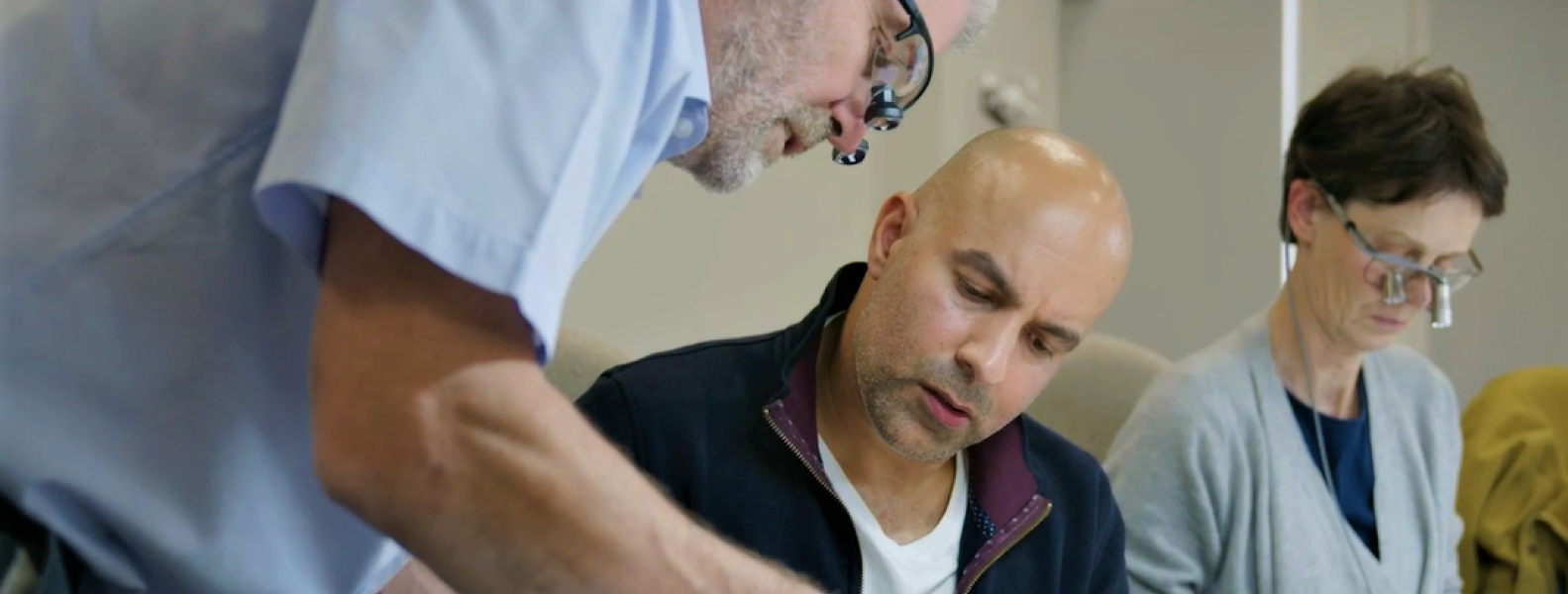
The Advanced Orthodontics course is a comprehensive, 120-credit, Level 7 programme leading to the award of the CGDent Postgraduate Diploma in Primary Care Orthodontics.
Delivered by IAS Academy, it is designed to give General Dental Practitioners the skills and knowledge needed to treat more complex malocclusions, including extraction cases, taking them up to just below specialist training level. It covers all appliance systems – fixed functional, aligners, lingual and Inman – and includes both the theory and practical aspects of orthodontic care.
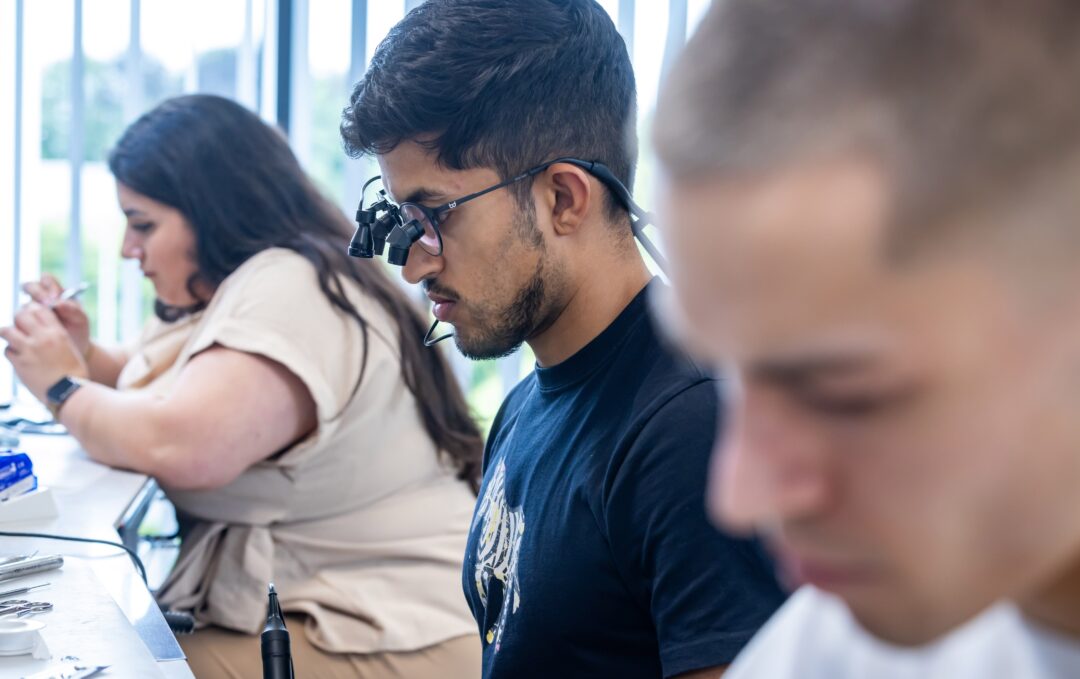
In addition to lectures, students will discuss multiple new cases, participate in hands-on practical sessions and receive one-to-one mentoring by specialists for ten treated cases. The syllabus, which is delivered across six 3-4 day training blocks as well as weekly online planning discussions, includes:
Records, assessment, diagnosis and treatment planning
Treatment planning for Class I, Class II div1, Class II div 2 and Class III malocclusions
Radiography – Ceph/OPG/CBCT
Fixed appliances
Lingual appliances
Removable appliances
Functionals
Retention
Aetiology of malocclusion, growth & development
Development of the dentition and tooth movement
Dental material & biomechanics
Multidisciplinary care, including restorative, periodontics & surgery
Critical reading skills
Health education, health & safety, legislation and audit
This training block is specifically for candidates accepted onto the 2026-28 cohort of the diploma course and is limited to 12 places. To ensure enough case-flow and experience, the course is recommended for dentists who have treated at least ten fixed cases, are treating a minimum of ten orthodontic cases per annum, and are familiar with using fixed appliances.
The College of General Dentistry, Tom Bereznicki Charitable Educational Foundation and Dentsply Sirona would like to congratulate the successful candidates of the inaugural Tom Bereznicki Award for Advanced Aesthetic Dentistry.
The competition, which recognises aesthetic dentistry skills and patient care, was open to dentists who qualified in the UK or Ireland between 2019 and 2023, or who qualified overseas between 2019 to 2023 and had been practising in the UK for at least the two years.
The 19 winning entrants are:
Dr Cordelia Ashby
Dr Milton Justinsuthakaran
Dr Golasa Sheikh Akbari
Dr Alastair Campbell
Dr Nafeesa Khan
Dr Arav Soin
Dr Nathaniel-Edouard Davidson
Dr Adam Kingsley
Dr Mojgan Talibi
Dr Farah Elnaqa
Dr Emily Lawton
Dr Nickhalas Tan Chun Khye
Dr Puyan Heydari
Dr Ronan Lee
Dr Jarmima Uddin
Dr Victoria Hillson
Dr Tendai Manangazira
Dr Abida Islam
Dr Parth Patel
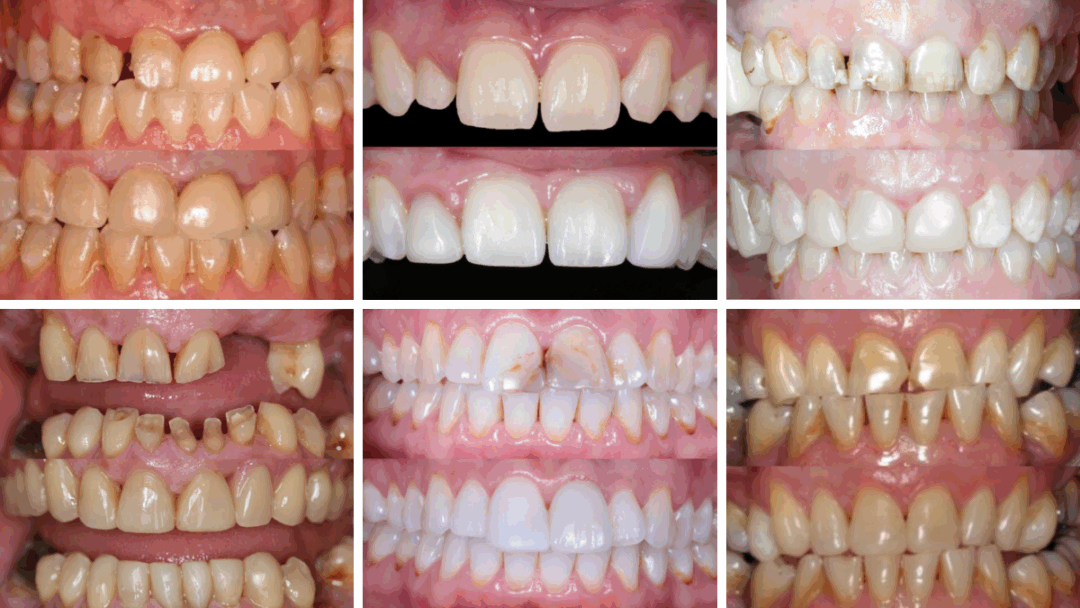
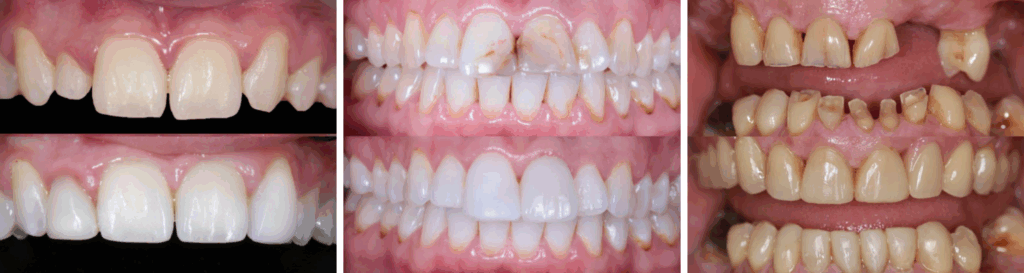
To enter the award, participants each submitted an aesthetic case which involved more than one tooth, including at least one anterior tooth, and the use of composite to restore teeth. Cases also followed a mainly analogue workflow. Cases entered featured a range of restorative treatments including those for diastema,severe tooth wear, and peg shaped laterals. View all successful cases here.
A selection of the winning cases which illustrate a range of different types of cases entered in the competition. Cases submitted by (L-R): Dr Nafeesa Khan, Dr Mojgan Talibi, Dr Cordelia Ashby
The assessors scored each case based on a set of assessment criteria which allocated points to overall improvement in the patient’s oral health, the standard of aesthetic treatment, the complexity of the case and the quality of the entrant’s reflection.
The successful candidates will each receive a fully funded place on a bespoke, hands-on two-day digital dentistry course next month at the Dentsply Sirona Academy in Weybridge, Surrey. Travel costs, hotel accommodation and subsistence are included in the prize, which is worth around £2,000 per place.
Dentsply Sirona is the world’s largest manufacturer of professional dental products and technologies.
Dr Bereznicki commented:
“I would like to thank everyone who entered our first competition for early career dentists, and congratulate the successful candidates. We were impressed by the high standard of entries we received as well as the interesting and wide variety of aesthetic cases. I am sure the winners, and their patients, will all benefit immensely from the intensive hands-on course on Digital Dentistry, which has been generously supported by Dentsply Sirona.”
Further details about the award are available on the award web page. To register your interest in next year’s award and receive a notification as soon as the competition opens, sign up to our notification list.
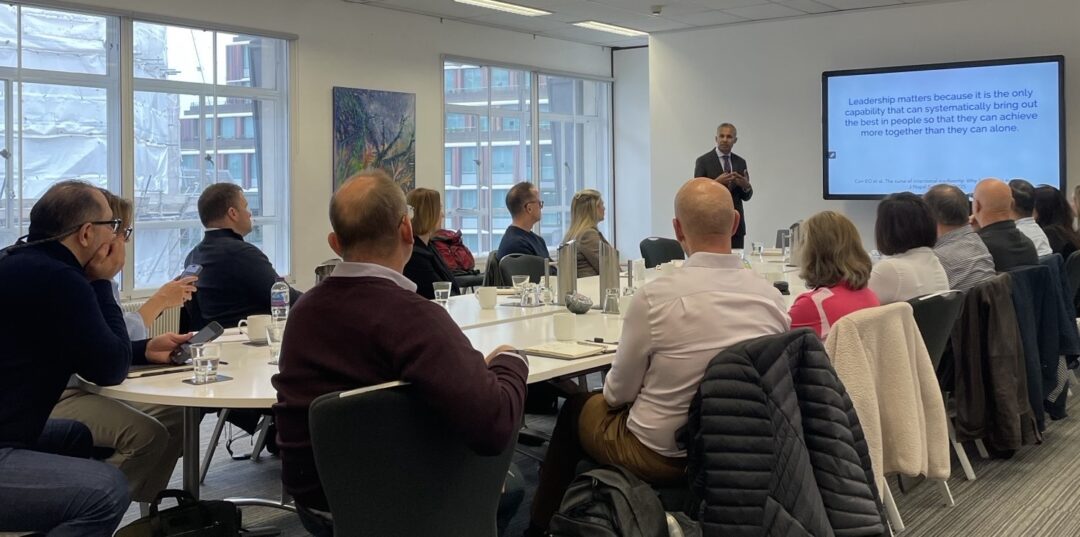
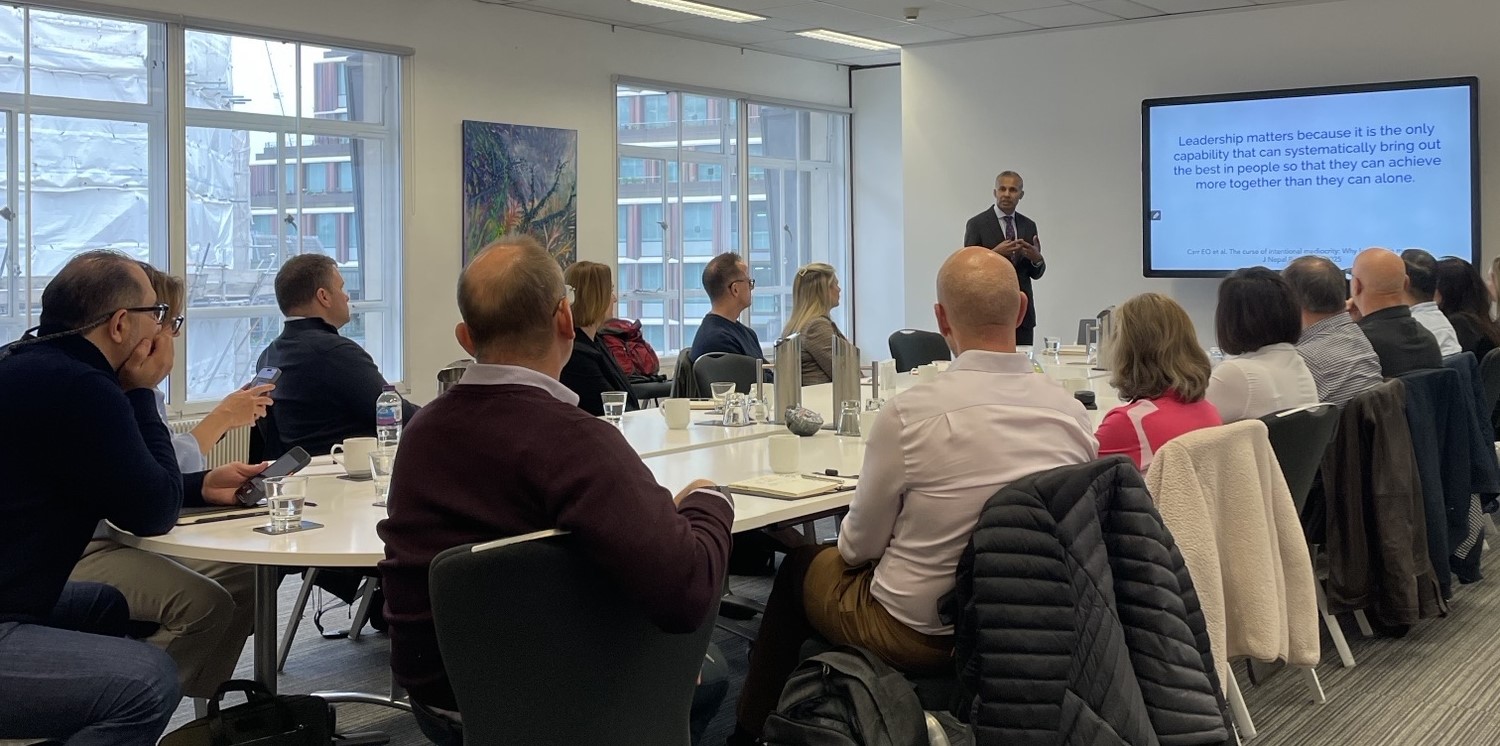
The College recently hosted a Leadership Development Masterclass for dental professionals.
Professor Sreenivas Koka FCGDent presenting to participants at the CGDent Leadership Development Masterclass
The masterclass taught some of the most critical elements needed to be an effective team leader, with carefully curated content offering appropriate breadth and depth for early-career leaders, including
Giving and receiving feedback as a leader
Learning one’s motivations for leadership (and adapting accordingly)
Measuring your leadership effectiveness
The one-day programme, which took place at the Royal Society of Medicine in London on Tuesday 14 October 2025, was restricted to Full Members, Associate Fellows and Fellows of the College and was attended by members from across the dental team.
The event was led by Professor Sreenivas Koka DDS MS PhD MBA MAS FACD FCGDent and Professor Elizabeth Carr MAADH DHA FACD(Hon) FCGDent.
Professor Koka is co-founder of Executive Leadership Enterprises and the Future Leaders in Prosthodontics (FLiP) programme, and founder of both the Shaping the Future of Implant Dentistry (SHIFT) leadership workshop series and the non-profit Career Design in Dentistry organisation. He is also a former Chair of the Massachusetts Institute of Technology (MIT) Sloan School of Management Alumni Board. Dean of the University of Mississippi School of Dentistry from 2021-2024, he has been a lecturer at the University of Michigan and University of California Los Angeles, and a professor at Loma Linda University, the University of Nebraska and the Mayo Clinic. In addition to qualifying as a Doctor of Dental Surgery, he holds a Master’s in Prosthodontics from the University of Michigan, an MBA from MIT, a Master’s in Applied Sciences from Johns Hopkins University and a PhD from the University of Nebraska. He was the founder and owner of Premium Dental Editing in Rochester, Minnesota, and of Koka Dental Clinic in San Diego, and is the author/co-author of over 100 peer-reviewed articles and nine book chapters. A Fellow of CGDent, he was brought up in Romford, emigrated to the United States at the age of 19 and is one of 16 dentists in his family.
Professor Carr is Chair of the Department of Dental Hygiene, Professor of Dental Hygiene and Director of the Mississippi Population Oral Health Collaborative at the University of Mississippi School of Dentistry, where she has worked for over 20 years. She holds a Bachelor’s degree in Dental Hygiene and a Doctorate in Health Administration from the University of Mississippi and a Master’s in Dental Hygiene from the University of Tennessee. She has also completed the MIT Sloan School of Management’s Executive Certificate programme in Leadership and Management. A Fellow of the CGDent, she is also an Honorary Fellow of the American College of Dentists, a past President of the Mississippi Dental Hygienists’ Association, and a member of the American Dental Hygienists’ Association and the American Academy of Dental Hygiene. Her peer-reviewed articles on leadership and dental education have been published in the Journal of the American College of Dentists, the Journal of International Oral Health, the Journal of Prosthodontic Research, the Journal of Prosthetic Dentistry, the Journal of Dental Hygiene and the Journal of Dental Education.
Professor Koka is also the guest editor of the next issue of the Primary Dental Journal (PDJ), which will be published later this year on the theme of leadership, and co-author of its paper ‘Oral health in the context of patient well-being: Implications for the general dentist’. Professor Carr is the author of ‘Effectively managing difficult conversations with patients and dental teams’. Both are co-authors of ‘Everyday leadership’.
Simon Thornton-Wood PhD, Chief Executive of the College, said:
“To practise dentistry requires years of education, yet people can take on leadership roles with little or no training at all. First-time and second-time dental leaders are challenged because other people’s actions now define them; the potential to fail in a leadership role is high and the consequences can be significant.
“Leadership can be taught and learned, so we were delighted to be able to host this masterclass, and privileged that it was delivered by two College Fellows who are world-leading scholars in the art and science of practising leadership in the context of oral healthcare delivery.”
To be eligible to submit a portfolio for assessment, applicants must have at least five years’ post-qualification experience in Restorative Dentistry, and must hold Associate Membership or Full Membership of the College at the time of application. Non-members should first join the College and should allow up to two weeks for their membership application to be validated and processed.
They will then need to submit:
A log of training meeting the requirements below.
Six cases meeting the specifications below.
A comprehensive CV detailing at least five years’ post-qualification experience in roles with the appropriate responsibilities and clinical environment to meet the expected standard of patient care.
Training requirements
Applicants must have:
Completed 165 hours of verifiable training consistent with RQF Level 7, set out in a training log which details the hours and attaches the evidence for each of the required topics below, or
Completed an accredited postgraduate qualification of at least 60 RQF credits for which the transcript demonstrates coverage of the required topics below, or
Successfully completed a recognised Royal College Diploma examination
Applicants submitting evidence of training undertaken before 2010 must also provide evidence of at least 50 hours of Enhanced CPD relevant to restorative dentistry undertaken in the last 5 years.
Required topics:
Patient assessment, history and treatment planning and communication
Principles and application of occlusion
Smile design
Tooth whitening
Anterior direct restorations
Posterior direct restorations
Clinical photography
Anterior direct restorations
Posterior direct restorations
Indirect restorations – crowns, onlays and ceramic veneers
Management of tooth surface loss
Replacement of missing teeth
Endodontics
Periodontics
Contemporary caries management
Case specifications
Applicants must present a total of six anonymised cases, all undertaken within the past five years. The first three must demonstrate, respectively, endodontic, periodontic and prosthodontic management. The remaining cases can be in any of these three disciplines, however no more than half of the total number of cases may be submitted from any one discipline.
Endodontic cases must demonstrate at least one of the following:
a multirooted tooth with root curvatures 30 – 45 degrees
a tooth with canals deemed non-negotiable in the coronal third, but patent thereafter, as evidenced clinically and radiographically
a multirooted tooth with a canal length exceeding 25 mm
a tooth with incomplete root development
re-treatment of a previously treated tooth, with evidence of patency beyond an existing short root filling, provided there are no complicating factors from earlier treatment
removal of a fractured post (less than 8 mm in length)
Periodontic cases must demonstrate one of the following:
Treatment of generalised stage II, III or IV periodontitis that has true pocketing of 6 mm or more showing BOP <10% and PPD < 4mm at 1 year after treatment
Management of gingival enlargement non-surgically with a minimum of 1 year post operative review: showing BOP <10% and PPD < 4mm at 1 year after treatment
Management of a peri implant mucositis case with a minimum of one-year postoperative review showing ≤ 1 point of BOP and absence of suppuration
Management of furcation defects and other complex root morphologies when strategically important (in more than one sextant) showing stability at 1 year after treatment e.g. <10% BOP and PPD <4mm at a 1 year post operative review
Periodontal treatment that includes pocket reduction surgery in more than 1 sextant
Prosthodontic cases must demonstrate one of the following:
Occlusal reorganisation is necessary, and medium-term stability is achieved through plastic restorations, removable appliances, or both
Occlusion requires careful management to avoid premature failure of restorations (e.g., guidance for multiple restorations)
Replacement and temporisation of multiple fixed restorations, where oral condition stability/control may be at risk
Addressing anatomical challenges related to soft tissues
Compromised health of denture-bearing soft tissue
Raised or critical aesthetic or functional expectations/needs
Definitive replacement of at least three teeth involving pre-prosthetic procedures, such as: (i) abutment optimisation (ii) minor oral surgery procedures (iii) occlusal adjustments
Consent
For each case, applicants must ensure that they have the consent of the patient for inclusion in their portfolio. The bespoke Patient Information Sheet and Patient Consent Form should be used to ensure informed participation.
To submit their application, applicants will need to upload their case presentations, CV and training log (or equivalent), and pay a non-refundable Assessment Fee of £600.
Assessment will be centred around the evidence submitted, with specific emphasis on the case selection, and will include a case-based discussion. This will be undertaken by a panel of two suitably qualified assessors with experience of assessment for Postgraduate Diploma qualifications.
A successful portfolio will qualify the applicant for Associate Fellowship of the College and in addition will satisfy the Clinical & Technical domain of Fellowship. The applicant will also be able to add their successful portfolio to the College’s Register of Members and Fellows as a recognised qualification. If an application is unsuccessful, the applicant may be able to request a review by a separate panel, for which an additional Review Fee of £200 would apply.
Funded places on this course are reserved for successful applicants for the 2026 Foundation Nakao – CGDent Award in Coaching and Mentoring. It is not possible to register on this course separately.

Delivered onlinevia Zoom
Establishing a mentoring and coaching culture is key to the College’s commitment to workforce diversity, inclusion, and wellbeing. In promoting effective mentoring practice, we aim to foster appropriate support in the career pathway progression for all members of the oral healthcare team.
Thanks to sponsorship by Foundation Nakao, generously donated through Prof Avijit Banerjee FCGDent, the College is offered a very special opportunity for a three-day training course in mentoring and coaching for dental care professionals. Our aspiration is to cultivate a community of College members amongst dental care professionals who are equipped and confident to nurture their peers.
College members who are registered as a dental therapist, dental hygienist, dental nurse, orthodontic therapist, dental technician or clinical dental technician and who have at least two years’ post-qualification experience are eligible to apply.
The short course is being delivered synchronously online, using the Zoom platform, by UMD Professional, an organisation with more than thirty years of experience within dentistry, medicine, healthcare and law, to establishing coaching and mentoring practices within organisations.
Foundation Nakao – also known as The Nakao Foundation for Worldwide Oral Health – was founded in Luzern in 2018 by Makato Nakao, Chairman of GC Corporation, a leading manufacturer of dental materials and equipment. GC also partners with the College on the CGDent-GC Award for Foundation Traineesand The Tom Bereznicki Award for Tooth Wear Cases
Dr Nathaniel-Edouard Davidson, Associate Member of the College and winner of the inaugural CGDent-GC Award, reflects on what he learntat the first Introduction to Occlusion Symposium and why you should go to the next one.
When I first saw the announcement for the Introduction to Occlusion Symposium, I was not sure if it was for me. Occlusion felt like one of those important, yet complex (and slightly intimidating) areas of dentistry where it’s difficult to apply the extensive teachings in day-to-day practice. However, after dealing with a rising number of fractured restorations, TMJ complaints, and patients reporting muscle soreness and headaches, I realised I needed to deepen my understanding.
From the moment the first lecture started, it was clear this was not just a day of theory. The symposium tackled real-world challenges that many of us face every day in practice. The sessions covered everything from the history and implications of occlusal disease to practical techniques for restoring worn dentitions; always maintaining a strong focus on understanding the “why” behind the “what.”
The first Introduction to Occlusion Symposium in London, 5 April 2025
What stood out most
One of the key points from the day was to focus on the high prevalence of occlusal disease, which is even more common than caries or periodontal disease. There are many signs that indicate the presence of occlusal disease, such as fractured cusps, worn-down restorations, mobility, gingival recession, abfraction lesions, TMJ pain, headaches. These issues often seem unrelated, however, the symposium effectively demonstrated how these issues are in fact interconnected.
“A single night of bruxism can cause as much damage as a lifetime of chewing”. This significant insight was discussed, along with how the loss of proprioception during sleep can result in forces generated by nocturnal clenching increasing tenfold. This may explain the rise in failed restorations and unexplained wear.
Practical knowledge I’m already applying
One of the best aspects of the symposium was the clear, actionable treatment planning advice. We discussed the importance of the “Five Laws” for an ideal occlusion and successful occlusal appliance:
Mutually protected occlusion
RCP = ICP around the retruded axis position
Anterior guidance
No non-working side interferences
Posterior stability
Frameworks like these make managing occlusion more straightforward.
We also explored how to manage occlusal wear with restorative approaches. One fascinating technique that stood out was the use of additive composite canine risers. We can maintain the intercuspal position, but through the use of composite additions to the canines we can reintroduce anterior guidance – this alone can disclude posterior teeth and prevent further wear. It’s simple, it’s effective, and it’s something I can do in day-to-day practice.
The symposium clarified occlusion terminology, particularly centric relation (RCP) versus intercuspal position (ICP). I now understand that while ICP is used for day-to-day dentistry, centric relation is stable and reproducible for complex treatments. Knowing when to use each position and whether to conform or reorganise has improved my approach.
The rule of thumb we learnt
Reorganise: when there is heavy wear, multiple restorations, TMJ symptoms, or a need to increase vertical dimension.
Conform: when the five laws of ideal occlusion (as mentioned above) are met, when there are fewer restorations to carry out, or when there are potential financial constraints.
What I’ll do differently now
Since attending the symposium, I have already started using articulating paper markings in both RCP and ICP and taking intraoral photos and scans to help with diagnosing current or potential future occlusal problems. I am more able to practically ‘see’ a reduced envelope of function. Patients who used to report “chipping front teeth” now make me think of reduced overbite and a collapsed envelope of function, rather than just failing restorations and parafunctional habits.
In addition, I am now more proactive about spotting early signs of parafunction, reducing interferences and offering occlusal splints. Perhaps most importantly, I now understand that restoring anterior guidance early might actually save the need for more invasive posterior restorations later. The symposium has motivated me to pursue further learning and has provided clear direction on where to focus my efforts.
Why should you attend the Occlusion Symposium?
This symposium did more than just teach occlusion – it sparked a genuine interest in the subject and gave me practical tools I can use right away. It is easy to overlook occlusion in favour of more popular topics in dentistry, but this symposium reinforces that getting the fundamentals right is what leads to predictable and long-lasting results.
If you are on the fence about attending a future occlusion symposium, I would say this: do it. Whether you are early in your career or years into practice, the insights you will gain are invaluable. If you are a Principal of a practice, why not encourage your Associates to attend? It is not just about protecting teeth, it is about treating the whole system, understanding function, and elevating the quality of care you can provide.
The next Introduction to Occlusion Symposium will take place in Edinburgh on Saturday 1 November 2025. Open to all dental professionals and with six hours’ CPD, tickets are just £90 for those who qualified between 2020 and 2025, and £110 for all other attendees. For further information, and to book your place, visit our event page
The College has launched a new portfolio-based route to joining its Fellowship community.
The new route, which will be available in relation to specific fields of practice, means that both Associate Fellowship and the Clinical & Technical domain of College Fellowship can now be achieved through recognition of a wealth of clinical experience and expertise, not just advanced qualifications.
Under the new scheme, those with at least five years’ post-qualification experience in the discipline for which they are applying, and who meet the specification for prior training, can submit a portfolio of six suitably complex cases, undertaken within the past five years, for assessment. The expected standard for cases is that which would be achieved with a relevant 120 credit, Level 7 Diploma or at Level 2 clinical complexity.
As well as qualifying the applicant for Associate Fellowship and the Clinical & Technical domain of Fellowship, a successful portfolio can also be published as a recognised qualification in the College’s Member Register.
Both Associate Fellowship and Fellowship of the College are open to dental professionals in all team roles.
Associate Fellowship acts as a stepping stone to Fellowship, recognising enhanced knowledge and skills as well as a commitment to lifelong learning and the highest levels of patient care. As members of the College’s Fellowship community, Associate Fellows are eligible to attend its prestigious Fellows’ Receptions, have the opportunity of ceremonial admission by the College President and may use the postnominal ‘AssocFCGDent’.
All those holding an eligible qualification can become an Associate Fellow without the need of portfolio assessment. These are:
a relevant PhD, Master’s degree or Postgraduate Diploma meeting the College’s eligibility criteria
Specialty membership of a Royal College or Royal College faculty
Membership in General Dental Surgery (MGDS)
Diploma in Postgraduate Dental Studies (DPDS)
CGDent Diploma in Primary Care Orthodontics
FGDP(UK) or RCS Edinburgh Diploma in Implant Dentistry
FGDP(UK) Diploma in Restorative Dentistry
FGDP(UK) Diploma in Primary Care Oral Surgery
Fellowship is the most distinguished membership of the College and is recognised with the postnominal designation ‘FCGDent’. It is a mark of excellence; significant commitment to the science, art and practice of dentistry; and distinction across clinical and professional domains. All dental professionals with ten or more years’ post-qualification practice may apply for Fellowship by route of experience, and to be successful applicants must provide evidence of meeting the requirements of three of five domains:
Clinical & Technical
Teaching, Learning & Assessment
Leadership & Management
Publications & Research
Law & Ethics
The Clinical & Technical domain is automatically satisfied without the need of portfolio assessment for those who meet one of the eligibility criteria for Associate Fellowship described above, or who have qualified as a:
Specialist (with demonstrable referral activity)
Member of the Royal Australasian College of Dental Surgery
Fellow of the American Academy of Implant Dentistry
Accredited Full Member of the British Academy for Cosmetic Dentistry.
Applications for portfolio assessment are now being accepted in Restorative Dentistry. Portfolios in Implant Dentistry will start being accepted early in 2026, with those in Orthodontics thereafter.
To find out more, and to apply, click the button below:
The next College Fellows’ Reception, incorporating the ceremonial admission of new Associate Fellows and Fellows, will take place on the evening of Thursday 5 February 2026 in London. For details, visit cgdent.uk/events
The 2026 College of General Dentistry Lecture will be delivered by Dr Catherine Rutland FCGDent.
The Ethical Shield: Protecting enamel, professional integrity and patient smiles will explore how dental professionals can continuously integrate ethical values into their working lives in order to provide patients with assurance and confidence in the care they receive.
This will be the second annual College Lecture, and will build on both Martin Kelleher’s inaugural College Lecture, Satisficing standards in dentistry, and on the rich legacy of Malcolm Pendlebury Lectures previously hosted by the Faculty of General Dental Practice UK (FGDP).
Catherine Rutland is Head of Clinical and Policy at Dentaid, representing the dental charity across the profession and engaging with MPs, public health teams and commissioners. She is also a Board Member of Dental Protection, which indemnifies and supports 70,000 dental professionals worldwide, and a Non-Executive Director and Council Member of the Medical Protection Society, which has a further 245,000 medical professional members in 40 countries. Part of the General Dental Council’s Dental Leadership Network, she is a Trustee of the Dentists’ Health Support Trust, which supports dentists facing mental health and addiction challenges, and was appointed a Trustee of the College of General Dentistry in 2026. She was previously Director of Policy and Clinical Affairs at the Association of Dental Groups, whose members work with over 22,000 registered dental professionals in treating over 10 million dental patients, and Clinical Director at Simplyhealth, including Denplan, where she chaired both the Clinical Governance Committee and the Denplan Excel Board.
After qualifying as a dentist in 1992 from the University of Leeds, where she achieved a Distinction in oral surgery, she spent two and a half years in secondary care as a House Officer in Leeds and Senior House Officer in Newcastle before moving into general dental practice. She completed Vocational Training in Sunderland and spent a year there as an associate GDP before practising in Reading for three years. From 2000-2019, she was Principal Dental Surgeon and a joint partner at a private dental practice in Thatcham, West Berkshire. She joined Denplan as a Dental Advisor in 2010, and was later promoted to Senior Dental Advisor, Head of Professional Support Services and Head Dental Officer before working there full-time from 2019. In 2013, she completed a Master’s degree in Medical Ethics and Law at King’s College London, writing her dissertation on whether both professional integrity and patient autonomy can be satisfied in fulfilling patients’ cosmetic dental desires. She became a Certified Member of the Institute of Risk Management in 2015 and was awarded a Chartered Management Institute Level 7 Certificate in Leadership Mentoring and Coaching in 2016. She became a Fellow of the College in 2023, and in 2024 was a keynote speaker at the CGDent Scotland Annual Study Day, the College’s largest annual CPD event, lecturing on ethical and legal considerations in the provision of aesthetic and cosmetic dental procedures.
All dental professionals, and others with professional interests in contemporary dental practice, will be eligible to attend, with discounted places available to College members.
Ticket prices and a registration link will be posted here in due course.
*This lecture was originally scheduled to take place as part of the College Summer Day on 25 June 2026, however the day unfortunately had to be cancelled due to the UK Health Security Agency’s red heat-health alert.
“I thoroughly enjoyed it, very important topic that’s not always fully understood! All the speakers spoke about occlusion in a comprehensive manner that I understood.”
The secrets of successful, long-term restorations
A solid understanding of the principles of occlusion is crucial for the provision of successful, long-term restorative treatments for tooth wear and other conditions. This one-day symposium on the fundamentals of occlusion, first hosted in London and Edinburgh last year, aims to enhance your knowledge in this field. You will leave the day with a deeper knowledge of the basic principles of occlusion and an introduction to a range of postgraduate courses you may wish to consider undertaking to further elevate your skills.
“The best day course I have been on – such big names all presenting in one venue. Learned loads and it has inspired me to learn more about occlusion.”
Symposium fee
The fee includes lunch and refreshments.
Early careers (qualified 2021-2026): £90
Dental professionals: £225
Students*: FREE – SOLD OUT
*Free student places are no longer available
Verifiable CPD: approx 6 hours
BOOK NOW– To access the booking form,sign in or register a free College Subscriber account then refresh this page.
You are invited to visit our trade exhibition and education stands in the breaks to find out more about high-quality postgraduate courses available to you.
Lunch and refreshments
A two-course buffet lunch will be provided and tea/coffee, pastries and cakes are available during registration and throughout the day.
Prayer rooms
Separate male and female prayer rooms will be available. Please bring your own prayer mat.
Manchester Conference Centre, Pendulum Hotel, Sackville Street, Manchester M1 3BB
By train: Manchester Piccadilly train station is 12 minutes walk from the venue.
Car park: The nearest car park is NCP Manchester Circle Square Car Park located at Circle Square, Oxford Road, Manchester, M1 7ED. A discounted rate is available when paid on the day via the NCP app using a discount code.
We look forward to seeing you there!
BOOK NOW – To access the booking form, sign in or register a free College Subscriber account then refresh this page.
A full refund will be provided up to 14 days before the date of the symposium. No refund will be issued within 14 days of the event. If you would like to cancel your place and request a refund, please email us at [email protected]
Foundation Nakao – CGDent Award in Coaching and Mentoring
A special opportunity for a fundedthree day short course: strictly limited places available
Establishing a mentor and coaching culture is key to the College’s commitment to workforce diversity, inclusion, and wellbeing. In promoting effective mentoring practice, we aim to foster appropriate support in the career pathway progression for all members of the oral healthcare team.
Now, thanks to sponsorship by Foundation Nakao, generously donated through Prof Avijit Banerjee FCGDent, we can offer a very special opportunity for a three day training course in mentoring and coaching.
The award is open to College members who are registered as a dental therapist, dental hygienist, dental nurse, orthodontic therapist, dental technician or clinical dental technician. Our aspiration is to cultivate a community of College members amongst Dental Care Professionals who are equipped and confident to nurture their peers, and dentist members are therefore asked to support this aim by highlighting the opportunity to dental team colleagues.
The short course will be delivered synchronously online, using the Zoom platform, by UMD Professional, an organisation with more than thirty years of experience with dentistry, medicine, healthcare and law, to establishing coaching and mentoring practices within organisations*.
Course dates
Day 1. Friday 21st November 2025
Day 2. Saturday 22nd November 2025
Day 3 Friday 16th January 2026 (or Friday 23rd January)
Applicants must:
Hold a current membership of the College at the time of application, in one of the registered Dental Care Professional roles. Join today.
Have at least two years of post-qualification experience in the role.
Be available to participate in all three days of the training.
Be prepared to:
apply mentoring or coaching skills between Day 2 and Day 3.
apply the learning to support less experienced colleagues through the College
contribute to the promotion of the experience in mentorship through an article or at a College event.
To apply
Download and complete the application form, which should be submitted by email to [email protected].
The deadline for applications is 5pm Monday 22nd September 2025.
Successful applicants will be informed by email by Monday 6th October 2025.
Foundation Nakao – also known as The Nakao Foundation for Worldwide Oral Health – was founded in Luzern in 2018 by Makato Nakao, Chairman of GC Corporation, a leading manufacturer of dental materials and equipment. GC also partners with the College on the CGDent-GC Award for Foundation Trainees.
We use cookies on our website to give you the most relevant experience by remembering your preferences and repeat visits. By clicking “Accept”, you consent to the use of ALL the cookies.
This website uses cookies to improve your experience while you navigate through the website. Out of these, the cookies that are categorized as necessary are stored on your browser as they are essential for the working of basic functionalities of the website. We also use third-party cookies that help us analyze and understand how you use this website. These cookies will be stored in your browser only with your consent. You also have the option to opt-out of these cookies. But opting out of some of these cookies may affect your browsing experience.
Necessary cookies are absolutely essential for the website to function properly. These cookies ensure basic functionalities and security features of the website, anonymously.
Cookie
Duration
Description
cookielawinfo-checbox-analytics
11 months
This cookie is set by GDPR Cookie Consent plugin. The cookie is used to store the user consent for the cookies in the category "Analytics".
cookielawinfo-checbox-functional
11 months
The cookie is set by GDPR cookie consent to record the user consent for the cookies in the category "Functional".
cookielawinfo-checbox-others
11 months
This cookie is set by GDPR Cookie Consent plugin. The cookie is used to store the user consent for the cookies in the category "Other.
cookielawinfo-checkbox-advertisement
1 year
The cookie is set by GDPR cookie consent to record the user consent for the cookies in the category "Advertisement".
cookielawinfo-checkbox-necessary
11 months
This cookie is set by GDPR Cookie Consent plugin. The cookies is used to store the user consent for the cookies in the category "Necessary".
cookielawinfo-checkbox-performance
11 months
This cookie is set by GDPR Cookie Consent plugin. The cookie is used to store the user consent for the cookies in the category "Performance".
PHPSESSID
session
This cookie is native to PHP applications. The cookie is used to store and identify a users' unique session ID for the purpose of managing user session on the website. The cookie is a session cookies and is deleted when all the browser windows are closed.
viewed_cookie_policy
11 months
The cookie is set by the GDPR Cookie Consent plugin and is used to store whether or not user has consented to the use of cookies. It does not store any personal data.
wordpress_test_cookie
session
This cookie is used to check if the cookies are enabled on the users' browser.
Functional cookies help to perform certain functionalities like sharing the content of the website on social media platforms, collect feedbacks, and other third-party features.
Performance cookies are used to understand and analyze the key performance indexes of the website which helps in delivering a better user experience for the visitors.
Analytical cookies are used to understand how visitors interact with the website. These cookies help provide information on metrics the number of visitors, bounce rate, traffic source, etc.
Advertisement cookies are used to provide visitors with relevant ads and marketing campaigns. These cookies track visitors across websites and collect information to provide customized ads.