Nominations open for Council elections

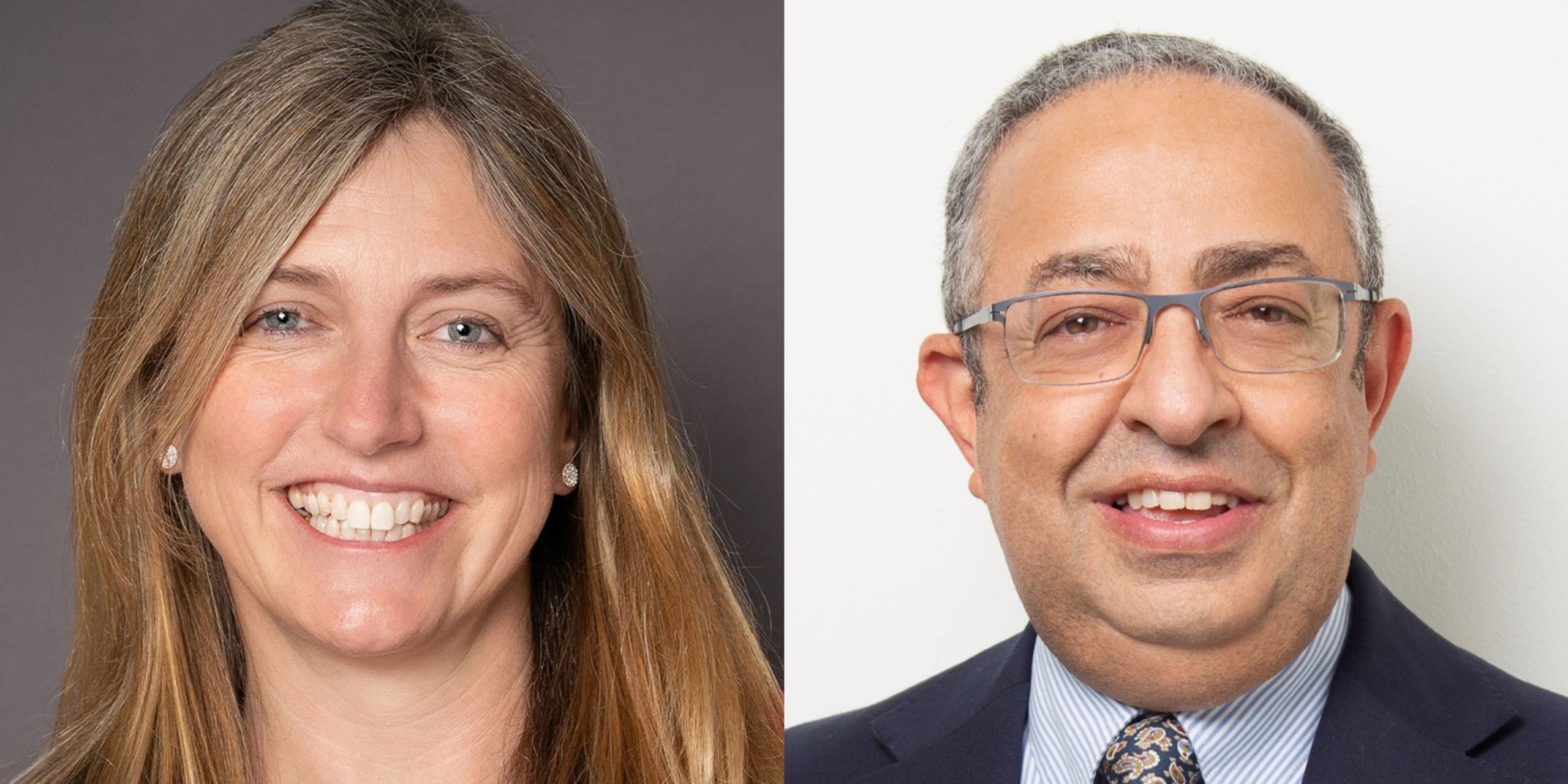
Nominations are now open for elections to two seats on the College Council, and eligible individuals are invited to nominate themselves as candidates.

College Council members meeting in Sheffield, 13 June 2025

The Council is the voice of our members.  Overseeing our role as a professional body and guiding Trustees on the development of the College to fulfil its mission, it includes representation based both on geographical region and professional role.


Seats to be elected this year

Nominations are sought for the following seats in 2026:

  • Mersey & North West
  • Northern Ireland

Further seats on the Council will be due for election in 2027 and 2028 – see the College Council page for details.


Eligibility to stand

All Full Members, Associate Fellows and Fellows of the College, regardless of dental team role, who live or work within one of the above regions, and who are registered with that region with CGDent, are eligible to nominate themselves as candidates for election to the relevant Council seat.

Members who live and work in more than one region are welcome to change the address with which they are registered with the College in order to stand (or vote). This can be done at any time through their online account: log in at cgdent.uk then navigate via My Account to Update my details. (Please note that the new address will then be used for all correspondence, including receiving copies of the Primary Dental Journal.)

Associate Members within these regions who wish to nominate themselves for election will need to have successfully completed an upgrade to Full Membership before doing so. Any non-members will first need to join the College as a Full Member, Associate Fellow or Fellow. It is advised to allow at least a week for this to be processed.


The role

As a Council member, you would provide leadership, strategic input and direction in all the professional affairs of the College. You would be helping to shape key moments in the College’s growth and could also get involved in specific initiatives on areas such as careers, policy and standards.

If elected, you would serve a three-year term from June 2026 – June 2029, during which you would be expected to attend three one-day, face-to-face meetings in June, October and February each year, as well as regular online meetings and occasional committees outside of business hours.

You would also be expected to vote, and eligible to stand, in the annual election of up to two Vice Presidents; eligible to participate in the triennial appointment of a College President in 2027; and expected to attend College events around the UK.

You would be able to stand for re-election in 2029, and individuals may serve up to three elected terms (i.e. nine years) on the Council. The role is voluntary, but we do cover essential expenses. 

Elected candidates are expected to attend their first Council meeting on Friday 12 June 2026, when they will be formally inducted.


College electoral regions

If you are unsure which College region you are in, check your entry on the Member Register


Nominations process

All existing members who are eligible to stand for either seat based on their current membership grade and College region (as of 15 January 2026) will be sent an email from the College’s election services provider, Mi-Voice, containing a link to the nominations website.

If you are interested in standing for election, you will need to complete the nomination process via that link, where you will be asked for further information, and to submit an election statement.

You will also be required to provide the names of two supporters of your nomination. Your supporters must each be a Full Member, Associate Fellow or Fellow of the College within the constituency you are standing for. If you are unsure of the membership status or region of potential supporters, please consult our Member Register

If you think you might like to put yourself forward as a candidate and would like further information before deciding, we would be pleased to have a confidential discussion and answer any questions about the role and the process – please get in touch via [email protected]

If a ballot is required, voting will open on Monday 23 March 2026 and close at 23:59 on Monday 27 April 2026, with the results announced in May.

Subscribe to receive to our monthly newsletter

Reflection is the key to growth in dentistry

Dr Shreya Sharma, an Associate Dentist based in Hampshire, was successful in the 2025 CGDent-GC Award. In this blog, she describes how her reflective practice, a key part of the award entry process, supports her professional development.

Dentistry is a profession defined by lifelong learning. No two cases are ever quite the same and with every patient comes an opportunity to refine our judgement, technique and communication. But true growth doesn’t just come from experience, it comes from reflection.

At university, feedback is constant. Every procedure is supervised, every decision discussed. Once qualified, that safety net disappears and suddenly, we’re left to evaluate our own work. For me, reflection has become a way to recreate that feedback loop, to stay accountable and to keep improving.

I realised this most clearly while preparing my case for the CGDent-GC Award for Foundation Trainees. The award places a strong emphasis on reflective practice, with a significant portion of the assessment criteria dedicated to it. Knowing this encouraged me to slow down, document carefully and truly understand the reasoning behind each decision. That’s where the most meaningful learning happened.

What it means to reflect and why it matters

Reflection isn’t just a tick-box exercise for an e-portfolio. It’s an honest look at your own decision-making: why something worked, what could have gone better and how you’ll approach it differently next time.

During my award case, analysing my own work, even small details like line angles, surface texture and the polish of restorations, helped me understand why they mattered and how they influenced the overall outcome.

One example was restoring the fractured UR1 to match the adjacent UL1 crown. I found the process far more challenging than expected, particularly when trying to recreate the same lustre and the way the light reflected off the crowned tooth. Even achieving the correct width proved difficult.

My successful case: pre-op and post-op photographs

To guide the restoration, I used a measuring gauge to record the width of the UL1 and mirrored those measurements for the UR1. Despite this, the restored UR1 still appeared wider than the crown I was trying to mimic. It was only through reviewing my clinical photographs that I realised the issue was not with the measurements, but with the line angles.

The position and width of the line angles dramatically affect how we perceive tooth shape. My initial line angles were placed too far apart, which made the tooth look flat, dull, and visually broader than it truly was. By adjusting their position and narrowing the distance between them, the restoration immediately appeared more natural and better harmonised with the adjacent central.

This experience highlighted how subtle morphological details can completely change the final aesthetic and how essential reflective practice and clinical photography are in developing that level of awareness.

As clinicians, we hold ourselves to incredibly high standards. Reflection helps balance that drive for excellence with curiosity. It allows us to pause, recognise small wins and identify where to grow next. It transforms experience into understanding and uncertainty into progress.

The value of photography and case write-ups

Clinical photography has completely transformed the way I learn. It’s more than documentation, it’s a mirror that reveals what we might miss in the moment: a defective margin, a shade that could blend better or an open contact point. Reviewing those photographs later helps me see patterns and improvements in my work that are often invisible day-to-day.

A significant part of the CGDent-GC Award involves presenting clinical photographs that meet a high aesthetic and technical standard. Working towards this pushed me to refine my photography skills, pay closer attention to detail and critically assess the quality of my own work. Striving to meet that standard ultimately strengthened both my clinical outcomes and my ability to communicate them clearly.

Over time, these images have become a visual record of progress. They remind me that growth in dentistry rarely happens overnight, it builds with one small improvement at a time.

Case write-ups add another dimension to this process. Writing forces you to think through every stage of treatment, to justify your reasoning, material selection and workflow. While preparing my award case, I found myself analysing each choice, from composite selection to polishing technique. Putting those thoughts into words made my clinical reasoning clearer and my approach more deliberate.

Together, photography, writing and reflection drive ongoing development.

How the CGDent-GC Award nurtures reflection and growth

Entering the CGDent-GC Award deepened my appreciation of reflection. It wasn’t just a competition, it was a structured opportunity for learning.

Selecting a case

The process begins with choosing a case that you are about to start treating. Part of the competition is recognising, early on, that a forthcoming case has potential to showcase your skills and be developed into a strong entry. This shift in mindset encourages reflection from the very beginning: What might make this case a good learning opportunity? What challenges could it present?

It’s not about selecting a “perfect” patient or predicting a flawless outcome. Instead, it’s about identifying a case with learning value and approaching it intentionally, with the aim of documenting your decision-making and growth throughout the process.

Documenting the process

Clinical photography was essential here. Each image encourages you to pause, assess, and understand the nuances of your work. The lens doesn’t lie, it reveals subtleties that might otherwise go unnoticed, and the camera, in many ways became my most objective teacher.

Writing the case report

This was the most introspective stage for me. Writing about my case helped me connect my clinical decisions with their outcomes. It gave structure to what I had previously done instinctively and turned my learning into something tangible.

Winning the award

Winning the award was a huge honour, but the greatest reward was the insight gained along the way. Reflecting on my work, documenting the process and sharing it with others renewed my perspective on dentistry, something that’s easy to lose in the rhythm of daily practice.

Beyond the competition

The impact didn’t end when the results were announced. The experience continues to shape how I practice today. I take more photographs, analyse my outcomes more critically, and make time to reflect regularly. The competition gave me a framework for self-assessment and helped turn reflection from something occasional into something routine.

As part of the prize, I attended a two-day composite course in Belgium, where we learned advanced layering techniques and approaches to restoring fractured and discoloured teeth. It was an incredible opportunity to learn from experienced clinicians, refine my practical skills and connect with like-minded individuals.

On GC’s composite layering course in Belgium, July 2025

Competitions like the CGDent-GC Award (and the Advanced Aesthetic Award for more experienced clinicians) don’t just celebrate clinical skill, they nurture the habits that make us better dentists. They remind us that growth isn’t measured by accolades, but by how much we learn from every case, every challenge, and every uncertainty.

How reflection builds confidence

Confidence doesn’t come from avoiding mistakes, it comes from understanding them.

During my award case, I had plenty of moments of uncertainty: shade selection, matrix placement, polishing protocol. At the time, those doubts felt like signs of inexperience. But revisiting them afterwards showed me that those questions were actually the foundation of growth. Each hesitation led to research, feedback and ultimately, better results.

That shift, from fearing mistakes to learning from them, has been one of the most empowering parts of early-career dentistry. Reflection has taught me to value curiosity over perfection and progress over pressure.

Closing thoughts

Reflection turns experience into understanding and everyday dentistry into a journey of lifelong learning.

For me, it has made my clinical work more intentional, my patient care more consistent, and my growth as a dentist more measurable. Dentistry evolves not only through skill, but through self-awareness. Every case, every success and every setback, has something to teach us, if we just take the time to look.

Dentists and dental therapists who qualified in 2025 or are enrolled on DFT are eligible to enter the 2026 CGDent-GC Award – entries are open until Friday 20 February 2026.

Sign up to our monthly newsletter

An inspiring introduction to modern restorative dentistry

Dr Victoria Kit-mun Hillson, an associate dentist in a private practice in Dorset, was successful in the inaugural Tom Bereznicki Award for Advanced Aesthetic Dentistry and attended the Introduction to Digital Dentistry course in November 2025.

As an early-career clinician, bridging the gap between the idealised treatments frequently presented in lectures or on social media and those that can be confidently implemented in daily clinical practice can be challenging. The Introduction to Digital Dentistry course, which took place at Dentsply Sirona’s headquarters in Weybridge, Surrey, provided a valuable and motivating introduction to contemporary restorative dentistry, demonstrating how high-level outcomes can be achieved when treatment is underpinned by sound principles and a structured clinical framework.

I entered the award after researching opportunities presented by CGDent, having already been involved with the College previously and being familiar with its emphasis on structured, evidence-based learning. The application process was straightforward but appropriately selective, initially requiring the submission of pre-operative photographs for review, which were either accepted or declined before progressing further. Once accepted, this was followed by a short, written case summary and the submission of post-operative photographs. This staged process encouraged careful case selection, documentation and reflection. Entering the award was a valuable learning experience in itself, and winning it was both unexpected and deeply rewarding, providing reassurance that my clinical approach and attitude, alongside presentation and reflection were recognised at a national level, among other inspiring clinicians.

Delivered over two separate weekends with different groups, the course created an intimate and focused learning environment. It felt carefully designed to introduce complex concepts in a way that was accessible, particularly for those of us in the earlier stages of our professional development.

Delegates and Course Leaders at the Introduction to Digital Dentistry course, November 2025

Learning beyond the lecture theatre

We were hosted at the beautiful Brooklands Hotel, which added to the overall experience. Staying together encouraged informal discussion outside the teaching environment- conversations regarding dentistry, career progression and shared challenges as early clinicians continued over dinner, and into the evenings. These moments were just as valuable as the formal teaching, highlighting the importance of peer discussion and shared experience as integral components of professional learning and development.

Understanding restorative principles

The course centred on the use of digital techniques within modern dentistry, with discussion focusing on the pivotal role of intraoral scanners in building trust and rapport with patients, as well as their application in the fabrication of both temporary and permanent restorations.

Another central theme of the course was indirect adhesive dentistry, with a strong focus on the principles behind bonding onlays. Rather than being taught a rigid formula, we were encouraged to think critically about preparation design and cores, isolation, bonding protocols and long-term predictability.

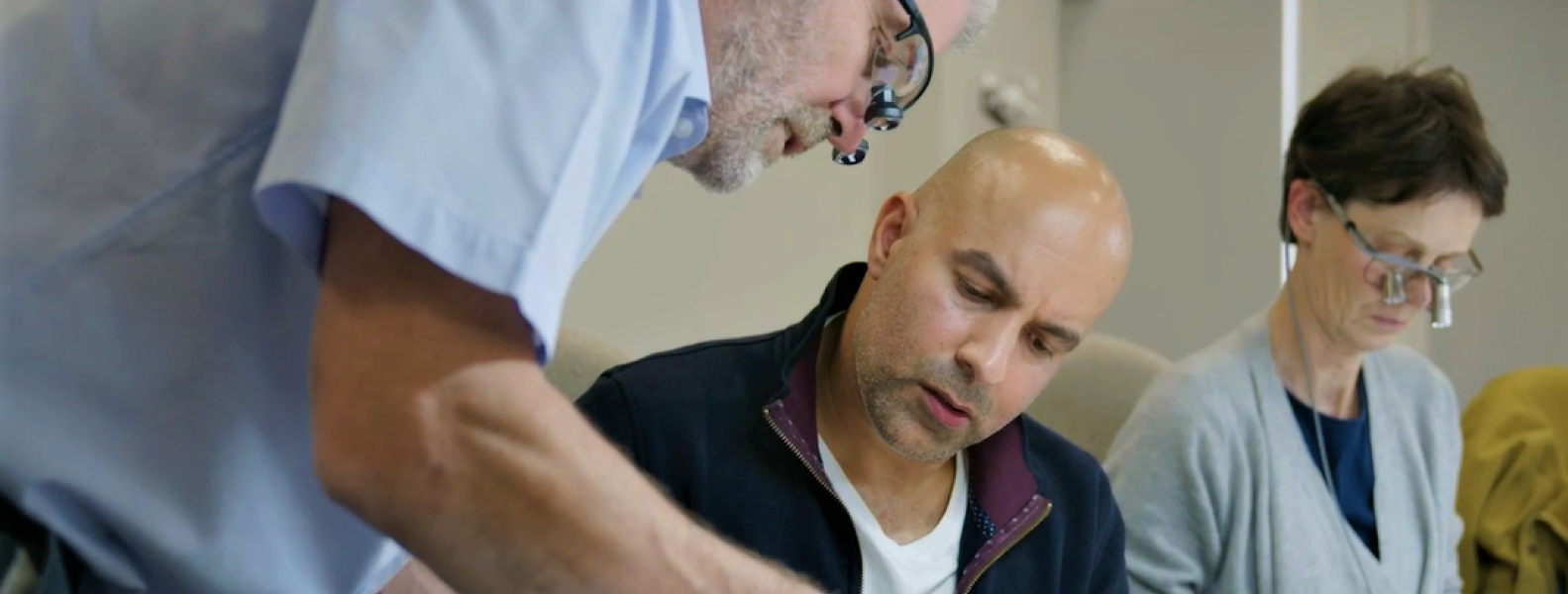
Training was delivered through lectures as well as hands-on experience

We also explored the advantages and limitations of scanners in shade analysis, alongside guidance on achieving ideal photographic settings for accurate documentation, explanation and presentation of clinical work.

Material selection was explored in depth, particularly the differences between zirconia and lithium disilicate E.max onlays. Understanding the indications, limitations and bonding considerations of each material helped clarify a topic that can often be challenging. This component of the course reinforced the importance of selecting restorative materials based on a comprehensive assessment of the patient’s history, functional demands, and occlusal considerations.

Digital dentistry: an accessible introduction

We explored 3D scanning and CAD/CAM workflows, including direct CEREC design. Although the course was more lecture-based overall, having the opportunity to scan each other and design restorations digitally was particularly valuable, especially for those who did not have these opportunities in their practices. It made digital dentistry feel more approachable and highlighted how these tools can support accuracy, efficiency and communication with patients- rather than relying alone on analogue workflow and trust of clinical judgement.

Hands-on session using intraoral scanners

Occlusion, bruxism and appliance therapy

Another impactful part of the course was the exploration of occlusion and the management of bruxism. We were introduced to removable appliances that were previously unfamiliar to me, broadening my perspective on the available management and treatment options for patients with parafunctional habits.

These sessions helped to connect restorative dentistry with daily functional considerations, reinforcing the principle that long- term clinical outcomes rely on a multifactorial understanding of the patient rather than a narrow focus on individual teeth requiring restoration.

Seeing the bigger picture: full-mouth rehabilitation

I have developed a particular interest in full-mouth rehabilitation, especially in cases that integrate both analogue and digital workflows. This course offered an introduction to a range of such cases, which further reinforced my engagement in this area. As an early-career dentist, these cases can feel far removed from daily practice. However, seeing them broken down into structured, principle-led stages made them feel more understandable and achievable over time.

Rather than creating a sense of immediate clinical readiness, the course prompted a more valuable outcome by highlighting the extent of further knowledge and skill development required. This insight was motivating rather than discouraging, as it provided a clearer perspective on the direction of future learning and professional development.

A motivating experience for early-career dentists

This course highlighted the breadth and depth of knowledge required to deliver predictable, high-quality restorative care. It strongly reaffirmed the professional direction I already knew I wanted to pursue and renewed my motivation for continued learning and development.

For early-career dentists considering applying for the Tom Bereznicki Award for Advanced Aesthetic Dentistry, I would strongly encourage it. The experience extends far beyond technical instruction, offering valuable perspective, professional inspiration and a clearer understanding of what modern dentistry can achieve with the right approach, while mixing with like- minded peers.

Opportunities like this remind us that dentistry is a  journey. Having access to high-quality education at an early stage plays a crucial role in shaping not only clinical practice, but also the kind of clinicians we aspire to become.

The Tom Bereznicki Award for Advanced Aesthetic Dentistry 2026 is now open to dentists who qualified between 2020 and 2024 and practise in the UK or EU.

Subscribe to receive our monthly newsletter

Introduction to Digital Dentistry

Friday 12 February 2027 – Saturday 13 February 2027

Funded places on this course are reserved for successful candidates in the Tom Bereznicki Award for Advanced Aesthetic Dentistry. It is not possible to register on this course separately.

Dentsply Sirona Academy, Building 3, The Heights, Weybridge, Surrey, KT13 0NY

The Introduction to Digital Dentistry course, which combines theory, demonstrations and hands-on experience, has been designed by Dr Tom Bereznicki and Dr Chris Leech specifically for early career dentists with limited or no experience of practising within a digital workflow. It provides a comprehensive introduction to digital dentistry techniques, and how harnessing them can enhance your aesthetic practice and patient care.

The two-day course will include hands-on elements of learning, with additional theory and material science modules delivered through pre-course videos.

The course will take you step-by-step through the complete process of creating a digitally produced crown, from scanning to cementation, and provisionally includes:

  • Presentations on digital dentistry and digital dentures
  • Short demonstrations followed by hands-on experience of:
    • Scanning each other
    • Scanning a preparation of a restoration on a pre-prepared model
    • Using software to design your final restoration
    • Demonstration of programming and milling processes
    • Adjustment and polishing techniques using pre-milled crowns that fit the model
    • Cementation of the crown onto the model

Refreshments and lunch are provided on both days.

The course accommodates 12 participants and also takes place on Friday 29 January – Saturday 30 January 2027.

Watch interviews with successful candidates who describe what they learnt on the course, and pass on advice to other early career dentists.

Course leaders

Dr Chris Leech
BDS, MAGDS RCS (Ed), MFDS RCPS (Glasg), Dip Imp Dent RCS (Ed), FDS RCS (Ed), FCGDent

A graduate of Newcastle Dental School, Dr Leech is a partner in a private dental practice and President-Elect of the British Academy of Cosmetic Dentistry. He holds the Diploma in Implant Dentistry of the Royal College of Surgeons of Edinburgh, for which he is now an examiner. He was also the first dentist to be awarded the Membership for Advanced General Dental Surgery by RCS Edinburgh and is a Fellow of its Faculty of Dental Surgery. He is also a member of the Society for the Advancement of Anaesthesia in Dentistry and of the Faculty of Dental Surgery of the Royal College of Physicians and Surgeons of Glasgow, and is a Fellow of the College of General Dentistry.

Dr Bal Sohal
BDS (Kings) Hons

Dr Sohal is a cosmetic dentist who has showcased his work in presentations in the UK and US. He is experienced in the use of digital workflows, in particular for restoring single unit restorations and aesthetic multi-unit veneers, crowns and onlays. He graduated BDS from King’s College London in 2018, where he was undergraduate president of the dental society and was awarded the Guy’s Full Shield, awards from the Richard Dickinson USA Trust Fund and King’s Opportunity Fund, the Gold Star Award and the Jelf Medal for the most distinguished undergraduate.

Dr Tom Bereznicki
BDS (Edin), FDS RCS (Ed), MFDTEd, FCGDent, MFDSEng

After graduating from Edinburgh, Dr Bereznicki worked as a house surgeon at Guy’s and The Royal Dental Hospitals before entering general dental practice, in which he has over 40 years’ experience. With a special interest in restorative dentistry, in particular occlusion and emergence profile, he was also a visiting clinical specialist teacher at King’s College London Dental Institute and later joined the teaching faculty for the university’s MSc in Aesthetic Dentistry. In 2018, he joined the Academy of Dental Excellence as a senior specialist teacher, and in 2021 became a partner associate lecturer for the University of Portsmouth’s Postgraduate Diploma in Advanced Aesthetic and Restorative Dentistry. In 2023, he founded the Tom Bereznicki Charitable Educational Foundation which supports educational opportunities for early career dental professionals. A former member of the FGDP and Founder Member of CGDent, he has been a Fellow of the College since 2022 and is a member of both the Faculty of Dental Trainers at the Royal College of Surgeons of Edinburgh and the Faculty of Dental Surgery of the Royal College of Surgeons of England. He is also a regional speaker on occlusion for the British Academy of Cosmetic Dentistry.

Attending the course

The Introduction to Digital Dentistry course has been created solely for the Tom Bereznicki Award for Advanced Aesthetic Dentistry, which is open to dentists who qualified between 2020 to 2024 and who practise in the UK or within the European Union. Successful candidates will each be awarded a fully funded place on one of two course dates, and hotel accommodation, UK travel and subsistence will also be covered.

To enter, eligible dentists must submit an aesthetic case they plan to treat with a mainly analogue workflow, which involves more than one tooth, including at least one anterior tooth, and the use of composite to restore teeth.

Entries for the 2026 award are now closed.

Subscribe to receive our monthly newsletter

Introduction to Digital Dentistry

Friday 29 January 2027 – Saturday 30 January 2027

Funded places on this course are reserved for successful candidates in the Tom Bereznicki Award for Advanced Aesthetic Dentistry. It is not possible to register on this course separately.

Dentsply Sirona Academy, Building 3, The Heights, Weybridge, Surrey, KT13 0NY

The Introduction to Digital Dentistry course, which combines theory, demonstrations and hands-on experience, has been designed by Dr Tom Bereznicki and Dr Chris Leech specifically for early career dentists with limited or no experience of practising within a digital workflow. It provides a comprehensive introduction to digital dentistry techniques, and how harnessing them can enhance your aesthetic practice and patient care.

The two-day course will include hands-on elements of learning, demos and lectures with additional theory and material science modules delivered through pre-course videos.

The course will take you step-by-step through the complete process of creating a digitally produced crown, from scanning to cementation, and provisionally includes:

  • Presentations on digital dentistry and digital dentures
  • Short demonstrations followed by hands-on experience of:
    • Scanning each other
    • Scanning a preparation of a restoration on a pre-prepared model
    • Using software to design your final restoration
    • Demonstration of programming and milling processes
    • Adjustment and polishing techniques using pre-milled crowns that fit the model
    • Cementation of the crown onto the model

Refreshments and lunch are provided on both days.

The course accommodates 12 participants and also takes place on Friday 12 – Saturday 13 February 2027.

Watch interviews with successful candidates who describe what they learnt on the course, and pass on advice to other early career dentists.

Course leaders

Dr Chris Leech
BDS, MAGDS RCS (Ed), MFDS RCPS (Glasg), Dip Imp Dent RCS (Ed), FDS RCS (Ed), FCGDent

A graduate of Newcastle Dental School, Dr Leech is a partner in a private dental practice and President-Elect of the British Academy of Cosmetic Dentistry. He holds the Diploma in Implant Dentistry of the Royal College of Surgeons of Edinburgh, for which he is now an examiner. He was also the first dentist to be awarded the Membership for Advanced General Dental Surgery by RCS Edinburgh and is a Fellow of its Faculty of Dental Surgery. He is also a member of the Society for the Advancement of Anaesthesia in Dentistry and of the Faculty of Dental Surgery of the Royal College of Physicians and Surgeons of Glasgow, and is a Fellow of the College of General Dentistry.

Dr Bal Sohal
BDS (Kings) Hons

Dr Sohal is a cosmetic dentist who has showcased his work in presentations in the UK and US. He is experienced in the use of digital workflows, in particular for restoring single unit restorations and aesthetic multi-unit veneers, crowns and onlays. He graduated BDS from King’s College London in 2018, where he was undergraduate president of the dental society and was awarded the Guy’s Full Shield, awards from the Richard Dickinson USA Trust Fund and King’s Opportunity Fund, the Gold Star Award and the Jelf Medal for the most distinguished undergraduate.

Dr Tom Bereznicki
BDS (Edin), FDS RCS (Ed), MFDTEd, FCGDent, MFDSEng

After graduating from Edinburgh, Dr Bereznicki worked as a house surgeon at Guy’s and The Royal Dental Hospitals before entering general dental practice, in which he has over 40 years’ experience. With a special interest in restorative dentistry, in particular occlusion and emergence profile, he was also a visiting clinical specialist teacher at King’s College London Dental Institute and later joined the teaching faculty for the university’s MSc in Aesthetic Dentistry. In 2018, he joined the Academy of Dental Excellence as a senior specialist teacher, and in 2021 became a partner associate lecturer for the University of Portsmouth’s Postgraduate Diploma in Advanced Aesthetic and Restorative Dentistry. In 2023, he founded the Tom Bereznicki Charitable Educational Foundation which supports educational opportunities for early career dental professionals. A former member of the FGDP and Founder Member of CGDent, he has been a Fellow of the College since 2022 and is a member of both the Faculty of Dental Trainers at the Royal College of Surgeons of Edinburgh and the Faculty of Dental Surgery of the Royal College of Surgeons of England. He is also a regional speaker on occlusion for the British Academy of Cosmetic Dentistry.

Attending the course

The Introduction to Digital Dentistry course has been created solely for the Tom Bereznicki Award for Advanced Aesthetic Dentistry, which is open to dentists who qualified between 2020 to 2024 and who practise in the UK or within the European Union. Successful candidates will each be awarded a fully funded place on one of two course dates, and hotel accommodation, UK travel and subsistence will also be covered.

To enter, eligible dentists must submit an aesthetic case they plan to treat with a mainly analogue workflow, which involves more than one tooth, including at least one anterior tooth, and the use of composite to restore teeth.

The 2026 award is now closed for entries.

Subscribe to receive our monthly newsletter

Presentations of Associate Fellows and Fellows

Thursday 28 January 2027, 6-9pm, London

Professor Sreenivas Koka FCGDent being ceremonially admitted into Fellowship by College President Dr Roshni Karia

The Livery Hall, Cutlers’ Hall, Warwick Lane, London EC4M 7BR

Fellows and Associate Fellows who have not previously been formally presented are invited to be ceremonially admitted into our Fellowship community by the President of the College, Dr Roshni Karia.

The presentations will be incorporated within the Fellows’ Winter Reception, and will take place in front of gathered Fellows and Associate Fellows of the College.

This is only the second opportunity for those in six new Fellowship categories to be presented, and any Fellows in Dental Nursing, Orthodontic Therapy, Dental Hygiene, Dental Therapy, Dental Technology or Clinical Dental Technology attending the 2027 Fellows’ Winter Reception who were not presented at the 2026 Fellows’ Summer Reception will be ceremonially admitted.

It is also just the fourth opportunity for Associate Fellows to be presented, and all Associate Fellows attending the Fellows’ Winter Reception who have not previously been presented will be ceremonially admitted.

New Fellows, and any College Fellow attending the Fellows’ Winter Reception who has neither been ceremonially admitted at a previous College Fellows’ Reception nor had their fellowship of the former FGDP(UK) conferred at a Diplomates’ Day will be ceremonially admitted.

Photographs of each presenting Fellow and Associate Fellow being ceremonially admitted by the President will be made available shortly afterwards to download free of charge.

The Fellows’ Winter Reception is an opportunity for dental professionals to network with their peers, as well as to meet College Trustees and members of the College Council and Faculty Boards.

Taking place from 6pm to 9pm, with registration open from 5.30pm, it will be the final element of the ‘Winter Day’ programme of events which also includes:

Formal business attire is recommended.

Ticketing

Ticket prices and a registration link will be posted here in due course.

Non-members or existing members applying for Associate Fellowship or Fellowship and who wish to be ceremonially admitted at the Winter Reception are advised to submit their applications as soon as possible in order to allow enough time for admissions procedures to be completed.

Information on eligibility for Associate Fellowship and Fellowship and is available here

Subscribe to receive to our monthly newsletter

Presentation of the 2026 College Medal

Thursday 28 January 2027, 6-9pm, London

Dr Patricia Thomson FCGDent (l), winner of the 2026 College Medal (r)

The Livery Hall, Cutlers’ Hall, Warwick Lane, London EC4M 7BR

The 2026 College Medal, the College’s most prestigious honour, will be awarded to Dr Patricia Thomson FCGDent.

Reserved for no more than one recipient per year, the College Medal is awarded for exceptional service to the dental profession and its patients in a manner aligned with the values and mission of the College. Dr Thomson will receive the award in recognition of her wholehearted commitment to the profession, and her longstanding service to CGDent and previously to the Faculty of General Dental Practice (FGDP), both nationally and in the west of Scotland.

Since graduating from Glasgow Dental School in 1983 until her retirement from practice this year, Dr Thomson amassed 43 years’ unbroken service as a general dental practitioner. Principal of a mixed NHS-and-private practice for over 30 years, she assisted the Vocational Dental Practitioners in her practice for over 20 of these, also nurturing the careers of many Dental Care Professionals, associate dentists and non-clinical staff. In recent years, she practised as a part-time associate dentist, and she continues to teach undergraduates as a part-time Clinical Teaching Fellow in the restorative department at the University of Glasgow.

Heavily involved for more than two decades in the highly active West of Scotland division of the former FGDP, she tutored numerous colleagues for entry exams for the Royal Colleges and presented teaching sessions on orthodontics to vocational trainees. Elected in 2016 to represent the West and North of Scotland on the national FGDP Board, she was re-elected in 2019 and transferred to the College Council when CGDent succeeded the FGDP.

In 2021, she led the establishment of CGDent Scotland to succeed the West of Scotland division, and has since continued her involvement both in the study groups and in planning the annual study days, which have been running since 1992 and now regularly attract over 400 colleagues.

She was appointed the first Chair of the College’s Regional Funding Panel and was elected Vice-President of the College in 2022. She served a second term as Vice-President in 2023-24, and was re-elected to the Council in 2024 before standing down in 2025 after completing the maximum permitted nine years’ service. She continues to represent the College as its nominee on the NHS Education for Scotland Dental Committee, a role she has held for many years.

With a longstanding interest in orthodontics, she spent three years on a part-time clinical attachment in Glasgow Dental School’s orthodontic department, training in fixed appliance therapy, and later completed an MSc in Primary Dental Care (Dental Science) with an interest in orthodontics, achieving a distinction.

She also holds the Diploma of Membership of the Joint Dental Faculties of the Royal College of Surgeons of England (MJDF) and the Diploma of Membership of the Faculty of Dental Surgery of the Royal College of Physicians and Surgeons of Glasgow (MFDS), and is a Fellow of the International College of Dentists and a Past President of the West of Scotland branch of the British Dental Association.

Dr Thomson will be the fifth recipient of the College Medal, following Ian MillsAndrew HaddenArio Santini and Kevin Lewis.


The presentation of the College Medal, to be made by the President of the College, Dr Roshni Karia, will be incorporated within the 2027 Fellows’ Winter Reception*, and will take place in front of gathered Fellows and Associate Fellows of the College.

The Fellows’ Winter Reception is an opportunity for dental professionals to network with their peers, as well as to meet College Trustees and members of the College Council and Faculty Boards. The event will be open to all members of the College’s Fellowship community (Associate Fellows, Fellows and College Fellows).

*The presentation of the 2026 College Medal was originally scheduled to take place during the 2026 Fellows’ Summer Reception, however that event was cancelled due to the UK Health Security Agency’s red heat-health alert.

Formal business attire is recommended.

Ticket prices and a registration link will be posted here in due course.

Subscribe to receive to our monthly newsletter

Fellows’ Winter Reception

Thursday 28 January 2027, 6-9pm, London

The Livery Hall, Cutlers’ Hall, Warwick Lane, London EC4M 7BR

The fifth annual College of General Dentistry Fellows’ Winter Reception will take place on the evening of Thursday 28 January 2027 in the historic Cutlers’ Hall in London.

The event is an opportunity to network with peers over drinks and canapés, as well as to meet College Trustees and members of the College Council and Faculty Boards.

A welcome by the Chair of the College and an address by the President will be followed by the admission of new Fellows and Associate Fellows.

Taking place from 6pm to 9pm, with registration open from 5.30pm, it will be the final element of the Winter Day programme of events (further details to follow).

Formal business attire is recommended

Ticketing

The event is open to all members of the College’s Fellowship community (Associate Fellows and Fellows), as well as members of the College’s Board of Trustees, Council and Faculty Boards.

Information on eligibility for Associate Fellowship and Fellowship is available here

Ticket prices and a registration link will be posted here in due course.


The following event(s) will also be taking place in and around the same location on the same day:

Subscribe to receive our monthly newsletter

2026 Aesthetic Dentistry Award open for entries

The Tom Bereznicki Award for Advanced Aesthetic Dentistry, which promotes aesthetic dentistry skills and patient care, is now open for entries to the 2026 competition.

Successful candidates on the Introduction to Digital Dentistry course in November 2025

Following a successful inaugural year, and an expansion to the award’s eligibility criteria, the 2026 award is open to dentists who qualified between 2020 and 2024 in the UK or within the European Union (EU), and who practise in the UK or the EU. Entrants must submit an aesthetic case they are about to start treating which involves more than one tooth, including at least one anterior tooth, and the use of composite to restore teeth. It must also mainly follow an analogue workflow.

There are 23 winning places available, with each successful candidate receiving a fully-funded place on a hands-on, two-day digital dentistry course at the Dentsply Sirona training facility in Surrey. The prize is worth around £2,000 per place and includes the costs of UK travel, hotel accommodation and subsistence.

Successful candidates in the inaugural competition took part in the tailor-made digital dentistry course, which is not available commercially, in November 2025. Led by Dr Chris Leech FCGDent and Dr Bal Sohal, participants were guided step-by-step through the complete process of creating a digitally produced crown, including the science behind material choice.

One participant described the course as “an incredible introduction into the future of dentistry” and another said they “had no expectations upon attending the Introduction to Digital Dentistry Course but I have got out far more than I could have imagined. I now feel a lot clearer on how to progress and elevate my clinical skills moving forward.

The 2026 award is now open, the closing date for entry is Monday 20 July 2026* and final cases must be submitted by Monday 16 November 2026. The winners will be announced in December, and their course, which is repeated on two separate dates, will take place on Friday-Saturday 29-30 January 2027 and Friday-Saturday 12-13 February 2027.

The Tom Bereznicki Award for Advanced Aesthetic Dentistry is funded by The Tom Bereznicki Charitable Educational Foundation and organised in conjunction with the College of General Dentistry and Dentsply Sirona. The Foundation supports educational opportunities for early career dentists, and was founded by Dr Tom Bereznicki FCGDent, a general dental practitioner with a special interest in restorative dentistry. Dentsply Sirona is a global company that designs and manufactures leading-edge dental products, enabling enhanced patient care through the adoption of a digital workflow.

Click the button below for further information about the award and links to guidance for entrants and the entry form.

The College is collaborating with the Tom Bereznicki Charitable Educational Foundation, and other partners, to deliver a range of educational opportunities for early career dental professionals.

CGDent and GC Award for Foundation Trainees
Dentists and dental therapists who qualified in 2025 or are enrolled on DFT are eligible to enter the CGDent-GC Award 2026, to win fully funded composite layering training in Belgium. Full details and entry form.

*entry deadline changed from Monday 8 June 2026

Sign up to our monthly newsletter