On 13 December 2023, the President of the College, Dr Abhi Pal, participated in a roundtable meeting with the newly appointed Minister for Primary Care, Andrea Leadsom MP.
Held at the Department of Health and Social Care, the meeting had been called by the newly-appointed Minister to outline her priorities for NHS dentistry in England – ensuring access for urgent dental care and increasing preventative activities such as perinatal advice and supervised toothbrushing schemes – and to hear the profession’s suggested solutions to the problems facing patients and NHS providers.
A wide range of stakeholders were present and discussed the critical need for contract reform as well as the delayed Dental Recovery Plan amongst other issues. On behalf of the College, Dr Pal made the case that the NHS needs to focus on arresting the exodus of the existing dental workforce and on increasing its appeal to newly-qualified professionals and those from overseas, and that to do this it needs to offer more attractive prospects by supporting a formal career progression framework for all those delivering NHS primary dental care.
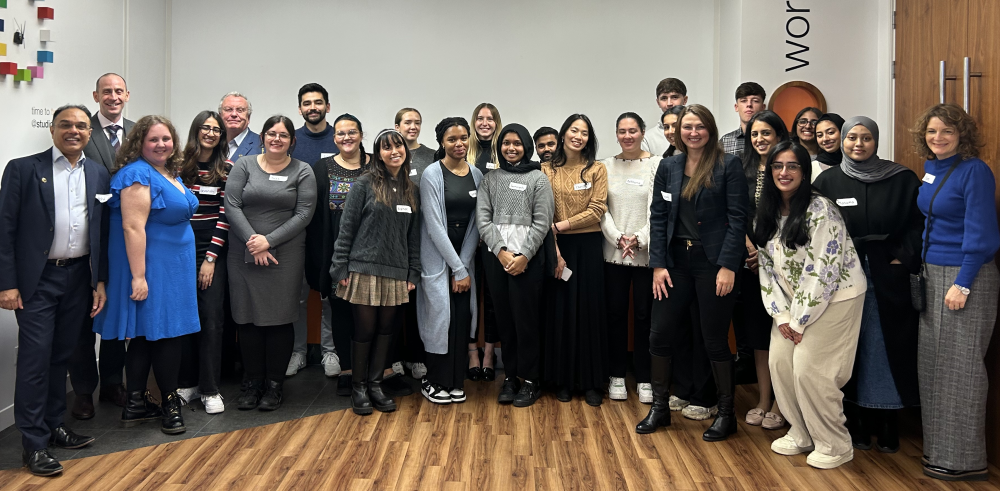
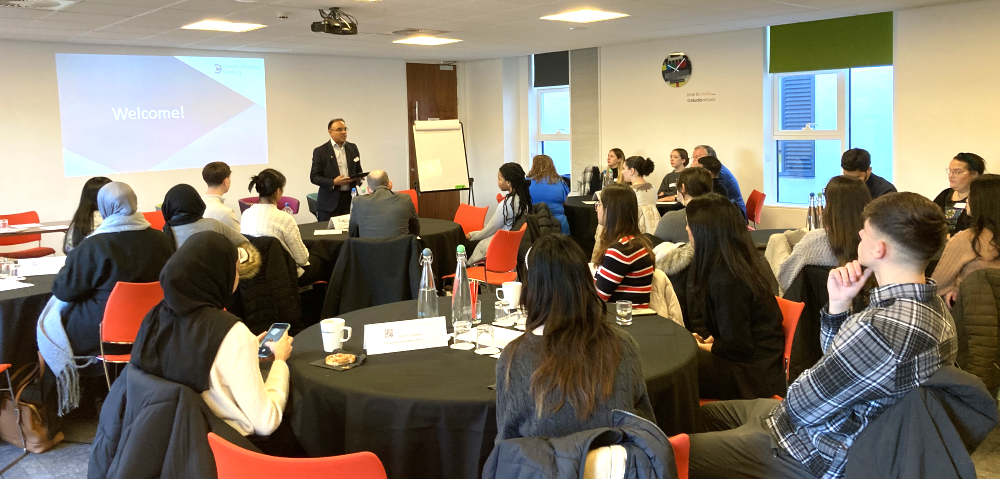
As part of a new initiative to raise awareness of its mission to dental students and early career professionals, the College held its first ‘NextGen’ event on Saturday 25 November 2023.
The CGDent NextGen Leadership Workshop, which took place in Manchester, was open to students on the Bachelor of Dental Surgery, BSc or DipHE Dental Hygiene and Dental Therapy, BSc Clinical Dental Technology and BSc Dental Studies courses at the University of Manchester, the University of Liverpool, the University of Birmingham and the University of Central Lancashire, as well as Foundation Dentists and Foundation Dental Therapists in the North West region.
Successful applicants were awarded a fully funded place at the one-day workshop, which explored the skills required for effective leadership in dentistry, through a series of talks, workshops and discussion. The day focused on the five competencies in the Agency Domain of the College’s Professional Framework for Career Pathways in Dentistry: autonomy, decision-making, influence, leadership and management.
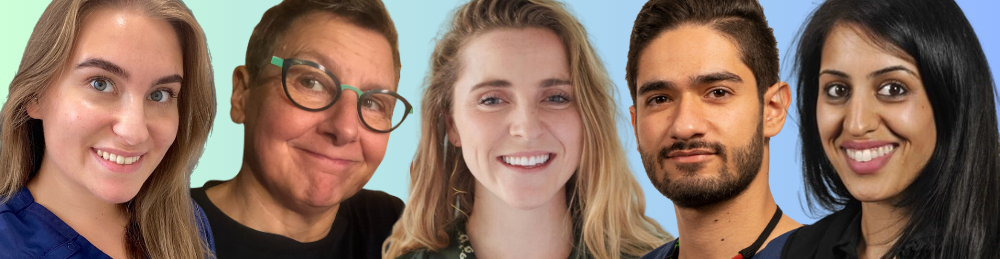
Supported by five College facilitators, the delegates were encouraged to examine the key leadership skills and consider how they could develop them through short-term, medium-term and long-term goals.
Christy, a BDS student at the University of Birmingham who took part in the day, said: “…it was great to meet the facilitators and other students there. Everyone was so welcoming, and the talks and activities were easily accessible – no matter what stage or area of dentistry we were in. I’ve learnt multiple ways to develop my skill set, information about the College of General Dentistry and thoroughly look forward to future events!”
Many of those who attended the workshop have become NextGen Ambassadors for the College, with the aim of raising awareness within their communities of CGDent’s mission and of the career support it offers to dental professionals.
The College wishes to thank the students and Foundation Trainees who enthusiastically took part in the day; the workshop facilitators who generously gave their time and expertise (Phillip Brown, Poppy Dunton, Roshni Karia, Abhi Pal and Sir Nairn Wilson); and the University of Manchester, University of Liverpool, University of Birmingham, University of Central Lancashire and Health Education North West for their support.
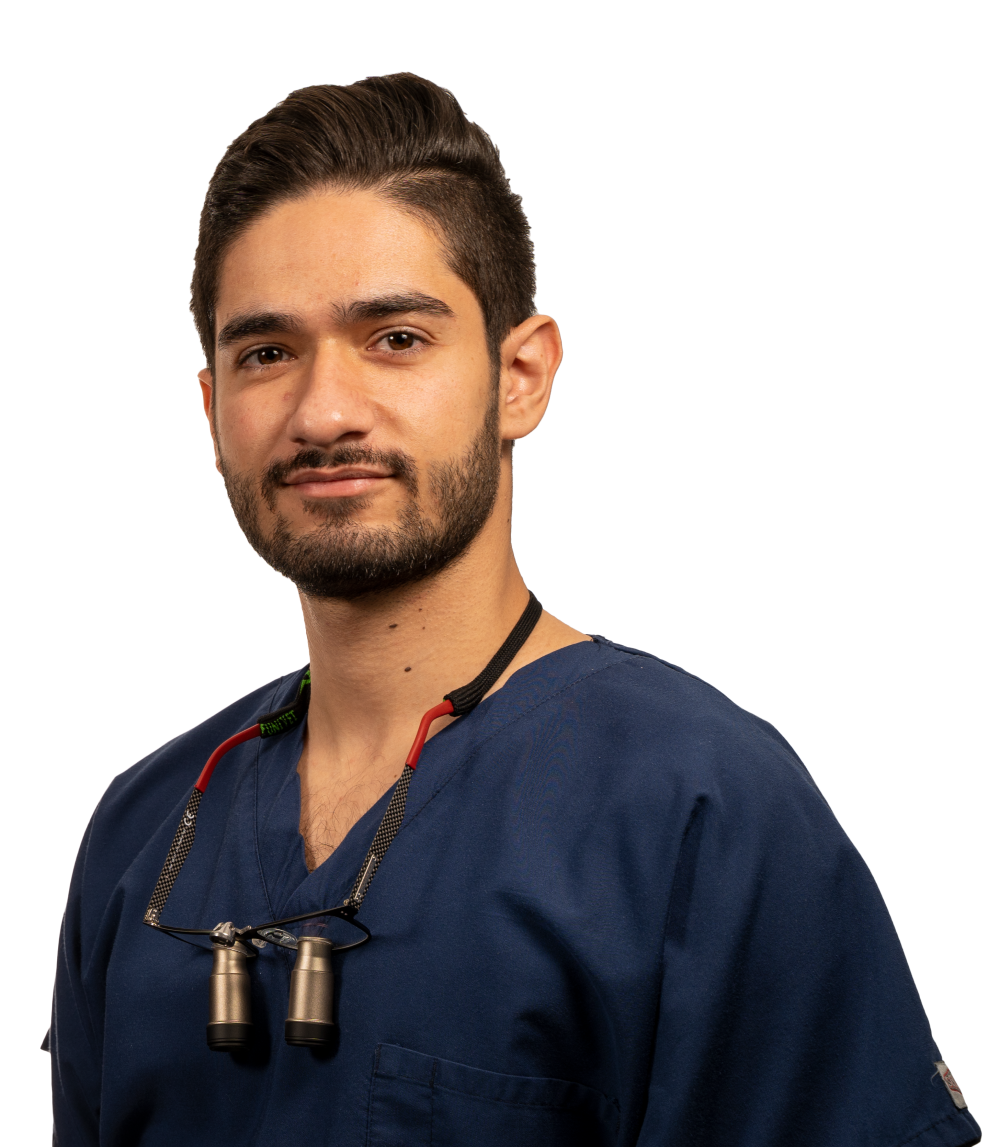
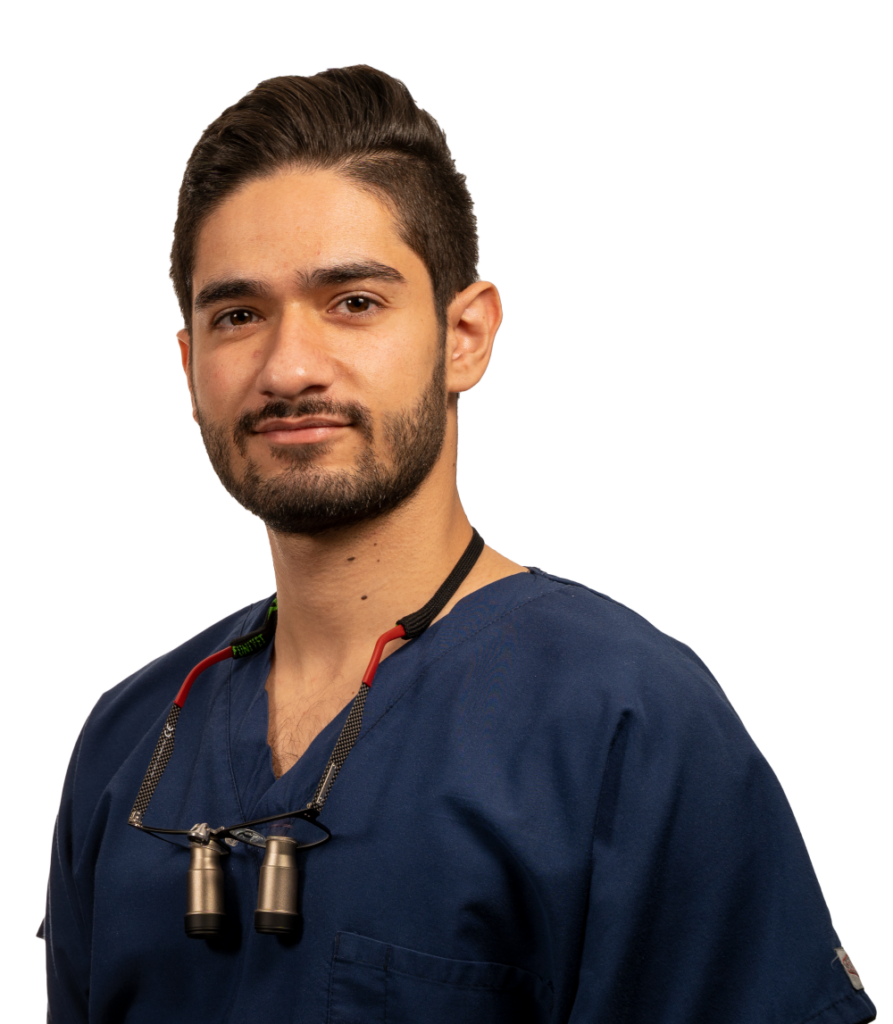
Dr Pouya Zohrabpour, GDP and co-creator of the Two Dentists YouTube Channel, describes his journey towards becoming a fully private associate dentist, and the support he has received from the College’s Certified Membership Scheme.
Many young dentists struggle with imposter syndrome, often hesitant to engage in private dental practice or transition to a fully private setting. I graduated in 2020 and have recently embarked on the journey to become a fully private associate dentist. The experiences I’ve gathered over the past few years have been instrumental in easing this transition, helping me overcome imposter syndrome, and instilling confidence in the quality of dental care I provide.
Shortly after graduating, my colleague and friend, Dr. Ali Gowie, and I made the decision to launch a YouTube channel named “Two Dentists.” This initiative was born out of our shared frustration during the lockdown, as we grew tired of lengthy hour-long webinars. Our mission was simple: to create informative, polished, and easily digestible educational videos within the field of dentistry. We aimed to make these videos accessible to both dental newcomers and students.
As time progressed, our content portfolio expanded to include diverse video series, such as our comprehensive exploration of dental photography and Loupes, which resonated strongly with our audience. Running our YouTube channel has opened doors for valuable collaborations with fellow dental professionals, nurturing our ongoing journey of learning and personal development. The channel has provided me with constant motivation to seek further knowledge, which I can then share through our videos.
During my foundation training year, I faced a pivotal decision regarding whether to pursue Dental Core Training (DCT). This choice weighed heavily on my mind as I sought advice from friends and colleagues. However, the diversity of opinions and my own uncertainty about the ideal career path left me in a state of indecision. Ultimately, I chose the associate route to focus on improving my general dentistry skills.
I’m certain that many others have found themselves in a similar situation, which is precisely where the new CGDent Certified Membership Scheme and Career Pathways can make a significant difference. As a young dentist, having a clearly defined career pathway, carefully mapped out by a professional body, offers me a sense of assurance that I’m on the right trajectory to expand my knowledge and evolve into a more proficient practitioner. Knowing that my progress will be acknowledged by the College and that I can work my way towards becoming an accomplished practitioner is incredibly motivating.
The Career Pathway provides a structured ladder to guide one’s professional growth, with clear steps leading to the achievement of the “accomplished practitioner” status. Currently classified as a “capable practitioner” “within the program, I am actively working towards the next milestone of becoming an “experienced practitioner”. One of the requirements for this advancement is completing a postgraduate diploma. To meet this requirement, I have enrolled in a PGDip program in Aesthetic & Restorative Dentistry offered by the Advanced Centre of Excellence (ACE). This further education has significantly boosted my confidence in treating a diverse range of patients, particularly in the private dental sector.
The Career Pathway is underpinned by the College’s Professional Framework, which delineates five domains encompassing 22 capabilities expected of dental professionals. My discussions with my assigned Facilitator while navigating these domains have been enlightening. They have encouraged me to pursue self-development not only in technical skills but also in the soft skills integral to dentistry. For instance, I’ve focused on honing my technical knowledge through courses in my PGDip program and ensuring I apply this knowledge in practice. Emphasizing the reflective domain, especially behaviours and well-being capabilities, has motivated me to foster a friendly, supportive, and collaborative environment among my colleagues at the dental practice. I firmly believe that without the framework and pathway in place, many of these actions may not have occurred or could have been delayed. The YouTube channel, Career Pathway, and Professional Framework have all played pivotal roles in shaping my career, enabling me to evolve and find fulfilment in dentistry.
As I near completion of my PGDip, I’m keen to identify the dental procedures that resonate with me most and potentially niche down in those treatments. To me, a successful dental career entails working in a capacity that allows you to practice the dentistry you enjoy, on a schedule that suits your preferences. This journey is neither swift nor easy; it demands patience and thoughtful planning. However, with the right guidance and strategy in place, it can become a more seamless and rewarding experience.
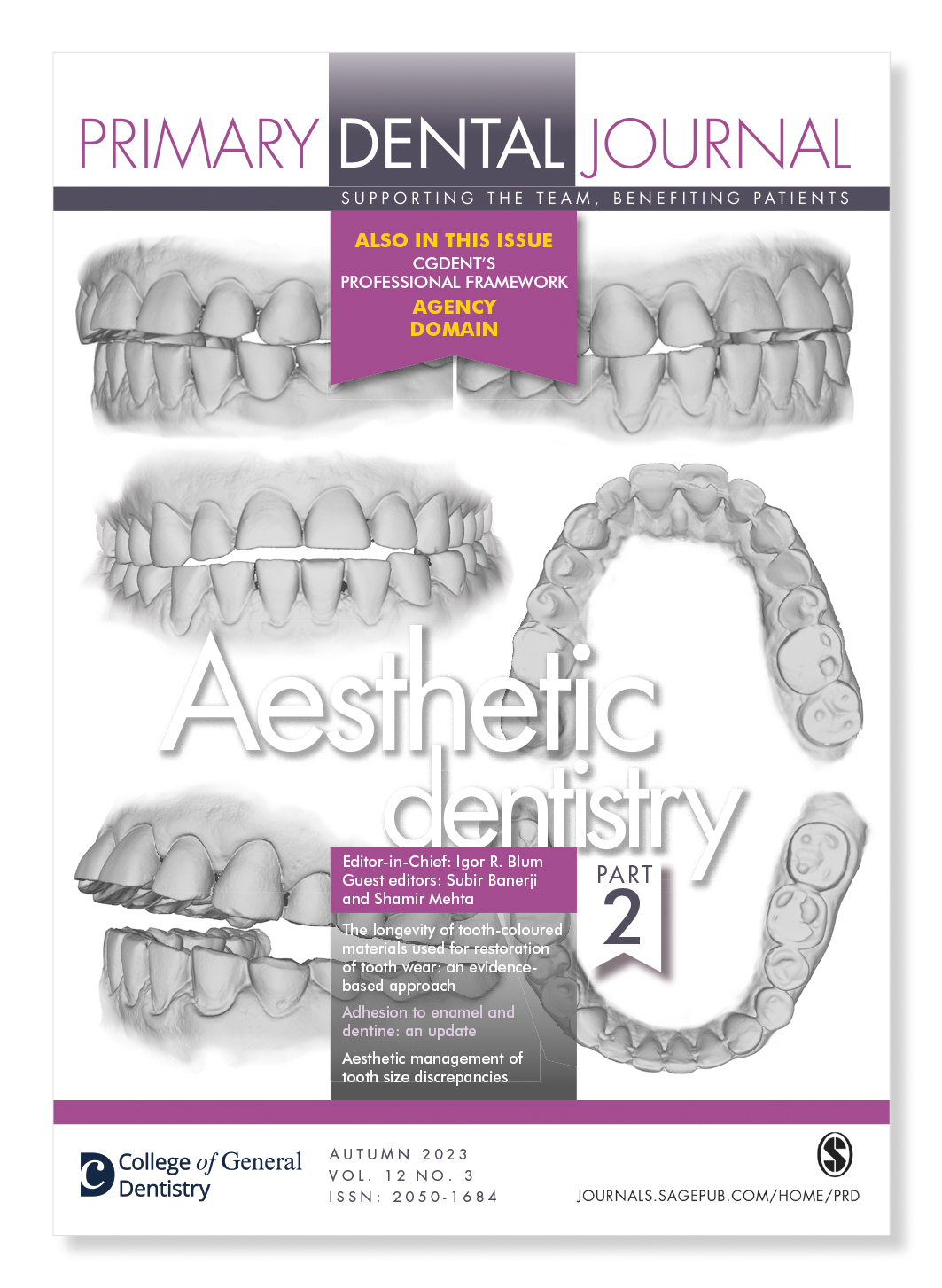
The latest edition of the Primary Dental Journal, the Aesthetic dentistry part 2 issue (vol.12, no.3), is now live online.
As with part 1 (vol.12, no.2), this issue is guest edited by two renowned experts in the field, Subir Banerji (Programme Director MSc Aesthetic dentistry, King’s College London) and Shamir Mehta (Professor of Aesthetic dentistry and Programme Lead, MSc Restorative and Aesthetic dentistry at CoMD/Ulster University).
In this part 2 issue, and the previous part 1 issue, the Guest Editors have selected a range of topics pertinent to the whole team of dental professionals, including discussions on the aesthetic management of tooth size discrepancies, the longevity of tooth-coloured materials in dental restoration, and an update on adhesion to enamel and dentine. A full list of part 2 papers can be found below.
Also included in this issue is the final of five domains from the College’s Career Pathways in Dentistry: Professional Framework, which describes the knowledge, skills and other attributes expected of primary care dental professionals at different career stages – from safe practitioner through to accomplished practitioner. The ‘Agency’ domain is published in this issue, and was preceded by the ‘Clinical & Technical’, ‘Professionalism’, ‘Reflection’ and ‘Development’ domains published in the Autumn and Winter 2022 and the Spring and Summer 2023 issues of the Primary Dental Journal. Every domain for all career stages can be viewed online, using the above link.
Full access to the majority of articles is reserved for College of General Dentistry members and Primary Dental Journal subscribers. For non-members / non-subscribers, individual print issues are available to purchase from £41. An annual print subscription, normally costing £125, is included with membership of the College. Membership is available from £125 for dentists, from £83 for other dental professionals, and from £42 for Dental Nurses and those eligible for a concession and also includes online access to the PDJ Archive of over 1,300 articles, and a range of other benefits.
CGDent members and PDJ subscribers should expect their printed copies to arrive in the next 2–3 weeks.
On behalf of the College, the PDJ editorial team would like to express its gratitude to all the authors and peer reviewers who have contributed to the publication of this issue.
CGDent members can view full articles by logging in via the yellow button below, then clicking ‘Access the PDJ Archive’:
At least one paper in each issue is made available online free of charge on an Open Access basis. Non-members can view all other full articles using the purchase options presented when clicking the individual article links below, or can use the links above to purchase a complete issue or an annual subscription, or become a member.
PDJ Autumn 2023 Aesthetic dentistry part 2 issue contents
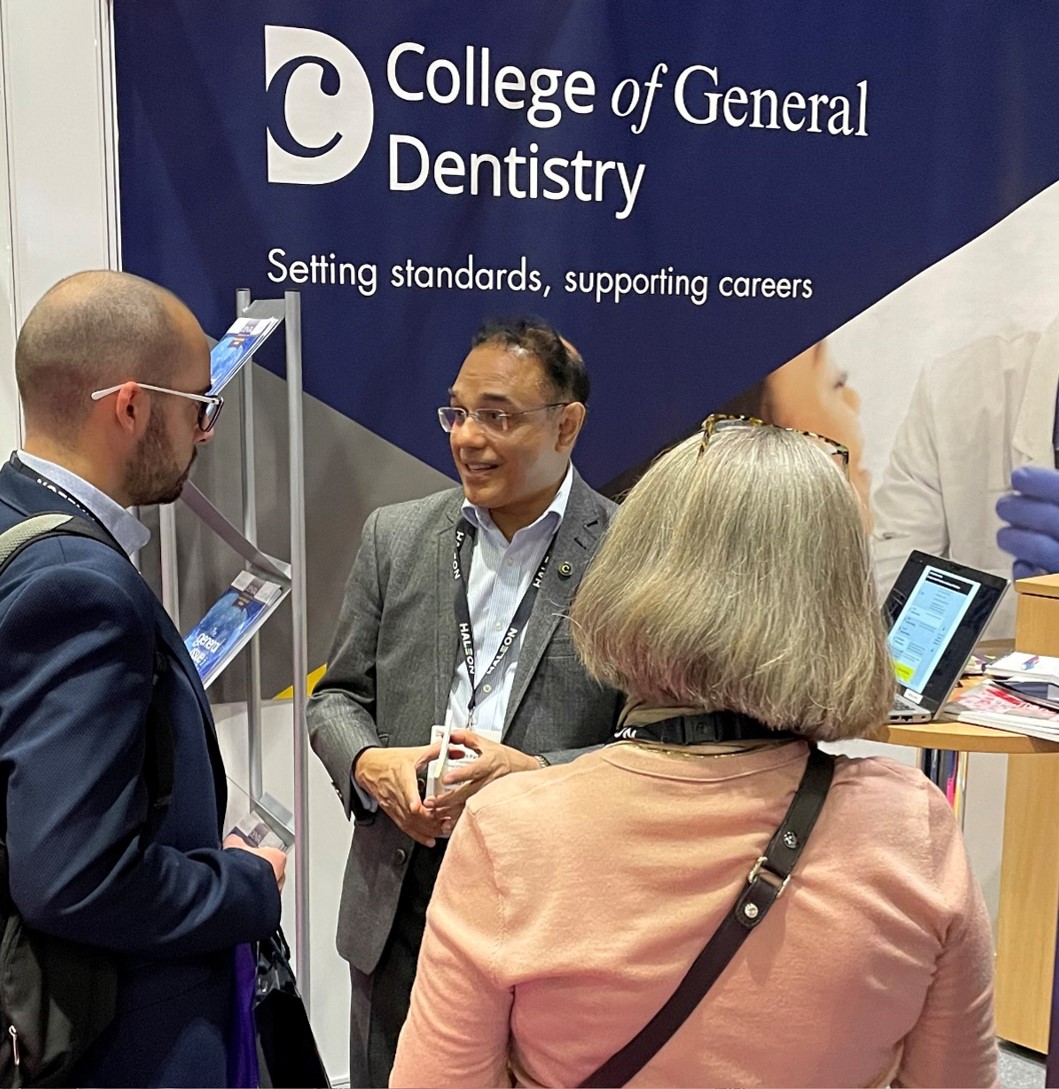
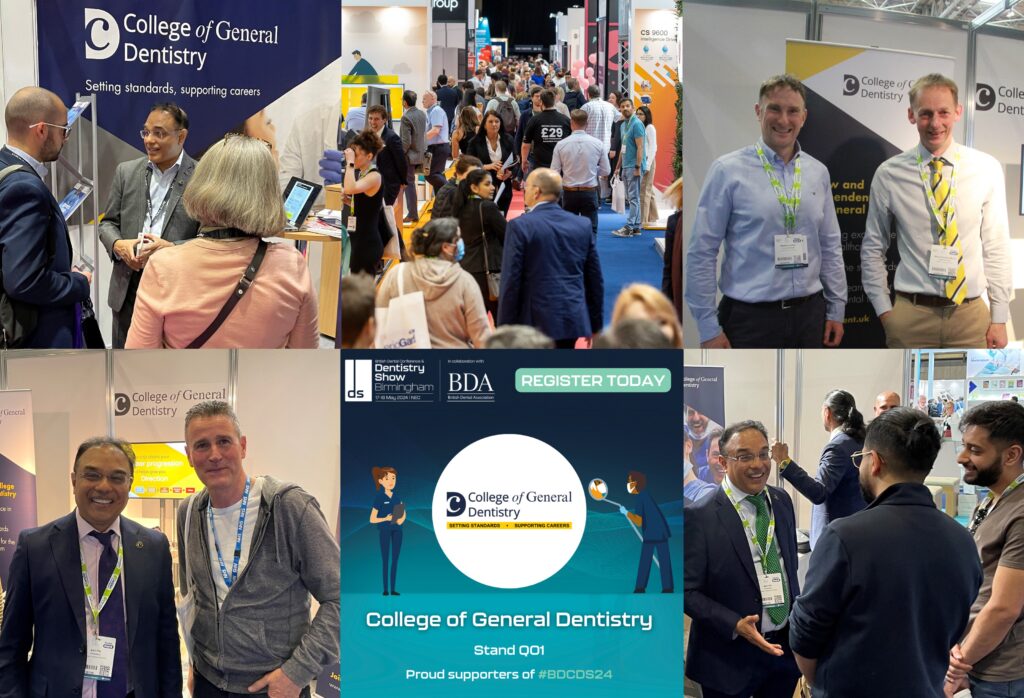
College members and non-members alike were encouraged to come and introduce themselves, to find out more about the College and have their queries answered.
Perhaps you have questions about your membership or how to access your benefits? Or want to know whether you’re eligible for Full Membership, Associate Fellowship or Fellowship? Or you wonder how Certified Membership works, what Life Fellowship is, or how to add your qualifications to the Member Register?
Maybe you’re a former member of FGDP(UK) uncertain of your College status, or the correct way to present your Faculty post-nominals?
Or perhaps you’re a non-member who’s not yet heard much about the College and just wants to find out why we were set up, what our plans are or how we can help you in your career?
Whatever your query, senior College members and staff will be there throughout the conference to help you out, and we’ll have live access to our systems to help solve membership queries on the spot.
Or even if you don’t have a query, we’d be delighted to meet you!
The College is also the headline education partner for the Enhanced CPD Theatre, where it is hosting four lectures.
The British Dental Conference and Dentistry Show is the UK’s largest dental event, giving you access to 400 exhibitors and 9,000 fellow dental professionals, and offering 200 lectures across 11 CPD theatres.
It’s FREE to attend for all registered dental professionals – just register via the button below:
Webinar with Future Frontline, Tuesday 5 December 2023, 6pm
This webinar with Future Frontline, aimed to raise awareness of different careers within general dentistry and to educate future dental professionals about working in the dental profession. Members from across the dental team gave an insight into a typical day in the life of a dental professional, explained what they love about working in dentistry and the career pathways that are open to dental professionals. They also gave information about the College of General Dentistry and how we support careers in dentistry.
Speakers:
Michelle Brand, Dental Nurse, Associate Member of the College
Dr Roshni Karia MCGDent, General Dental Practitioner, Council member of the College of General Dentistry
Frances Robinson AssocFCGDent, Dental Hygienist, Chair of the College’s Faculty of Dental Hygiene and Dental Therapy
Carmel Vickers-Wall, Clinical Dental Technician, member of the College’s Faculty of Clinical Dental Technology & Dental Technology
Dr Pouya Zohrabpour, General Dental Practitioner, Ambassador for the College of General Dentistry, Associate Member of the College
Membership of the College of General Dentistry is open to all registered dental professionals and dental students and trainees. Find out about our membership types and fees here.
The latest edition of the Primary Dental Journal, the Aesthetic dentistry part 1 issue (vol.12, no.2), is now live online.
This issue is guest edited by two renowned experts in the field, Subir Banerji (Programme Director MSc Aesthetic dentistry, King’s College London) and Shamir Mehta (Professor of Aesthetic dentistry and Programme Lead, MSc Restorative and Aesthetic dentistry at CoMD/Ulster University).
In this part 1 issue, and the following part 2 issue, the Guest Editors have selected a range of topics pertinent to the whole team of dental professionals, including discussions on the “ideal” smile, clear aligners, and how digital dentistry can assist in aesthetic treatment planning. A full list of part 1 papers can be found below, together with papers anticipated
The issue also features the penultimate in five domains from the College’s Career Pathways in Dentistry: Professional Framework, which describes the knowledge, skills and other attributes expected of primary care dental professionals at different career stages – from safe practitioner through to accomplished practitioner. The ‘Development’ domain published in this issue will be followed by the final domain, ‘Agency’, in the following issue of the Primary Dental Journal. The first three domains, ‘Clinical & Technical’ and ‘Professionalism’ and ‘Reflection’, were published in the Autumn and Winter 2022 and the Spring 2023 issues, and every domain for all career stages can be viewed online, using the above link.
Full access to the majority of articles is reserved for College of General Dentistry members and Primary Dental Journal subscribers. For non-members / non-subscribers, individual print issues are available to purchase from £41. An annual print subscription, normally costing £125, is included with membership of the College. Membership is available from £125 for dentists, from £83 for other dental professionals, and from £42 for Dental Nurses and those eligible for a concessionand also includes online access to the PDJ Archive of over 1,300 articles, and a range of other benefits.
CGDent members and PDJ subscribers should expect their printed copies to arrive in the next 2–3 weeks.
On behalf of the College, the PDJ editorial team would like to express its gratitude to all the authors and peer reviewers who have contributed to the publication of this issue.
CGDent members can view full articles by logging in via the yellow button below, then clicking ‘Access the PDJ Archive’:
At least one paper in each issue is made available online free of charge on an Open Access basis. Non-members can view all other full articles using the purchase options presented when clicking the individual article links below, or can use the links above to purchase a complete issue or an annual subscription, or become a member.
PDJ Summer 2023 Aesthetic dentistry part 1 issue contents
The next issue of the journal will continue with the topic of Aesthetic dentistry, and is due out in Autumn 2023. Anticipated papers include:
Adhesion to enamel and dentine: an update
The longevity of tooth-coloured materials used for restoration of tooth wear – an evidence-based approach
A survey of retention and support for anterior bounded saddles of removable partial dentures
Complications of toxins and fillers in facial aesthetics
Aesthetic management of tooth size discrepancies
Aesthetic management of incisors in children
This article was first published on 19 June 2023 and was updated on 5 July 2023 with the titles of paper anticipated for the Aesthetic Dentistry Part Two issue.
The President of the College, Dr Abhi Pal, has told a committee of MPs that it will take more than contract reform to persuade more dental professionals to deliver NHS dental treatment.
Dr Pal, a general dental practitioner and Principal of an NHS-contracted dental practice in Edgbaston, was addressing the House of Commons Health and Social Care Select Committee during an oral evidence session on NHS dentistry in England. During a discussion focussed on the attractiveness of NHS dentistry to dentists, he said:
“I’ve heard the evidence earlier on, and first of all I have to concur with colleagues about the state of the contract and dental contract reform, which is sorely required. But it’s not just a question of contract reform – whilst that’s very important – it’s also a question of making dental professionals’ careers more fulfilling and providing some degree of recognition for what they’re doing.
“Everyone goes into dentistry to provide the best care they can, and it’s worthwhile pointing out that beyond Dental Core Training, which is some two years post qualification, there is no effective career pathway or structure for dentists to follow, and there is a large void left there.
“There’s also little recognition from the NHS for dentists who have sometimes invested significant quantities of money in order to enhance their skills. If working conditions in that sense, and recognition, could be made better, the NHS would be seen as a more attractive place – particularly for younger dentists, and international dentists – to come and work.”
He later added:
“We speak to a lot of early career dentists – dentists within the first three or four years of qualifying – and invariably they say a number of things. One is that they are a little bit lost as to which direction they should go. And they see less future within the health service – we’ve talked about all the reasons that there are before, and they can’t work to the best way that their training has allowed them to work. I think there are small changes, including contract reform, in terms of supporting professional development, that the NHS could be considering.”
He said that in order to retain dental professionals within the NHS workforce, consideration should be given to supporting their training and development, and to supporting the development of more professional networks, peer review opportunities and mentoring schemes. He summarised that:
“All of these things, put together, in addition to contract reform, would go some way in making the NHS more attractive than it is now.”
The College recently opened a Certified Membership programme built around its freely available Professional Framework for Career Pathways in Dentistry, and speaking during the same evidence session, the Chair of Health Education England’s Dental Education Reform Programme informed committee members that HEE was already working with the College to look at how the NHS might recognise the career progression of dental professionals working in primary care.
Written evidence previously submitted by the Faculty of General Dental Practice – which transferred into the College in 2021 – told the committee that the current NHS dental contract in England is “ill-conceived and not fit for purpose”, “crude and ineffective”, and that many patients struggle to access NHS dental care as “the funding simply does not provide the universal offer they expect”.
Last year, Dr Pal visited No.10 Downing Street for a discussion on access to careers and progression in dentistry, and he has also discussed these issues with the Shadow Health Secretary.
The Health Committee’s evidence session on NHS dentistry can be viewed in full here
Dr Louise Belfield AssocFCGDent is the College Council‘s Dental Nursing & Orthodontic Therapy Representativeand Chair of the College’s Research Advisory Panel. The first dental nurse in the UK to achieve a PhD, here she reflects on the key moments, influences and lessons from her career to date.
My career in dentistry started at the age of 17 with an apprenticeship in Dental Technology. I worked as a trainee Dental Technician for 18 months and developed skills in crown and bridge work. During this time, I wondered with increasing frequency about the patients we were making prostheses for and decided to apply for a patient-facing role as a Dental Nurse. I trained in a small mixed NHS and private practice, and in 2003 gained my National Examining Board for Dental Nurses (NEBDN) Certificate in Dental Nursing. I was fortunate to work with a supportive team, and I was proactively included in continuing professional development (CPD) activities. The critical CPD event that changed the trajectory of my career in dentistry was a session exploring the links between periodontal diseases and systemic conditions, such as diabetes and cardiovascular disease, and how the oral microbiome might connect them. This sparked my curiosity and drive to find answers. What might this mean for our patients? What might we be able to advise if we knew more about it? The only path forward that I could see was to embark on scientific training at university.
The decision to leave my practice and enrol on a university degree was a difficult one because I was very happy where I was, and I enjoyed Dental Nursing. As I had gone straight into apprenticeship after leaving school, I chose a BSc in Human Biosciences university course which included a “Year Zero” to cover the prerequisite scientific knowledge in lieu of traditional A-levels. Throughout the university course I continued practising as a dental nurse, working as bank staff for a local hospital trust. This provided invaluable experience and kept me clinically active in the profession. I worked across a range of settings, including domiciliary care, school visits, emergency clinics, dental access centres, special care dentistry, and even on a mobile dental surgery van. I also worked at an emergency out-of-hours weekend service, and in a private practice which I fitted in around my lectures.
It became apparent to me through the course of my studies that it was the immune system that was the pivotal link between periodontal and systemic diseases, and in the final year of my degree course I focused my studies on the periodontal pathogen Porphyromonas gingivalis, and how it interacts with immune cells. This formed the basis of my further studies leading to a PhD, investigating how these immune cells behave in response to P. gingivalis when they are involved with oral cancer or chronic inflammation. As is often the case at the end of a PhD, there were many new questions formulating and I knew I wanted to continue to investigate these relationships further to answer some of these questions.
Career in dental research and education
At the end of my doctoral studies, an academic position became available and I was appointed as a Lecturer in Biomedical Sciences in 2013. This has enabled me to explore both the scientific and educational facets required in an academic career, and I have been able to establish research in both of these areas. My scientific research focuses on host-pathogen interactions, and I have been fortunate to work on multiple projects, including development of three-dimensional oral mucosa models, association of subgingival lipid A profiles with periodontal disease status,1,2 and in 2019 I received the Colgate Robin Davies Dental Care Professional Research Award from the Oral and Dental Research Trust (ODRT), for a project investigating modulation of osteoclast differentiation and activity by endotoxin tolerance. This Dental Care Professional (DCP) specific award was instrumental in developing an independent research career and I remain grateful to the ODRT for the opportunity.
Subsequently, working together with two colleagues at the University of Plymouth, we established the Oral Microbiome Research Group, where we run clinical and translational research investigating links between human health and disease, and oral bacteria. Two current clinical studies link the oral microbiome with pre-eclampsia, and formation of cerebral abscesses.3 Our research also explores how modifying the oral microbiome can be detrimental to maintaining oral and physiological health mechanisms; a study using chlorhexidine mouthwash to disrupt the normal microbiome found that a decreased diversity of species was associated with a decreased salivary pH buffering capacity, increased lactate and glucose levels, and reduced availability of nitrate and nitrite, with an associated increase in systolic blood pressure.4
Alongside my scientific research, I have also been able to develop scholarly activity, with a focus on inter- and intra-professional education, particularly relating to assessments and standard setting in multi-cohort programmes.5,6 Having come into higher education via a non-standard route, an area I have been particularly keen to invest in is access and participation, and a significant part of my academic role has been to develop a Foundation (Year Zero) entry pathway for the BSc Dental Therapy and Hygiene programme at Peninsula, with the specific focus on Dental Nurses, who make up the majority of our cohort. This Foundation pathway has been running successfully now for three years, and we will welcome our first cohort of BDS year zero students in September 2023, specifically designed to enable fairer access to dental education for local, South West students with non-traditional entry backgrounds.
Engagement with the professional community
I remain actively engaged with the Dental Nursing community through a number of external roles; I uphold my registration with the General Dental Council (GDC), and I am a trustee for the NEBDN, where I also chair the Education Standards Committee. In 2020, I was appointed as a Dental Clinical Fellow with Health Education England, which continues to afford me an insight into NHS dentistry, service commissioning, workforce challenges, DCP skill mix, and training needs, in line with the Dental Education Reform Programme.7 I am also a representative for Dental Nursing on the Council of the College of General Dentistry (CGDent), and with a dedicated and experienced team, we are working to establish the first Faculty of Dental Nursing. I am also grateful to the College for the opportunity to chair the Research Advisory Panel, espousing the message that research is open to all dental professionals.
Key learning points and recommendations
Instrumental in my career have been support and encouragement from those I work with, and seizing opportunities despite the frequent imposter syndrome! While by no means perfect, there tends to be more clarity in the pathway to an academic career for dentists, which is lacking for other dental professionals, which means it can be extra challenging to carve your own route. Promisingly, I come across more and more outstanding DCPs in academic positions and I hope this will continue. This is one of the reasons I am excited about the CGDent Career Pathways in Dentistry: Professional Framework and the establishment of the faculties, and to promote the CGDent vision to make research opportunities accessible for all members of the dental team, to pro-actively support Dental Nurses and all team members to excel in their profession to their fullest potential.
The skills and experience I accrued as a Dental Nurse helped me to progress in other areas, including academia and research; working as a bank dental nurse had its challenges, arriving each morning to a new practice, with different staff, surgery set-ups and protocols was difficult at times, but I learned to be adaptable, and to think on my feet. Communication and team working skills were vital; and I was privileged to work with a variety of patients with their own range of perspectives and experiences and I learned a lot from them. Finally, working in a high-pressure environment, developing effective time management was crucial to being a competent Dental Nurse and these skills have also served me well in academia. I would wholeheartedly encourage anyone with an interest in research or an academic career to pursue that, to reach out to potential mentors or advisors for guidance, and to explore the CGDent Career Pathways frameworks, as well as membership of the College and its Faculties.
References
1. McIlwaine C, Strachan A, Harrington Z, et al. Comparative analysis of total salivary lipopolysaccharide chemical and biological properties with periodontal status. Arch Oral Biol. 2019;110:104633.
2. Strachan A, Harrington Z, McIlwaine C, et al. Subgingival lipid A profile and endotoxin activity in periodontal health and disease. Clin Oral Investig. 2019;23(9):3527-3534.
3. Roy H, Bescos R, McColl E, et al. Oral microbes and the formation of cerebral abscesses: A single-centre retrospective study. J Dent. 2023;128:104366.
4. Bescos R, Ashworth A, Cutler C, et al. Effects of Chlorhexidine mouthwash on the oral microbiome. Sci Rep. 2020;10(1):5254.
5. McIlwaine C, Brookes ZLS, Zahra D, et al. A novel, integrated curriculum for dental hygiene-therapists and dentists. Br Dent J. 2019;226(1):67-72.
6. Zahra D, Belfield L, Bennett J. The benefits of integrating dental and dental therapy and hygiene students in undergraduate curricula. Eur J Dent Educ. 2018;23(1):e12-e16.
This account was first published in the Primary Dental Journal (vol. 12, issue 1, March 2023)
Update (June 2023): Since this article was published, Louise has been appointed Academic Head of Assessment at Brunel University Medical School and has stood down from the College Council to focus on her new role; however she remains on the College’s Research Advisory Panel.
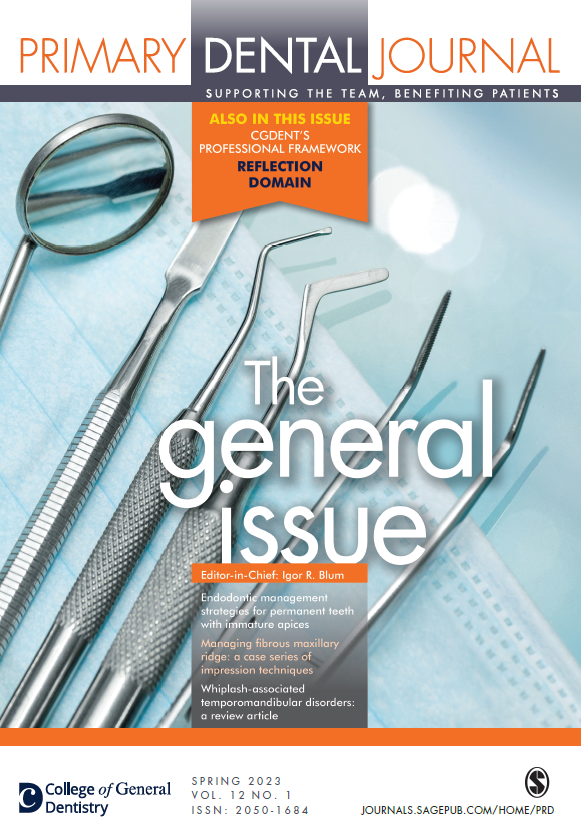
The latest edition of the Primary Dental Journal, The general issue (vol.12, no.1), is now live online.
The general issue brings together a wide range of topics, hand-picked by Editor-in-Chief, Professor Igor Blum, including a spectrum of contemporary approaches, clinical techniques and philosophies relating to aspects of general dental practice and the primary dental care team. A list of the papers can be found below.
The issue also features the third of five domains from the College’s Career Pathways in Dentistry: Professional Framework, which describes the knowledge, skills and other attributes expected of primary care dental professionals at different career stages – from safe practitioner through to accomplished practitioner. The ‘Reflection’ domain published in this issue will be followed by ‘Development’ and ‘Agency’ domains in future issues of the Primary Dental Journal. The first two domains, ‘Clinical & Technical’ and ‘Professionalism’, were published in the Autumn and Winter 2022 issues, and every domain for all career stages can be viewed online, using the above link.
Full access to the majority of articles is reserved for College of General Dentistry members and Primary Dental Journal subscribers. For non-members / non-subscribers, individual print issues are available to purchase from £41. An annual print subscription, normally costing £125, is included with membership of the College. Membership is available from £100 for dentists and from £33 for all other registered dental professionals, and also includes online access to the PDJ Archive of over 1,300 articles, and a range of other benefits.
CGDent members and PDJ subscribers should expect their printed copies to arrive in the next 2–3 weeks.
On behalf of the College, the PDJ editorial team would like to express its gratitude to all the authors and peer reviewers who have contributed to the publication of this issue.
CGDent members can view full articles by logging in via the yellow button below, then clicking ‘Access the PDJ Archive’:
At least one paper in each issue is made available online free of charge on an Open Access basis. Non-members can view all other full articles using the purchase options presented when clicking the individual article links below, or can use the links above to purchase a complete issue or an annual subscription, or become a member.
The next issue of the journal will be on the topic of Aesthetic dentistry, and is due out in summer 2023.
We use cookies on our website to give you the most relevant experience by remembering your preferences and repeat visits. By clicking “Accept”, you consent to the use of ALL the cookies.
This website uses cookies to improve your experience while you navigate through the website. Out of these, the cookies that are categorized as necessary are stored on your browser as they are essential for the working of basic functionalities of the website. We also use third-party cookies that help us analyze and understand how you use this website. These cookies will be stored in your browser only with your consent. You also have the option to opt-out of these cookies. But opting out of some of these cookies may affect your browsing experience.
Necessary cookies are absolutely essential for the website to function properly. These cookies ensure basic functionalities and security features of the website, anonymously.
Cookie
Duration
Description
cookielawinfo-checbox-analytics
11 months
This cookie is set by GDPR Cookie Consent plugin. The cookie is used to store the user consent for the cookies in the category "Analytics".
cookielawinfo-checbox-functional
11 months
The cookie is set by GDPR cookie consent to record the user consent for the cookies in the category "Functional".
cookielawinfo-checbox-others
11 months
This cookie is set by GDPR Cookie Consent plugin. The cookie is used to store the user consent for the cookies in the category "Other.
cookielawinfo-checkbox-advertisement
1 year
The cookie is set by GDPR cookie consent to record the user consent for the cookies in the category "Advertisement".
cookielawinfo-checkbox-necessary
11 months
This cookie is set by GDPR Cookie Consent plugin. The cookies is used to store the user consent for the cookies in the category "Necessary".
cookielawinfo-checkbox-performance
11 months
This cookie is set by GDPR Cookie Consent plugin. The cookie is used to store the user consent for the cookies in the category "Performance".
PHPSESSID
session
This cookie is native to PHP applications. The cookie is used to store and identify a users' unique session ID for the purpose of managing user session on the website. The cookie is a session cookies and is deleted when all the browser windows are closed.
viewed_cookie_policy
11 months
The cookie is set by the GDPR Cookie Consent plugin and is used to store whether or not user has consented to the use of cookies. It does not store any personal data.
wordpress_test_cookie
session
This cookie is used to check if the cookies are enabled on the users' browser.
Functional cookies help to perform certain functionalities like sharing the content of the website on social media platforms, collect feedbacks, and other third-party features.
Performance cookies are used to understand and analyze the key performance indexes of the website which helps in delivering a better user experience for the visitors.
Analytical cookies are used to understand how visitors interact with the website. These cookies help provide information on metrics the number of visitors, bounce rate, traffic source, etc.
Advertisement cookies are used to provide visitors with relevant ads and marketing campaigns. These cookies track visitors across websites and collect information to provide customized ads.